


Vitamin D and the immune system
- PMID: 21527855
- PMCID: PMC3166406
- DOI: 10.2310/JIM.0b013e31821b8755
Vitamin D and the immune system
Abstract
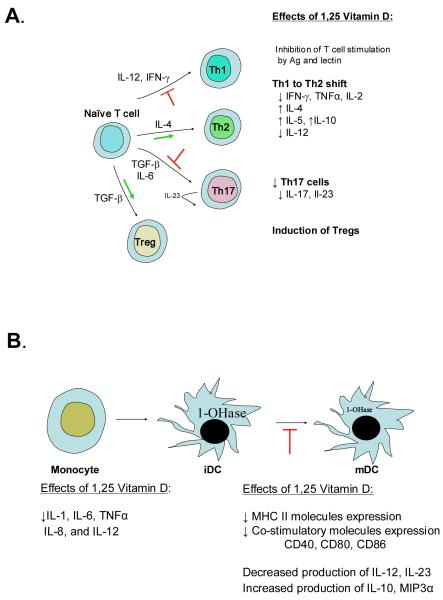
It is now clear that vitamin D has important roles in addition to its classic effects on calcium and bone homeostasis. As the vitamin D receptor is expressed on immune cells (B cells, T cells, and antigen-presenting cells), and these immunologic cells are all capable of synthesizing the active vitamin D metabolite, vitamin D has the capability of acting in an autocrine manner in a local immunologic milieu. Vitamin D can modulate the innate and adaptive immune responses. Deficiency in vitamin D is associated with increased autoimmunity and an increased susceptibility to infection. As immune cells in autoimmune diseases are responsive to the ameliorative effects of vitamin D, the beneficial effects of supplementing vitamin D-deficient individuals with autoimmune disease may extend beyond the effects on bone and calcium homeostasis.
Figures
References
-
- Holick MF. Vitamin D deficiency. N Engl J Med. 2007;357(3):266–81. - PubMed
-
- Townsend K, et al. Biological actions of extra-renal 25-hydroxyvitamin D-1alpha-hydroxylase and implications for chemoprevention and treatment. J Steroid Biochem Mol Biol. 2005;97(1-2):103–9. - PubMed
-
- Nagpal S, Na S, Rathnachalam R. Noncalcemic actions of vitamin D receptor ligands. Endocr Rev. 2005;26(5):662–87. - PubMed
-
- Wu S, et al. Splice variants of the CYP27b1 gene and the regulation of 1,25-dihydroxyvitamin D3 production. Endocrinology. 2007;148(7):3410–8. - PubMed
Publication types
MeSH terms
Substances
Grants and funding
LinkOut - more resources
Full Text Sources
Other Literature Sources
Medical
Research Materials
