


Right anterior cingulate cortical thickness and bilateral striatal volume correlate with child behavior checklist aggressive behavior scores in healthy children
- PMID: 21531391
- PMCID: PMC3134605
- DOI: 10.1016/j.biopsych.2011.03.015
Right anterior cingulate cortical thickness and bilateral striatal volume correlate with child behavior checklist aggressive behavior scores in healthy children
Abstract
Background: The anterior cingulate cortex (ACC), orbitofrontal cortex (OFC), and basal ganglia have been implicated in pathological aggression. This study aimed at identifying neuroanatomical correlates of impulsive aggression in healthy children.
Methods: Data from 193 representative 6- to 18-year-old healthy children were obtained from the National Institutes of Health Magnetic Resonance Imaging Study of Normal Brain Development after a blinded quality control. Cortical thickness and subcortical volumes were obtained with automated software. Aggression levels were measured with the Aggressive Behavior scale (AGG) of the Child Behavior Checklist. AGG scores were regressed against cortical thickness and basal ganglia volumes using first- and second-order linear models while controlling for age, gender, scanner site, and total brain volume. Gender by AGG interactions were analyzed.
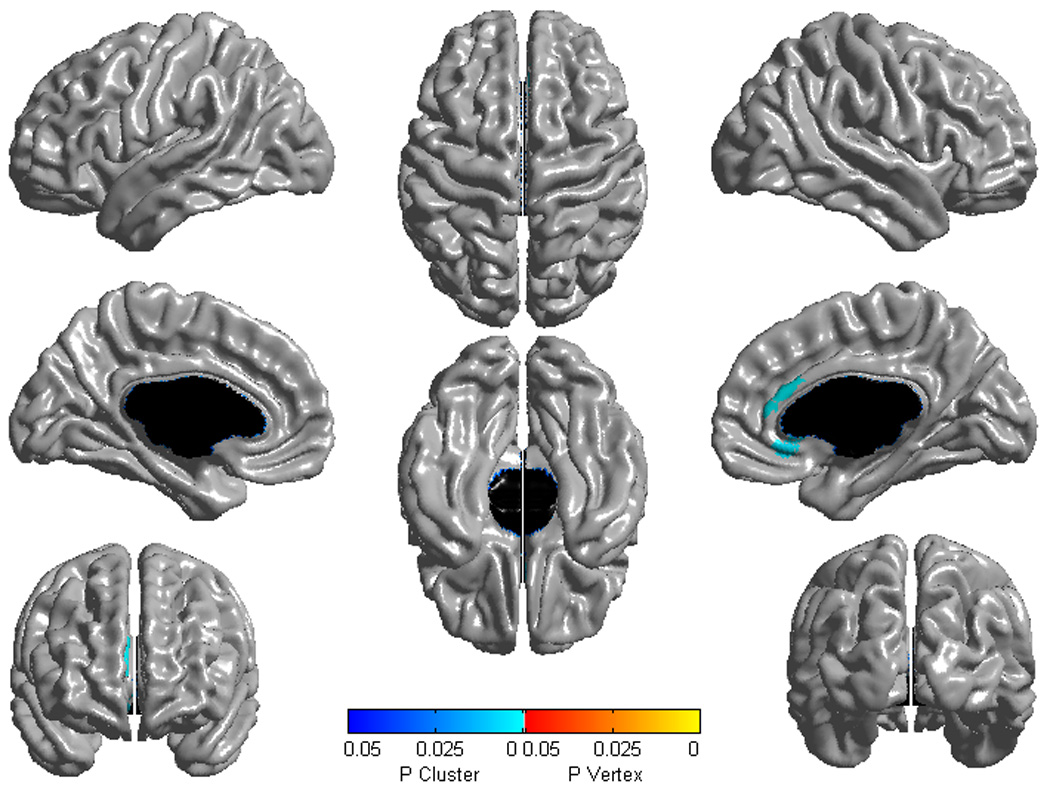
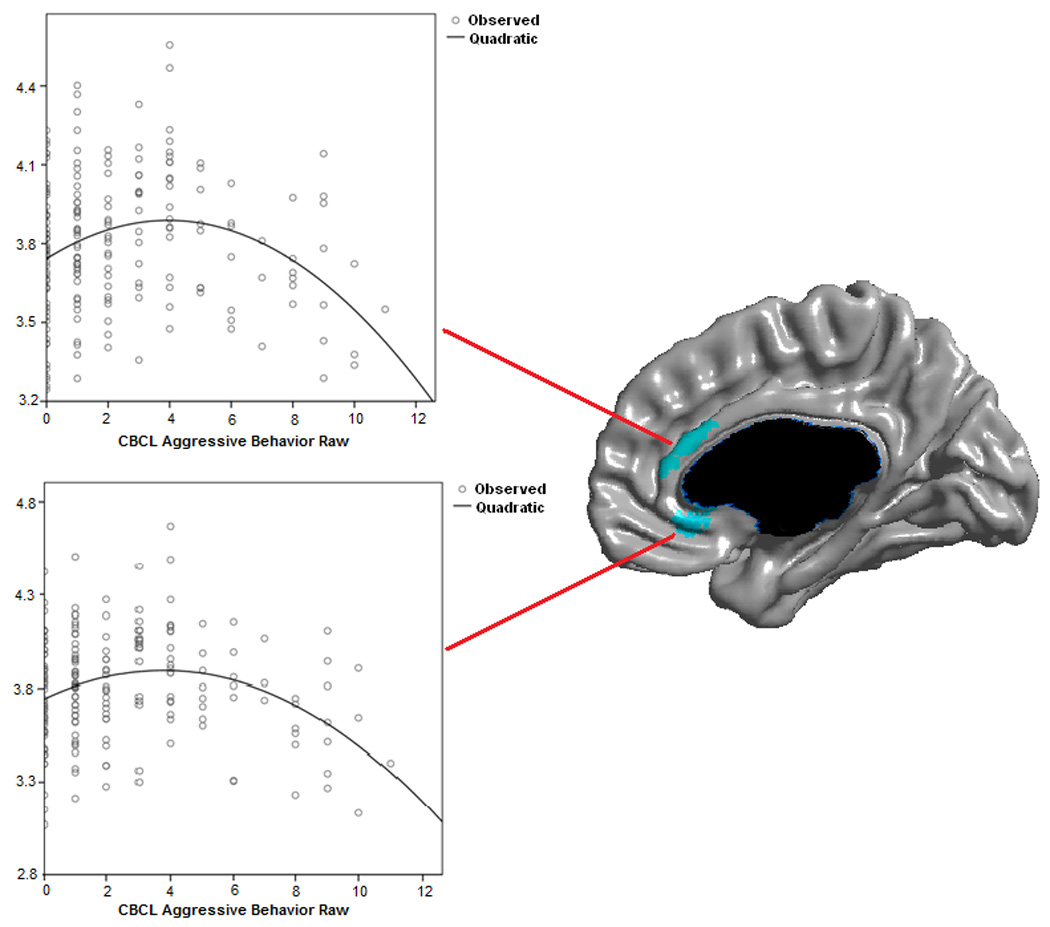
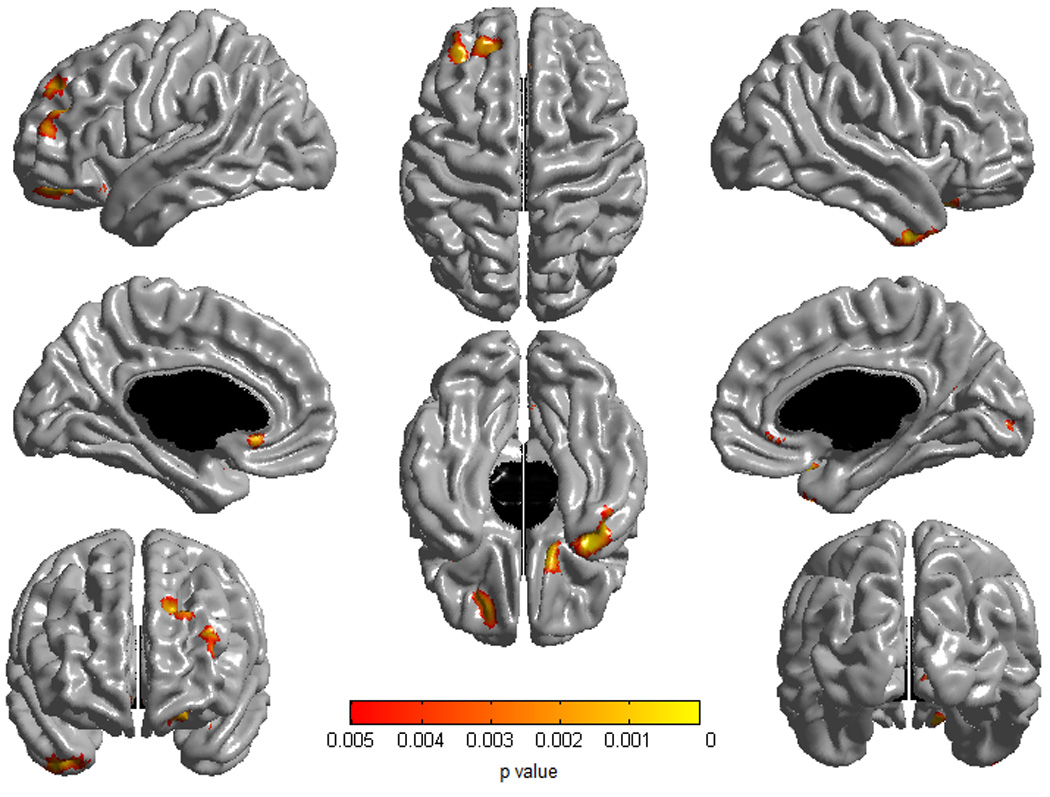
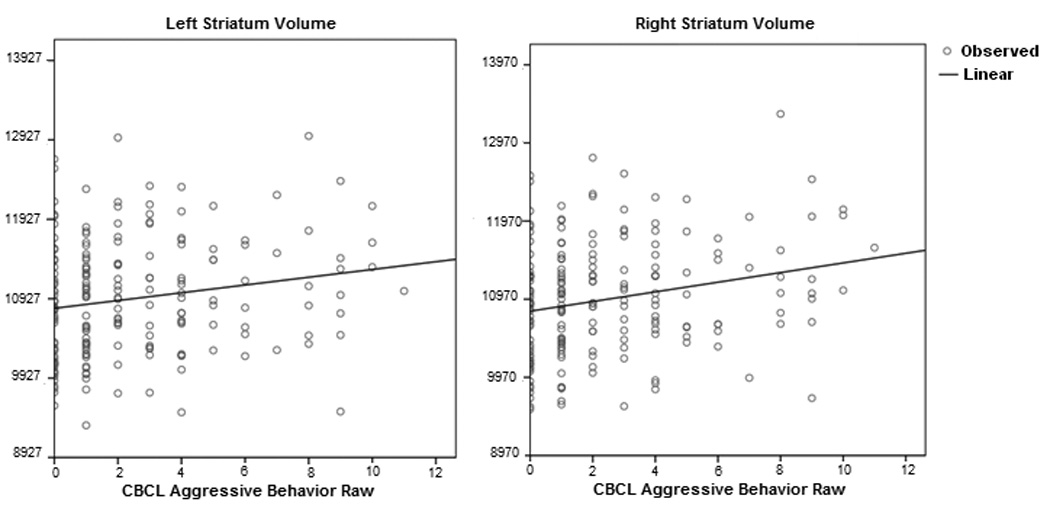
Results: There were positive associations between bilateral striatal volumes and AGG scores (right: r = .238, p = .001; left: r = .188, p = .01). A significant association was found with right ACC and subgenual ACC cortical thickness in a second-order linear model (p < .05, corrected). High AGG scores were associated with a relatively thin right ACC cortex. An AGG by gender interaction trend was found in bilateral OFC and ACC associations with AGG scores.
Conclusions: This study shows the existence of relationships between impulsive aggression in healthy children and the structure of the striatum and right ACC. It also suggests the existence of gender-specific patterns of association in OFC/ACC gray matter. These results may guide research on oppositional-defiant and conduct disorders.
Copyright © 2011 Society of Biological Psychiatry. Published by Elsevier Inc. All rights reserved.
Figures
References
-
- Evans A Group BDC. The NIH MRI study of normal brain development. NeuroImage. 2006;30:184–202. - PubMed
-
- Kruesi M, Casanova M, Mannheim G, Johnson-Bilder A. Reduced temporal lobe volume in early onset conduct disorder. Psychiatry Research: Neuroimaging. 2004;132:1–11. - PubMed
-
- Hudziak J, van Beijsterveldt C, Bartels M, Rietveld M, Rettew D, Derks E, et al. Individual differences in aggression: genetic analyses by age, gender, and informant in 3-, 7-, and 10-year-old Dutch twins. Behav Genet. 2003;33(5):575–589. - PubMed
-
- Ligthart L, Bartels M, Hoekstra R, Hudziak J, Boomsma D. Genetic contributions to subtypes of aggression. Twin Research and Human Genetics. 2005;8(5):483–491. - PubMed
Publication types
MeSH terms
Grants and funding
LinkOut - more resources
Full Text Sources
Other Literature Sources
