


Defining successful mobility after lower extremity amputation for complications of peripheral vascular disease and diabetes
- PMID: 21531528
- PMCID: PMC7526691
- DOI: 10.1016/j.jvs.2011.01.046
Defining successful mobility after lower extremity amputation for complications of peripheral vascular disease and diabetes
Abstract
Background: Information about longer-term functional outcomes following lower extremity amputation for peripheral vascular disease and diabetes remains limited. This study examined factors associated with mobility success during the first year following amputation.
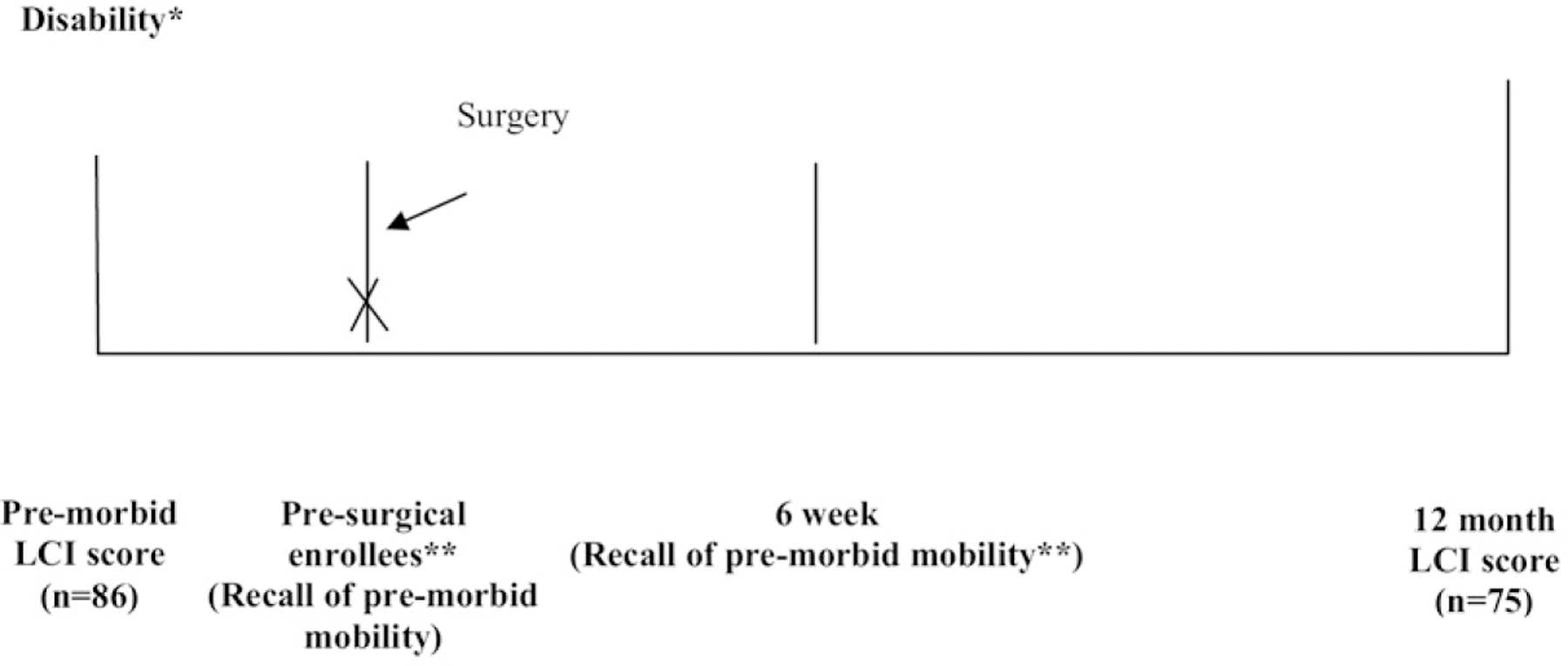
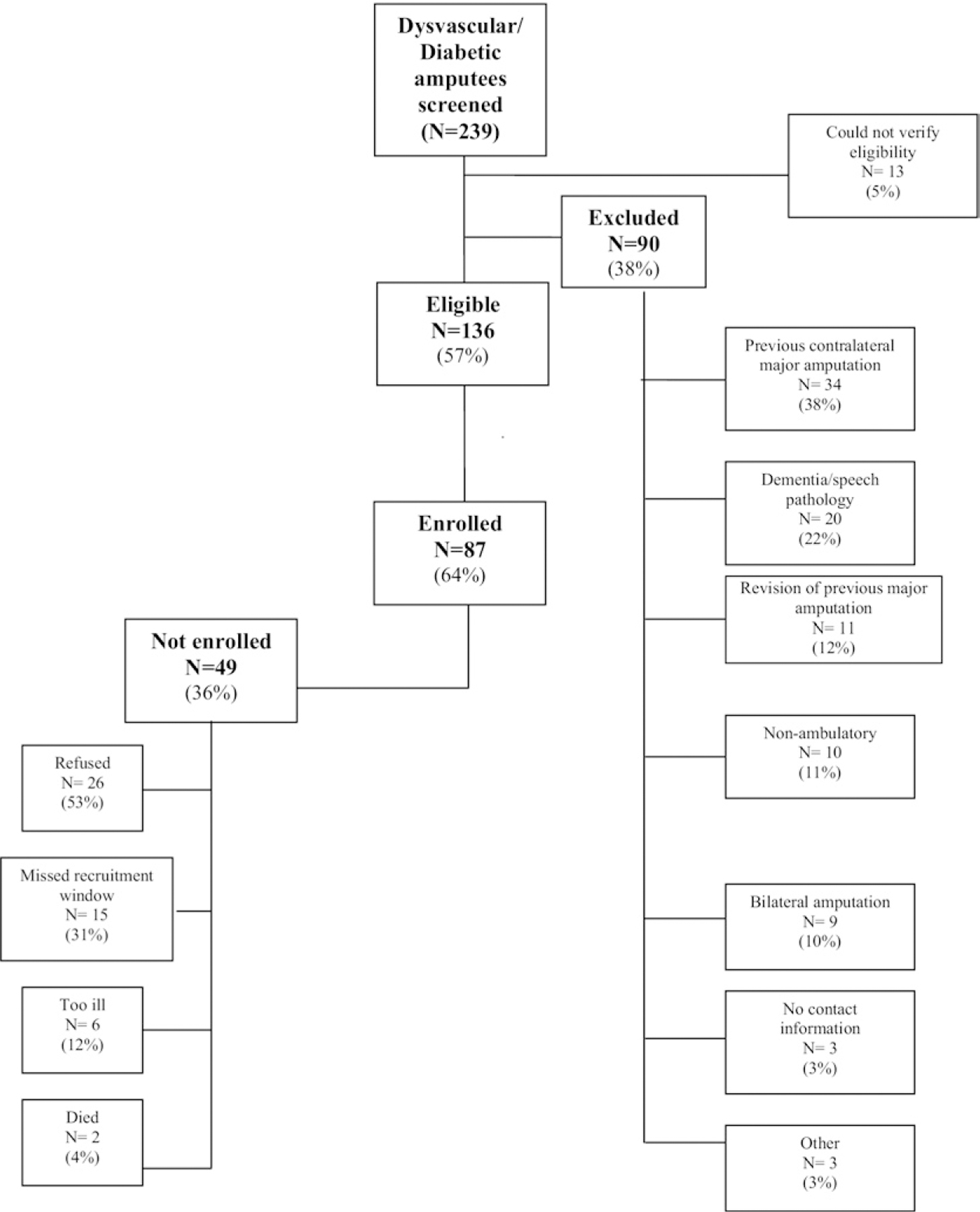
Methods: Prospective cohort study of 87 amputees experiencing a first major unilateral amputation surgery. Seventy-five (86%) participants completed 12-month follow-up interview.
Results: Twenty-eight subjects (37%) achieved mobility success, defined as returning to or exceeding a baseline level of mobility on the locomotor capability index (LCI-5). Forty-three subjects (57%) were satisfied with their mobility. Individuals who were 65 years of age and older (risk difference [RD] = -0.52; 95% confidence interval [CI]: -0.75, -0.29), reported a current alcohol use disorder (RD = -0.37; 95% CI: -0.48, -0.26), had a history of hypertension (RD = -0.23; 95% CI: -0.43, -0.03) or treatment for anxiety or depression (RD = -0.39; 95% CI: -0.50, -0.28) were less likely to achieve mobility success. Mobility success was associated with mobility satisfaction (RD = 0.36; 95% CI: 0.20, 0.53) and satisfaction with life (RD = 0.28; 95% CI: 0.06, 0.50). Although higher absolute mobility at 12 months was also associated with mobility satisfaction and overall life satisfaction, 50% of individuals who achieved success with low to moderate 12-month mobility function reported they were satisfied with their mobility.
Conclusion: Defining success after amputation in relation to an individual's specific mobility prior to the development of limb impairment which led to amputation provides a useful, patient-centered measure that takes other aspects of health, function, and impairment into account.
Published by Mosby, Inc.
Conflict of interest statement
The editors and reviewers of this article have no relevant financial relationships to disclose per the JVS policy that requires reviewers to decline review of any manuscript for which they may have a competition of interest.
Figures
References
-
- Dillingham TR, Pezzin LE, MacKenzie EJ. Limb amputation and limb deficiency: epidemiology and recent trends in the United States. South Med J 2002;95:875–83. - PubMed
-
- Cruz CP, Eidt JF, Capps C, Kirtley L, Moursi MM. Major lower extremity amputations at a Veterans Affairs Hospital. Am J Surg 2003; 186:449–54. - PubMed
-
- Larsson J, Agardh CD, Apelqvist J, Stenstrom A. Long-term prognosis after healed amputation in patients with diabetes. Clin Orthop Relat Res 1998;350:149–58. - PubMed
-
- Narang IC, Mathur BP, Singh P, Jape VS. Functional capabilities of lower limb amputees. Prosthet Orthot Int 1984;8:43–51. - PubMed
Publication types
MeSH terms
Grants and funding
LinkOut - more resources
Full Text Sources
Other Literature Sources
Miscellaneous
