


Towards a synthetic chloroplast
- PMID: 21533097
- PMCID: PMC3080389
- DOI: 10.1371/journal.pone.0018877
Towards a synthetic chloroplast
Abstract
Background: The evolution of eukaryotic cells is widely agreed to have proceeded through a series of endosymbiotic events between larger cells and proteobacteria or cyanobacteria, leading to the formation of mitochondria or chloroplasts, respectively. Engineered endosymbiotic relationships between different species of cells are a valuable tool for synthetic biology, where engineered pathways based on two species could take advantage of the unique abilities of each mutualistic partner.
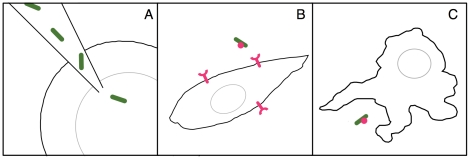
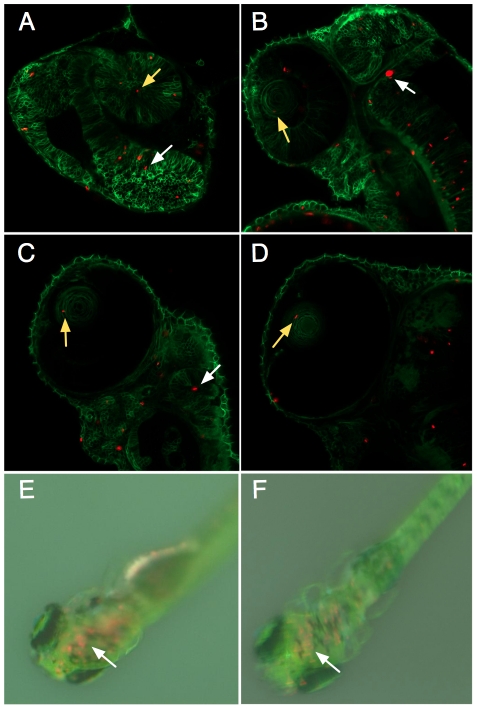
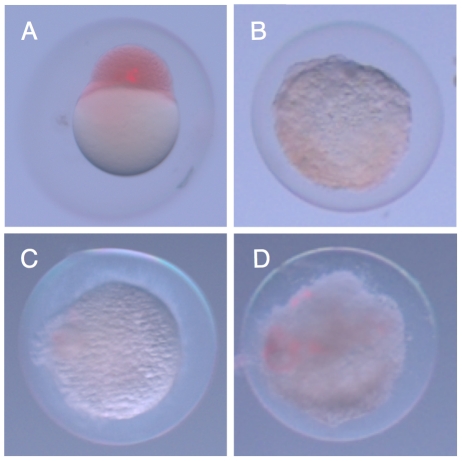
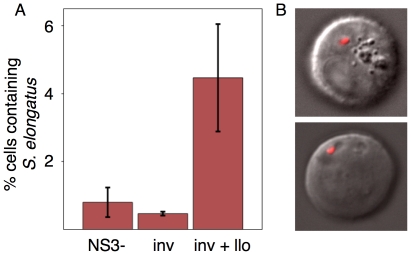
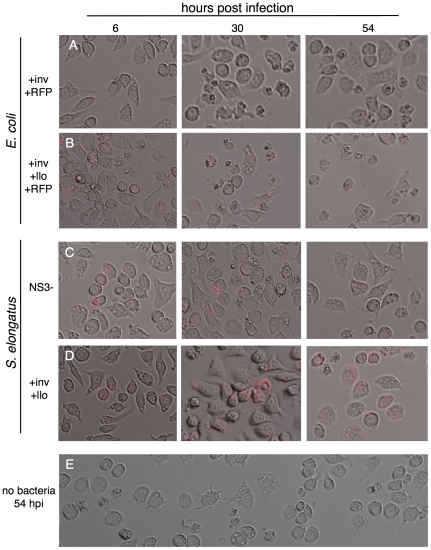
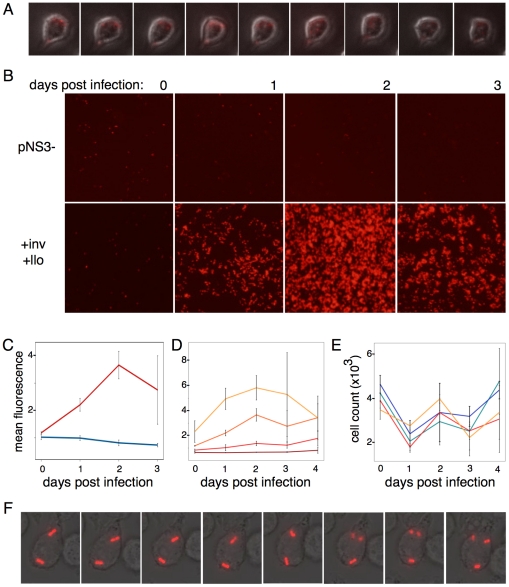
Results: We explored the possibility of using the photosynthetic bacterium Synechococcus elongatus PCC 7942 as a platform for studying evolutionary dynamics and for designing two-species synthetic biological systems. We observed that the cyanobacteria were relatively harmless to eukaryotic host cells compared to Escherichia coli when injected into the embryos of zebrafish, Danio rerio, or taken up by mammalian macrophages. In addition, when engineered with invasin from Yersinia pestis and listeriolysin O from Listeria monocytogenes, S. elongatus was able to invade cultured mammalian cells and divide inside macrophages.
Conclusion: Our results show that it is possible to engineer photosynthetic bacteria to invade the cytoplasm of mammalian cells for further engineering and applications in synthetic biology. Engineered invasive but non-pathogenic or immunogenic photosynthetic bacteria have great potential as synthetic biological devices.
Conflict of interest statement
Figures
References
-
- Kleine T, Maier UG, Leister D. DNA Transfer from Organelles to the Nucleus: The Idiosyncratic Genetics of Endosymbiosis. Annu Rev Plant Biol. 2009;60:115–138. - PubMed
-
- Pelz O, Tesar M, Wittich RM, Moore ER, Timmis KN, et al. Towards elucidation of microbial community metabolic pathways: unravelling the network of carbon sharing in a pollutant-degrading bacterial consortium by immunocapture and isotopic ratio mass spectrometry. Environ Microbiol. 1999;1:167–174. - PubMed
-
- Gray M, Burger G, Lang B. Mitochondrial evolution. Science. 1999;283:1476. - PubMed
-
- Douglas A. Nutritional interactions in insect-microbial symbioses: aphids and their symbiotic bacteria Buchnera. Annual Review of Entomology. 1998;43:17–37. - PubMed
Publication types
MeSH terms
Substances
Grants and funding
LinkOut - more resources
Full Text Sources
Other Literature Sources
Molecular Biology Databases
