. 2011 Apr 13;6(4):e18445.
doi: 10.1371/journal.pone.0018445.

RNA captor: a tool for RNA characterization

Affiliations

RNA captor: a tool for RNA characterization

Christian Clepet. PLoS One. .

Abstract

Background: In the genome era, characterizing the structure and the function of RNA molecules remains a major challenge. Alternative transcripts and non-protein-coding genes are poorly recognized by the current genome-annotation algorithms and efficient tools are needed to isolate the less-abundant or stable RNAs.

Results: A universal RNA-tagging method using the T4 RNA ligase 2 and special adapters is reported. Based on this system, protocols for RACE PCR and full-length cDNA library construction have been developed. The RNA tagging conditions were thoroughly optimized and compared to previous methods by using a biochemical oligonucleotide tagging assay and RACE PCRs on a range of transcripts. In addition, two large-scale full-length cDNA inventories relying on this method are presented.

Conclusion: The RNA Captor is a straightforward and accessible protocol. The sensitivity of this approach was shown to be higher compared to previous methods, and applicable on messenger RNAs, non-protein-coding RNAs, transcription-start sites and microRNA-directed cleavage sites of transcripts. This strategy could also be used to study other classes of RNA and in deep sequencing experiments.


Conflict of interest statement

Competing Interests: The author was granted a patent on this RNA-tagging method.

Figures

Figure 1
Figure 1. The RNA Captor protocol workflow.
Production of cDNAs from capped (A) or uncapped (B) RNAs. (A) Uncapped nucleic acids are inactivated by alkaline phosphatase and the transcripts are decapped by tobacco acid pyrophosphatase. (B) Rnl2 is used to add an oligoribonucleotide to the RNA 5′-phosphate by means of a 5′-adapter generating double-stranded structure. The S adapter upper fragment bears a Sfi1 site and a ligase-acceptor site. The N3 lower strand has a 5′-random-sticky end to pair with RNA 5′-ends and a 3′-amine to block unwanted ligations. The cDNAs can be reverse transcribed with oligo-dT (SfidTr) or random primers and used for RACE PCRs, full-length cDNA library construction or deep sequencing. P: 5′mono-phosphate. PP: 5′di- or tri-phosphate.
Figure 2
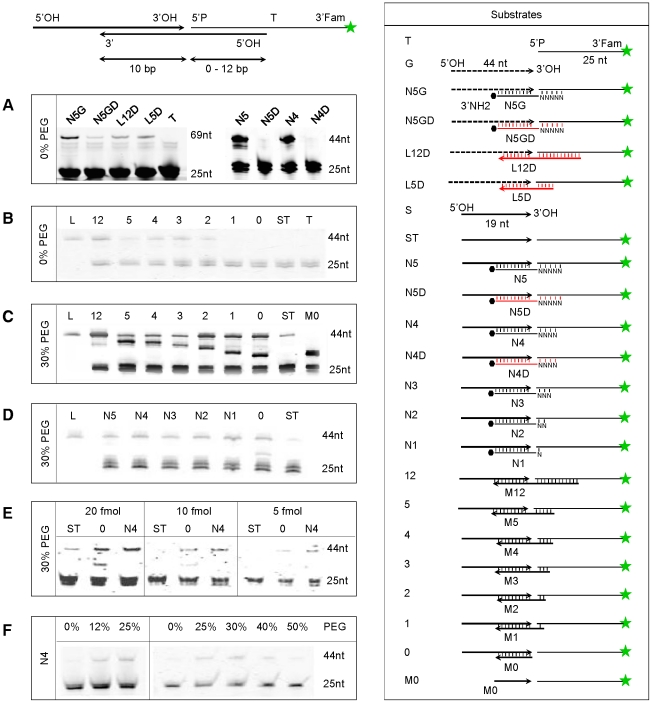
Figure 2. Rnl2 activity on a range of substrates and buffers.
Oligonucleotide tagging assays were performed with Rnl2, in various PEG concentrations and the substrates shown on the right panel: the 5′P of the Fam-labelled T oligonucleotide is ligated to the 3′OH of S or G, producing a larger fragment, revealed by urea PAGE and fluorimager scanning. RNA and the mixed RNA-DNA (T) oligonucleotides are shown in black, DNA in red. L: 44 nt RNA-DNA sequence identical to the S-T ligation product. •: 3′ NH2 group. A) Rnl2 ligation is best on RNA (N5G, N5 and N4) vs DNA-lower-strand substrates. B) In 0% PEG, Rnl2 is active on substrates bearing a template strand as short as 12, 5, 4, 3, or 2 nt complementary to T. C) In 30% PEG, Rnl2 is also active with the shorter M1 (lane 1) and M0 (lane 0) lower strands and the non-templated ST substrate. D) Similar results are observed with random-sequence sticky ends. In (C) the ladder of extra bands between 25 and 44 nt corresponds to single-strand ligations between M and T, as confirmed in lane M0; both M12-T (47 nt) and S-T (44-nt) ligation products are not completely resolved on this gel; no such “extra-bands” are observed in (D), due to the blocked 3′NH2 of the N5-N1 oligonucleotides. E) 5, 10 and 20 T-equivalent fmol of ligation products show best rate for the (N4) templated ligation. F) 30% PEG ligation buffer produces best tagging efficiency.
Figure 3
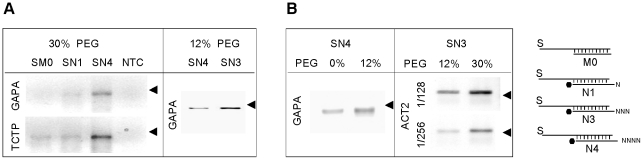
Figure 3. RACE PCR based on various Rnl2-tagging conditions.
Total RNAs were ligated to the adapters and in the PEG concentrations shown on top of the gel. Semi-quantitative RACE PCRs were performed on TCTP, GAPA or ACT2 transcripts, and analysed on ethydium-bromide stained 4%-agarose gels. Two cDNA dilutions were used for the ACT2 RACE PCR. The bands obtained with the SN3 and SN4 adapters are consistent with the expected RACE products, SN1 and SM0 produced very weak or non-detectable signals. NTC: No template control. Relative cDNA concentration as deduced from QRT-PCR with (ACT2.190 U, ACT2.256L): 1rst panel 1.06 (SM0), 1.44 (SN1), 1 (SN4); 2nd panel 1.33 (SN4), 1 (SN3); 3rd panel 1.08 (PEG 0%) 1 (PEG 12%); 4rth panel 1 (PEG 12%) 1.04 (PEG 30%). ▸ 200 bp. The SN3-adapter and 30% PEG ligation buffer produces best RACE PCR efficiency.
Figure 4
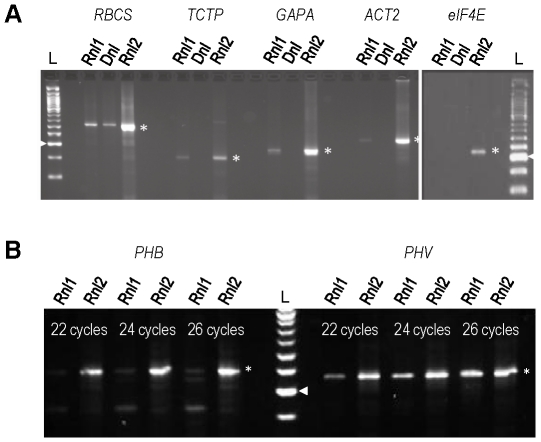
Figure 4. 5′ RACE PCR based on RNA tagging by Rnl2, Dnl and Rnl1, towards (A) mRNA cap sites and (B) microRNA-directed cleavage sites.
The adapters were ligated (A) on dephosphorylated/decapped RNAs or (B) untreated RNAs, with the method indicated on each lane. The RACE PCR were performed under semi-quantitative conditions (A) on the less and less abundant RBCS, TCTP, GAPA, ACT2, eIF4E transcripts or (B) with 22–26 nested-PCR cycles on the PHB and PHV cleaved RNAs. Relative cDNA concentrations as deduced from QRT-PCR based on ACT2 internal primers (A) 1.58 (Rnl1), 1.04 (Dnl), 1.00 (Rnl2); (B) 1.10 (Rnl1), 1.00 (Rnl2). L: 50 bp ladder. ▸: 200 bp band. *: Bands consistent with the expected major RACE products.
Figure 5
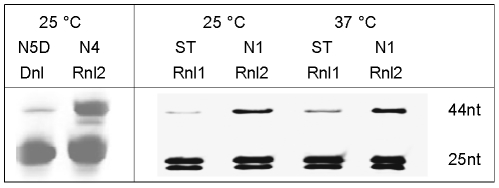
Figure 5. Comparison of Rnl2, Dnl and Rnl1.
Oligonucleotide tagging assays were carried out with the ligase, substrate and temperature shown on each lane, in 30% (Dnl and Rnl2) or 25% (Rnl1) PEG ligation buffer. The substrates are described in figure 2. Rnl2 outperforms Dnl and Rnl1 for adding an adapter on the 5′ end of RNAs.

References

    1. Carninci P. RNA dust: where are the genes? DNA Res. 2010;17:51–59. - PMC - PubMed
    1. German MA, Pillay M, Jeong DH, Hetawal A, Luo S, et al. Global identification of microRNA-target RNA pairs by parallel analysis of RNA ends. Nat Biotechnol. 2008;26:941–946. - PubMed
    1. Ni T, Corcoran DL, Rach EA, Song S, Spana EP, et al. A paired-end sequencing strategy to map the complex landscape of transcription initiation. Nat Methods. 2010;7:521–527. - PMC - PubMed
    1. Edery I, Chu LL, Sonenberg N, Pelletier J. An efficient strategy to isolate full-length cDNAs based on an mRNA cap retention procedure (CAPture). Mol Cell Biol. 1995;15:3363–3371. - PMC - PubMed
    1. Carninci P, Kvam C, Kitamura A, Ohsumi T, Okazaki Y, et al. High-efficiency full-length cDNA cloning by biotinylated CAP trapper. Genomics. 1996;37:327–336. - PubMed

Publication types

MeSH terms