Thinking and drinking: alcohol-related cognitions across stages of adolescent alcohol involvement
- PMID: 21534645
- PMCID: PMC3372460
- DOI: 10.1037/a0023302
Thinking and drinking: alcohol-related cognitions across stages of adolescent alcohol involvement
Abstract
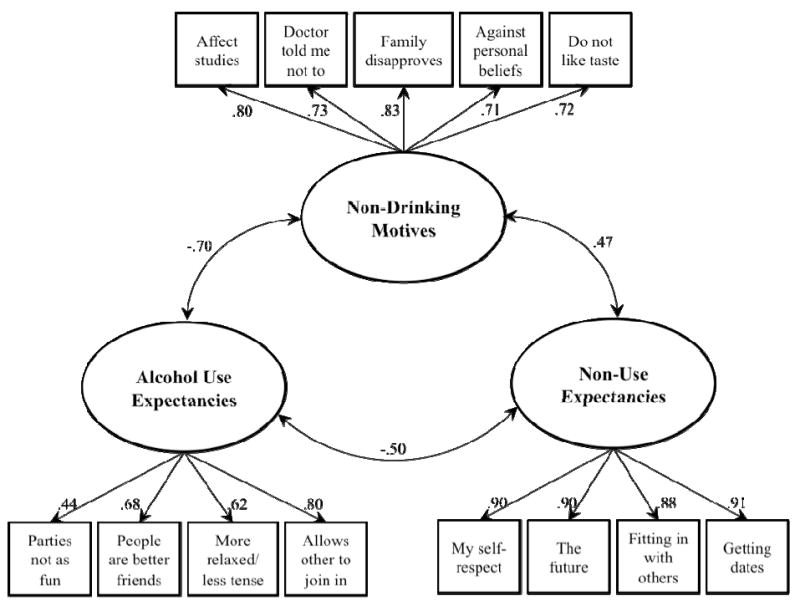
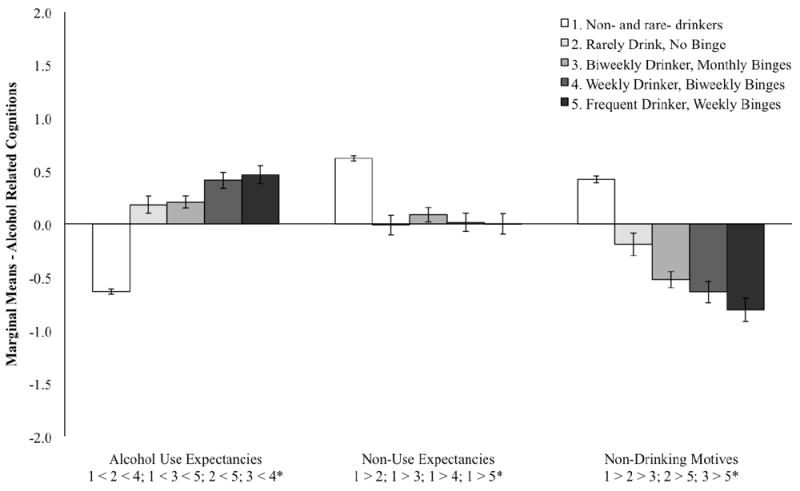
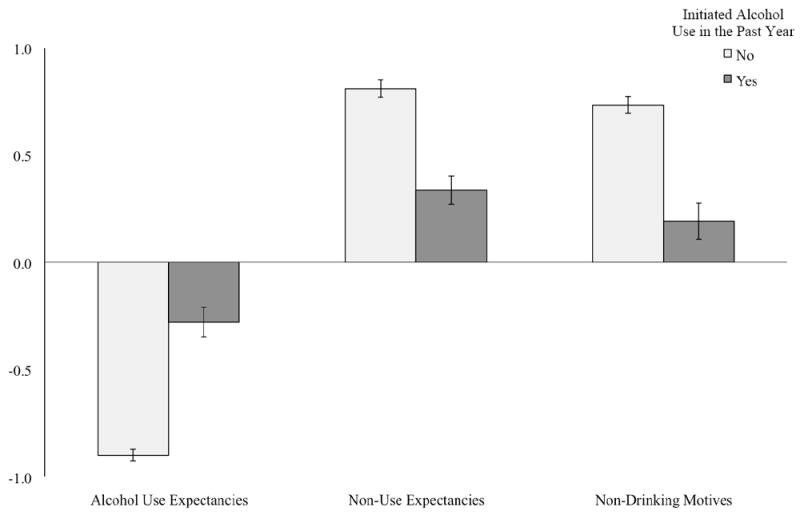
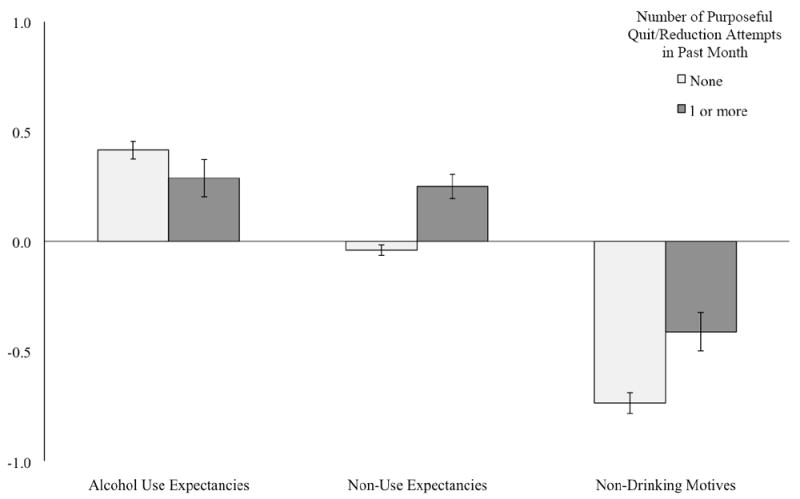
Alcohol-related cognitions, particularly expectancies for drinking and nondrinking and motives for nondrinking, are involved in the initiation, maintenance, and cessation of alcohol use and are hypothesized to play key roles in adolescent decision making. This study explored (a) the relationships between alcohol use expectancies, nondrinking expectancies, and nondrinking motives; (b) the roles of these cognitions across hypothesized developmental stages of adolescent alcohol use; and (c) the relationships between these cognitions and recent or intended future changes in drinking behavior in a cross-sectional sample. Surveys assessing alcohol use behaviors and attitudes were administered to 1,648 high school students. Heavier drinkers reported more positive alcohol use expectancies and fewer nondrinking motives than did lighter drinkers or nondrinkers; however, nondrinking expectancies only differed between nondrinkers and rare drinkers and all subsequent drinking classes. Alcohol use expectancies, nondrinking expectancies, and nondrinking motives differentiated students who recently initiated alcohol from those who had not, while nondrinking expectancies and nondrinking motives differentiated binge-drinking students who had made recent efforts to reduce/stop their drinking from those who had not. Intentions to initiate or reduce drinking in the coming month were also associated with these alcohol-related cognitions. Drinking and nondrinking expectancies and motives for not drinking may play critical roles in decisions to alter alcohol-use behavior during adolescence. Future exploration of temporal relationships between changes in alcohol-related cognitions and behavioral decision making will be useful in the refinement of effective prevention and intervention strategies.
(c) 2011 APA, all rights reserved.
Figures
References
-
- Aas HN, Leigh BC, Anderssen N, Jakobsen R. Two-year longitudinal study of alcohol expectancies and drinking among Norwegian adolescents. Addiction. 1998;93(3):373–384. - PubMed
-
- Anderson KG, Grunwald I, Bekman N, Brown SA, Grant A. Psychometric evaluation of a short form of motives not to drink in adolescence. Manuscript submitted for publication 2010
-
- Anderson KG, Parent SJ. Adolescent decision-making about substance use: A video-based assessment. In: Galwye VN, editor. Progress in Educational Psychology Research. New York: Nova Publishers; 2007. pp. 3–21. Reprinted in (2008) Psychology of Decision-Making (P.M. Garrison, Ed.). New York: Nova Publishers.
-
- Bandura A. Social Foundations of Thought and Action. Englewood Cliffs, NJ: Prentice-Hall; 1986.