


Prior infection of pigs with a genotype 3 swine hepatitis E virus (HEV) protects against subsequent challenges with homologous and heterologous genotypes 3 and 4 human HEV
- PMID: 21536085
- PMCID: PMC3106128
- DOI: 10.1016/j.virusres.2011.04.010
Prior infection of pigs with a genotype 3 swine hepatitis E virus (HEV) protects against subsequent challenges with homologous and heterologous genotypes 3 and 4 human HEV
Abstract
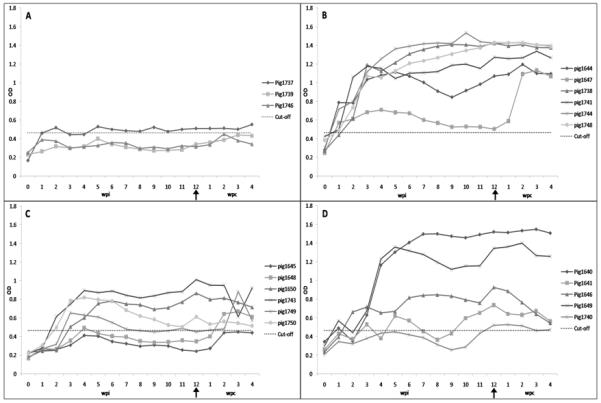
Hepatitis E virus (HEV) is an important human pathogen. At least four recognized and two putative genotypes of mammalian HEV have been reported: genotypes 1 and 2 are restricted to humans whereas genotypes 3 and 4 are zoonotic. The current experimental vaccines are all based on a single strain of HEV, even though multiple genotypes of HEV are co-circulating in some countries and thus an individual may be exposed to more than one genotype. Genotypes 3 and 4 swine HEV is widespread in pigs and known to infect humans. Therefore, it is important to know if prior infection with a genotype 3 swine HEV will confer protective immunity against subsequent exposure to genotypes 3 and 4 human and swine HEV. In this study, specific-pathogen-free pigs were divided into 4 groups of 6 each. Pigs in the three treatment groups were each inoculated with a genotype 3 swine HEV, and 12 weeks later, challenged with the same genotype 3 swine HEV, a genotype 3 human HEV, and a genotype 4 human HEV, respectively. The control group was inoculated and challenged with PBS buffer. Weekly sera from all pigs were tested for HEV RNA and IgG anti-HEV, and weekly fecal samples were also tested for HEV RNA. The pigs inoculated with swine HEV became infected as evidenced by fecal virus shedding and viremia, and the majority of pigs also developed IgG anti-HEV prior to challenge at 12 weeks post-inoculation. After challenge, viremia was not detected and only two pigs challenged with swine HEV had 1-week fecal virus shedding, suggesting that prior infection with a genotype 3 swine HEV prevented pigs from developing viremia and fecal virus shedding after challenges with homologous and heterologous genotypes 3 and 4 HEV. The results from this study have important implications for future development of an effective HEV vaccine.
Copyright © 2011 Elsevier B.V. All rights reserved.
Figures
References
-
- Aikawa T, Kojima M, Takahashi M, Nishizawa T, Okamoto H. Identification of indigenous hepatitis E virus from a Japanese patient who contracted sporadic acute hepatitis in 1982. J. Infect. Dis. 2002;18(10):1535–1536. - PubMed
-
- Arankalle VA, Chobe LP, Chadha MS. Type-IV Indian swine HEV infects rhesus monkeys. J. Viral. Hepat. 2006;13(11):742–745. - PubMed
-
- Arankalle VA, Lole KS, Deshmukh TM, Srivastava S, Shaligram US. Challenge studies in Rhesus monkeys immunized with candidate hepatitis E vaccines: DNA, DNA-prime-protein-boost and DNA-protein encapsulated in liposomes. Vaccine. 2009;27(7):1032–1039. - PubMed
-
- Bhatia V, Singhal A, Panda SK, Acharya SK. A 20-year single-center experience with acute liver failure during pregnancy: is the prognosis really worse? Hepatology. 2008;48(5):1577–1585. - PubMed
-
- Bilic I, Jaskulska B, Basic A, Morrow CJ, Hess M. Sequence analysis and comparison of avian hepatitis E viruses from Australia and Europe indicate the existence of different genotypes. J. Gen. Virol. 2009;90(Pt 4):863–873. - PubMed
Publication types
MeSH terms
Substances
Grants and funding
LinkOut - more resources
Full Text Sources
