


Spindle poisons and cell fate: a tale of two pathways
- PMID: 21540474
- PMCID: PMC3086919
- DOI: 10.1124/mi.11.2.12
Spindle poisons and cell fate: a tale of two pathways
Abstract
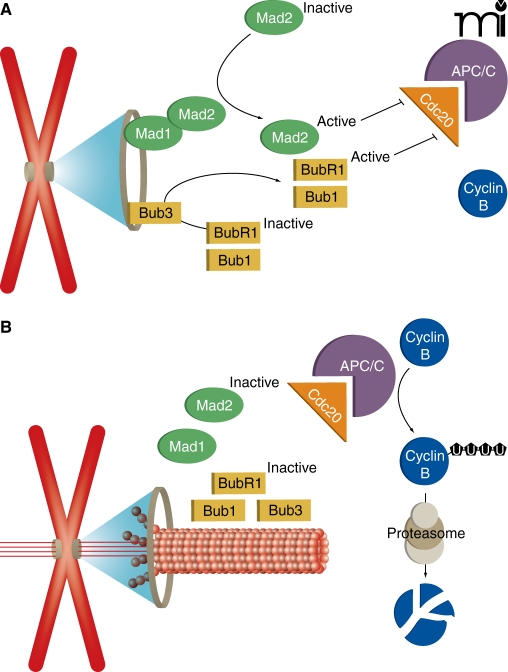
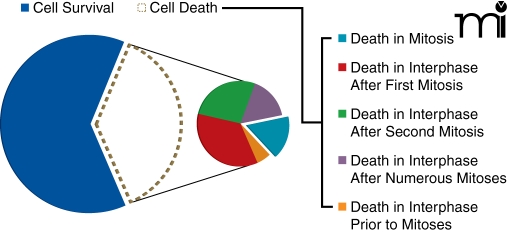
Spindle poisons, such as paclitaxel and vinblastine, exert their potent anti-neoplastic effects through activation of the spindle assembly checkpoint (SAC), thereby arresting cells in mitosis. Unfortunately, only certain cancers are susceptible to these drugs, and many patients fail to respond to treatment. We review the pathways that are triggered by spindle poisons and highlight recent studies that describe the great variability of tumor cells in responding to these drugs. We also describe the recent identification of an apoptotic pathway that is activated by mitotic arrest in response to spindle poisons. Emerging from these studies is not only a greater understanding of how these classic antimitotic agents bring about cell death, but also a wealth of potential new targets of anticancer therapeutics.
Figures


References
-
- Wood KW, Cornwell WD, Jackson JR. (2001) Past and future of the mitotic spindle as an oncology target. Curr Opin Pharmacol 1:370–377 - PubMed
-
- Pellegrini F, Budman DR. (2005) Review: tubulin function, action of antitubulin drugs, and new drug development. Cancer Invest 23:264–273 - PubMed
-
- Hadfield JA, Ducki S, Hirst N, McGown AT. (2003) Tubulin and microtubules as targets for anticancer drugs. Prog Cell Cycle Res 5:309–325 - PubMed
-
- Montero A, Fossella F, Hortobagyi G, Valero V. (2005) Docetaxel for treatment of solid tumours: a systematic review of clinical data. Lancet Oncol 6:229–239 - PubMed
-
- Duflos A, Kruczynski A, Barret JM. (2002) Novel aspects of natural and modified vinca alkaloids. Curr Med Chem Anticancer Agents 2:55–70 - PubMed
Publication types
MeSH terms
Substances
Grants and funding
LinkOut - more resources
Full Text Sources
Other Literature Sources