


Discovery of the strong antioxidant selenoneine in tuna and selenium redox metabolism
- PMID: 21540999
- PMCID: PMC3083957
- DOI: 10.4331/wjbc.v1.i5.144
Discovery of the strong antioxidant selenoneine in tuna and selenium redox metabolism
Abstract
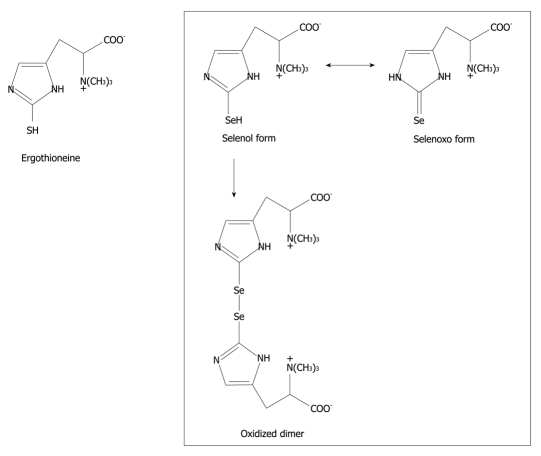
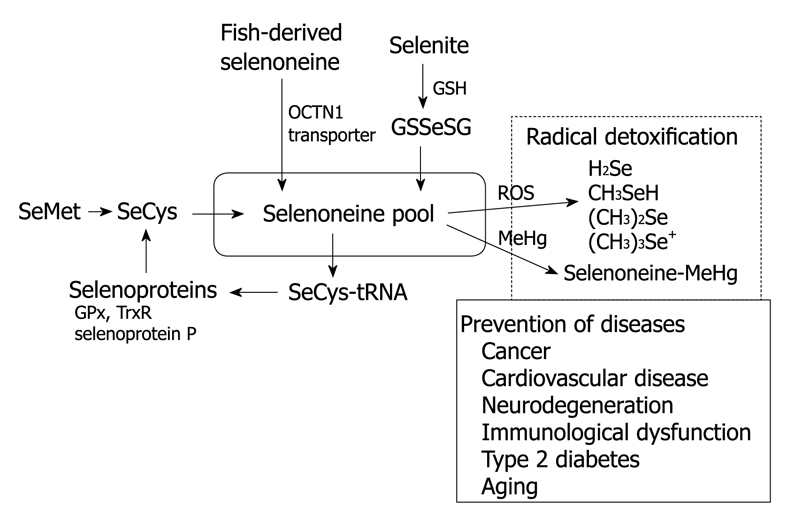
A novel selenium-containing compound, selenoneine, has been isolated as the major form of organic selenium in the blood and tissues of tuna. Selenoneine harbors a selenium atom in the imidazole ring, 2-selenyl-N(α), N(α), N(α)-trimethyl-L-histidine, and is a selenium analog of ergothioneine. This selenium compound has strong antioxidant capacity and binds to heme proteins, such as hemoglobin and myoglobin, to protect them from iron auto-oxidation, and it reacts with radicals and methylmercury (MeHg). The organic cations/carnitine transporter OCTN1 transports selenoneine and MeHg, regulates Se-enhanced antioxidant activity, and decreases MeHg toxicity. Thus, the dietary intake of selenoneine, by consuming fish, might decrease the formation of reactive oxygen radicals that could oxidize nucleotides in DNA, and thereby inhibit carcinogenesis, chronic diseases, and aging.
Keywords: Antioxidant; Ergothioneine; Fish; Glutathione peroxidase; Methylmercury; Organic cations/carnitine transporter OCTN1; Selenium-containing compound; Tuna.
Figures
References
-
- Himeno S, Imura N. New aspects of physiological and pharmacological roles of selenium. J Health Sci. 2000;46:1–6.
-
- Rayman MP. The importance of selenium to human health. Lancet. 2000;356:233–241. - PubMed
-
- Gerald F Jr, Combs SB. The Role of Selenium in Nutrition. New York: Academic Press; 1986.
-
- Brigelius-Flohé R. Tissue-specific functions of individual glutathione peroxidases. Free Radic Biol Med. 1999;27:951–965. - PubMed
LinkOut - more resources
Full Text Sources
Other Literature Sources
