


A classification study of respiratory Syncytial Virus (RSV) inhibitors by variable selection with random forest
- PMID: 21541057
- PMCID: PMC3083704
- DOI: 10.3390/ijms12021259
A classification study of respiratory Syncytial Virus (RSV) inhibitors by variable selection with random forest
Abstract
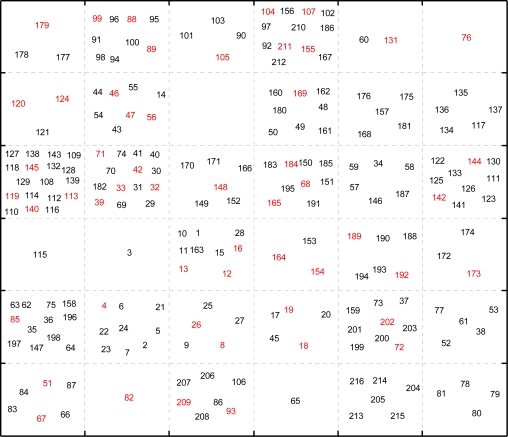
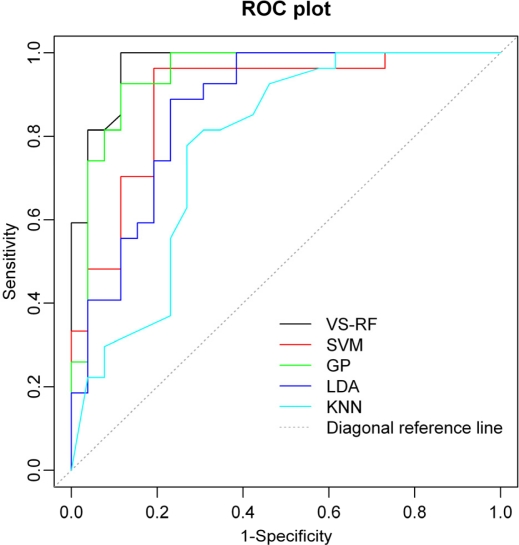
Experimental pEC(50)s for 216 selective respiratory syncytial virus (RSV) inhibitors are used to develop classification models as a potential screening tool for a large library of target compounds. Variable selection algorithm coupled with random forests (VS-RF) is used to extract the physicochemical features most relevant to the RSV inhibition. Based on the selected small set of descriptors, four other widely used approaches, i.e., support vector machine (SVM), Gaussian process (GP), linear discriminant analysis (LDA) and k nearest neighbors (kNN) routines are also employed and compared with the VS-RF method in terms of several of rigorous evaluation criteria. The obtained results indicate that the VS-RF model is a powerful tool for classification of RSV inhibitors, producing the highest overall accuracy of 94.34% for the external prediction set, which significantly outperforms the other four methods with the average accuracy of 80.66%. The proposed model with excellent prediction capacity from internal to external quality should be important for screening and optimization of potential RSV inhibitors prior to chemical synthesis in drug development.
Keywords: Mold2 descriptors; RSV; random forest; variable selection.
Figures
References
-
- Chanock R, Roizman B, Myers R. Recovery from infants with respiratory illness of a virus related to chimpanzee coryza agent (CCA) Am. J. Epidemiol. 1957;66:281–290. - PubMed
-
- Sigurs N, Gustafsson P, Bjarnason R, Lundberg F, Schmidt S, Sigurbergsson F, Kjellman B. Severe respiratory syncytial virus bronchiolitis in infancy and asthma and allergy at age 13. Am. J. Respir. Crit. Care Med. 2005;171:137–141. - PubMed
Publication types
MeSH terms
Substances
LinkOut - more resources
Full Text Sources
