


Observing behavior and atypically restricted stimulus control
- PMID: 21541173
- PMCID: PMC2972782
- DOI: 10.1901/jeab.2010.94-297
Observing behavior and atypically restricted stimulus control
Abstract
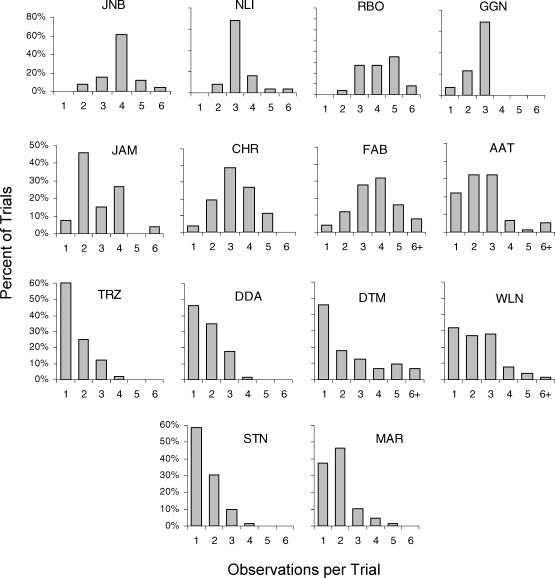
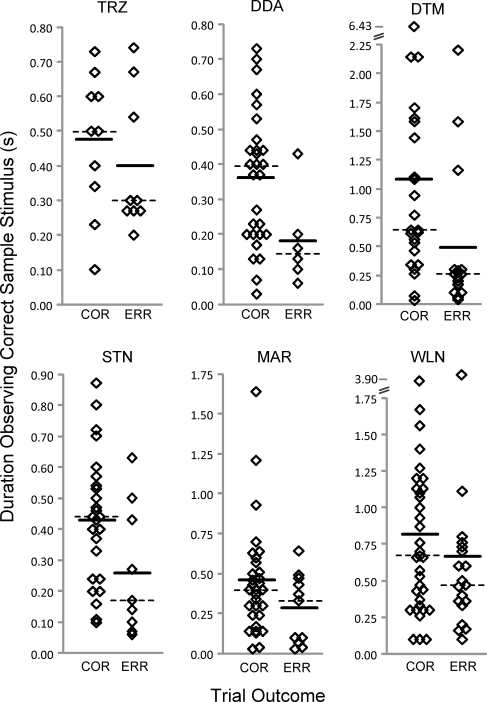
Restricted stimulus control refers to discrimination learning with atypical limitations in the range of controlling stimuli or stimulus features. In the study reported here, 4 normally capable individuals and 10 individuals with intellectual disabilities (ID) performed two-sample delayed matching to sample. Sample-stimulus observing was recorded with an eye-tracking apparatus. High accuracy scores indicated stimulus control by both sample stimuli for the 4 nondisabled participants and 4 participants with ID, and eye tracking data showed reliable observing of all stimuli. Intermediate accuracy scores indicated restricted stimulus control for the remaining 6 participants. Their eye-tracking data showed that errors were related to failures to observe sample stimuli and relatively brief observing durations. Five of these participants were then given interventions designed to improve observing behavior. For 4 participants, the interventions resulted initially in elimination of observing failures, increased observing durations, and increased accuracy. For 2 of these participants, contingencies sufficient to maintain adequate observing were not always sufficient to maintain high accuracy; subsequent procedure modifications restored it, however. For the 5th participant, initial improvements in observing were not accompanied by improved accuracy, an apparent instance of observing without attending; accuracy improved only after an additional intervention that imposed contingencies on observing behavior. Thus, interventions that control observing behavior seem necessary but may not always be sufficient for the remediation of restricted stimulus control.
Keywords: humans; matching to sample; observing behavior; restricted stimulus control; stimulus overselectivity; touchscreen.
Figures
References
-
- Allen G, Courchesne E. Differential effects of developmental cerebellar abnormality on cognitive and motor functions in the cerebellum: An fMRI study of autism. American Journal of Psychiatry. 2003;160:262–273. - PubMed
-
- Barthold C.H, Egel A.L. Stimulus overselectivity and generative language instruction for students with autism: An issue that needs to be revisited. Behavior Analyst Today. 2001;2:33–39.
-
- Belmonte M.K, Yurgelun-Todd D.A. Functional anatomy of impaired selective attention and compensatory processing in autism. Cognitive Brain Research. 2003;17:651–664. - PubMed
-
- Bickel W.K, Richmond G, Bell J, Brown K. A microanalysis of the controlling stimulus–response relations engendered during the assessment of stimulus overselectivity. The Psychological Record. 1986;36:225–238.
Publication types
MeSH terms
Grants and funding
LinkOut - more resources
Full Text Sources
