


Alcohol effects on simulated driving in frequent and infrequent binge drinkers
- PMID: 21542027
- PMCID: PMC3161131
- DOI: 10.1002/hup.1195
Alcohol effects on simulated driving in frequent and infrequent binge drinkers
Abstract
Objective: Compared with non‐bingers, binge drinkers are more likely to drive while intoxicated. The extent to which binge frequency impacts confidence in driving and subsequent driving impairment is unknown. This study compared the effects of an experimenter‐delivered alcohol binge on subjective impairment and simulated driving ability in female high‐frequency and low‐frequency bingers.
Methods: Female drinkers were assigned to high‐frequency (n = 30) or low‐frequency (n = 30) binge groups based on their Alcohol Use Questionnaire responses. At 30‐min intervals within a 2‐h period, participants received either a placebo drink (n = 15 per group) or a 0.2 g/kg dose of alcohol (n = 15 per group; cumulative dose 0.8 g/kg). Self‐reported impairment, driving confidence, and simulated driving were then measured.
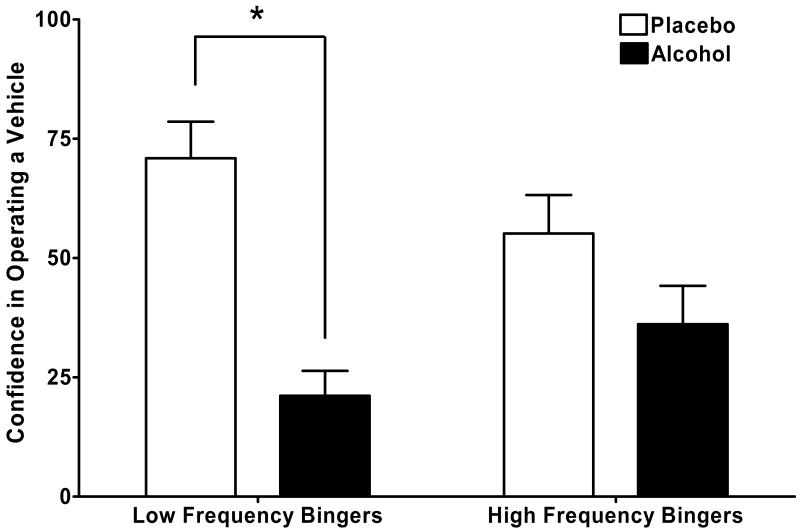
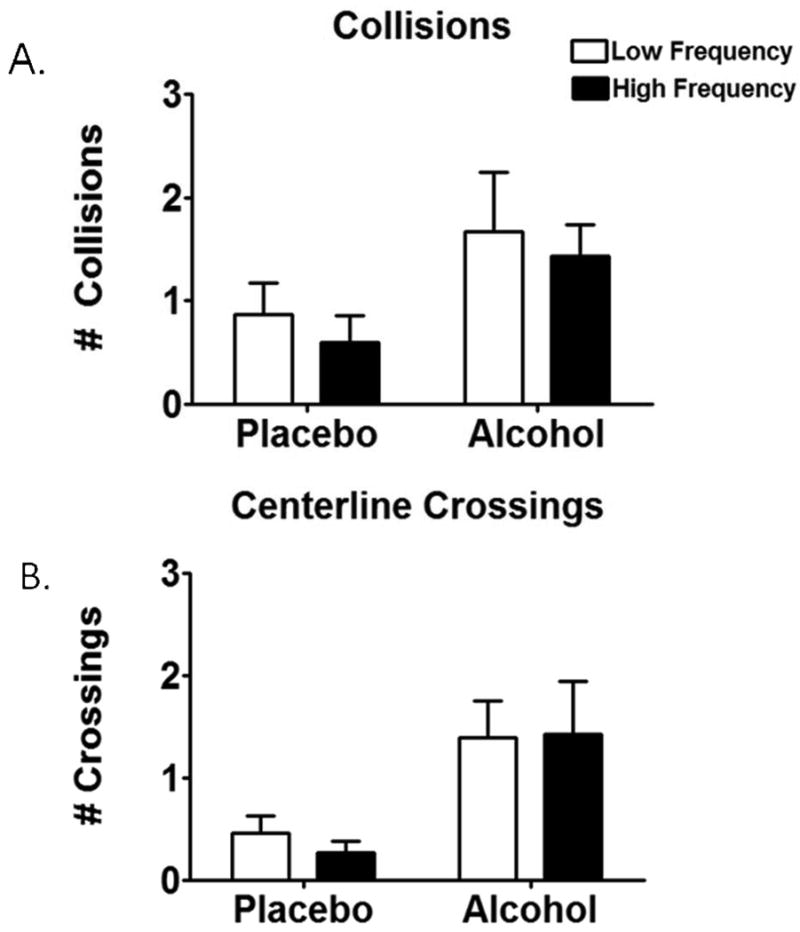
Results: Self‐reported confidence in driving was significantly lower after alcohol than after placebo in low‐frequency but not highfrequency bingers. Self‐reported impairment and collisions during simulated driving were significantly greater after alcohol than after placebo in both low‐frequency and high‐frequency bingers.
Conclusions: The impairing effects of a single alcohol binge on driving ability in women are not influenced by binge frequency. However, high binge frequency may be associated with a less cautious approach to post‐binge driving.
Figures
References
-
- Babor TF, Higgins-Biddle JC, Saunders JB, Monteiro MG. The Alcohol Use Disorders Identification Test (AUDIT) Manual. World Health Organization; Geneva: 2001.
-
- Beirness DJ. Self-estimates of blood alcohol concentration in drinking-driving context. Drug Alcohol Depend. 1987;19:79–90. - PubMed
-
- Burian SE, Liguori A, Robinson HJ. Effects of alcohol on risk-taking during simulated driving. Hum Psychopharmacol Clin Exp. 2002;17:141–150. - PubMed
-
- Chassin L, Pitts SC, Prost J. Binge drinking trajectories from adolescence to emerging adulthood in a high-risk sample: predictors and substance abuse outcomes. J Consult Clin Psychol. 2002;70:67–78. - PubMed
Publication types
MeSH terms
Substances
Grants and funding
LinkOut - more resources
Full Text Sources
