ACTN3 genotype, athletic status, and life course physical capability: meta-analysis of the published literature and findings from nine studies
- PMID: 21542061
- PMCID: PMC3174315
- DOI: 10.1002/humu.21526
ACTN3 genotype, athletic status, and life course physical capability: meta-analysis of the published literature and findings from nine studies
Abstract
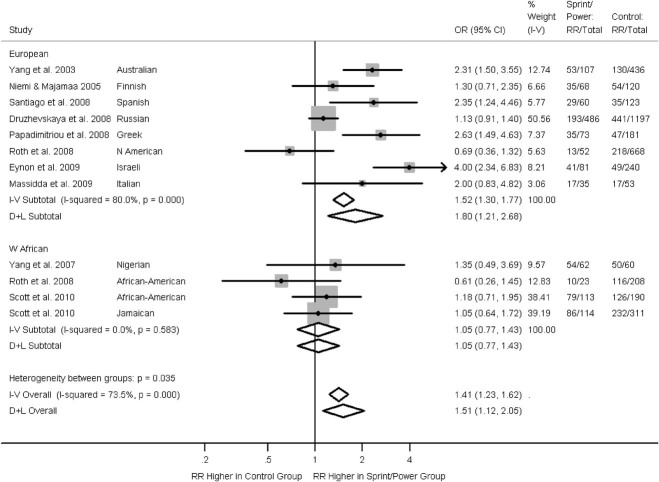
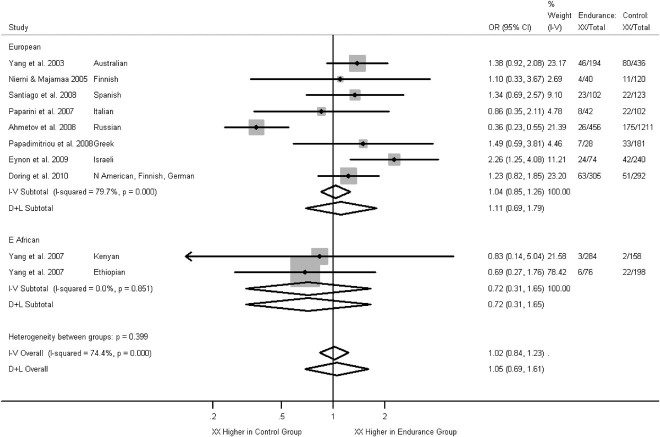
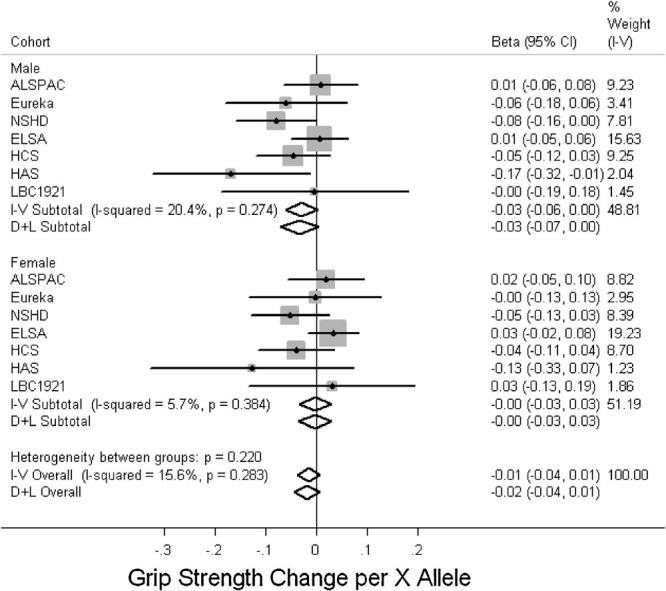
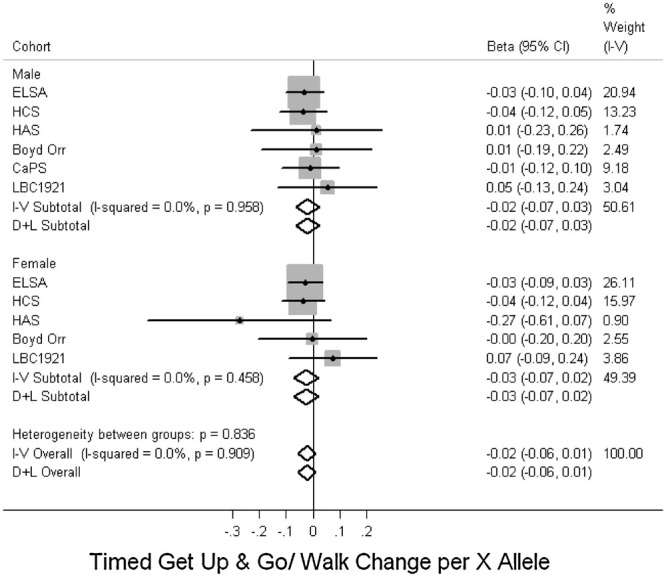
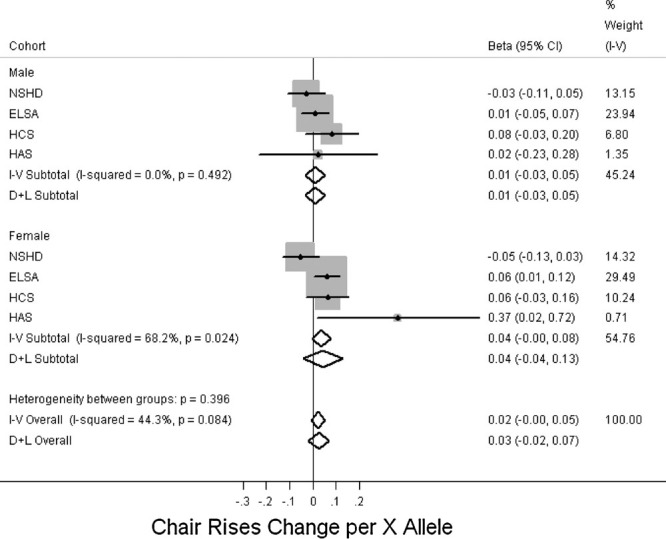
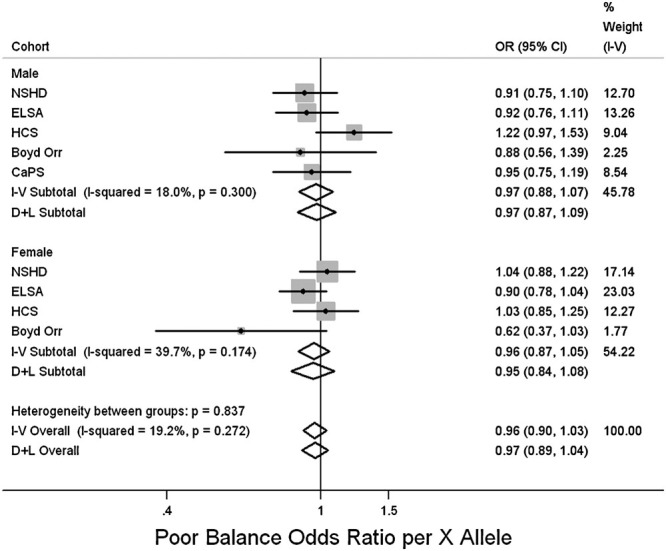
The ACTN3 R577X (rs1815739) genotype has been associated with athletic status and muscle phenotypes, although not consistently. Our objective was to conduct a meta-analysis of the published literature on athletic status and investigate its associations with physical capability in several new population-based studies. Relevant data were extracted from studies in the literature, comparing genotype frequencies between controls and sprint/power and endurance athletes. For life course physical capability, data were used from two studies of adolescents and seven studies in the Healthy Ageing across the Life Course (HALCyon) collaborative research program, involving individuals aged between 53 and 90+ years. We found evidence from the published literature to support the hypothesis that in Europeans the RR genotype is more common among sprint/power athletes compared with their controls. There is currently no evidence that the X allele is advantageous to endurance athleticism. We found no association between R577X and grip strength (P = 0.09, n = 7,672 in males; P = 0.90, n = 7,839 in females), standing balance, timed get up and go, or chair rises in our studies of physical capability. The ACTN3 R577X genotype is associated with sprint/power athletic status in Europeans, but does not appear to be associated with objective measures of physical capability in the general population.
© 2011 Wiley-Liss, Inc.
Figures
References
-
- Ahmetov II, Druzhevskaya AM, Astratenkova IV, Popov DV, Vinogradova OL, Rogozkin VA. The ACTN3 R577X polymorphism in Russian endurance athletes. Br J Sports Med. 2008;44:649–652. - PubMed
-
- Allen DG, Lamb GD, Westerblad H. Skeletal muscle fatigue: cellular mechanisms. Physiol Rev. 2008;88:287–332. - PubMed
-
- Arden NK, Spector TD. Genetic influences on muscle strength, lean body mass, and bone mineral density: a twin study. J Bone Miner Res. 1997;12:2076–2081. - PubMed
-
- Bray MS, Hagberg JM, Pérusse L, Rankinen T, Roth SM, Wolfarth B, Bouchard C. The human gene map for performance and health-related fitness phenotypes: the 2006–2007 update. Med Sci Sports Exerc. 2009;41:35–73. - PubMed
-
- Carmelli D, Kelly-Hayes M, Wolf PA, Swan GE, Jack LM, Reed T, Guralnik JM. The contribution of genetic influences to measures of lower-extremity function in older male twins. J Gerontol A Biol Sci Med Sci. 2000;55:B49–B53. - PubMed
Publication types
MeSH terms
Substances
Grants and funding
- 076467/WT_/Wellcome Trust/United Kingdom
- 74882/DH_/Department of Health/United Kingdom
- MC_UP_A620_1015/MRC_/Medical Research Council/United Kingdom
- G0600705/MRC_/Medical Research Council/United Kingdom
- MC_UP_A620_1014/MRC_/Medical Research Council/United Kingdom
- MC_U123092724/MRC_/Medical Research Council/United Kingdom
- ARC_/Arthritis Research UK/United Kingdom
- R01 AG017644/AG/NIA NIH HHS/United States
- R01 AG013196/AG/NIA NIH HHS/United States
- BHF_/British Heart Foundation/United Kingdom
- 17/D17566/MRC_/Medical Research Council/United Kingdom
- 092731/WT_/Wellcome Trust/United Kingdom
- AG1765506S1/AG/NIA NIH HHS/United States
- 15/SAG09977/BB_/Biotechnology and Biological Sciences Research Council/United Kingdom
- BB/F019394/1/BB_/Biotechnology and Biological Sciences Research Council/United Kingdom
- GR068468MA/WT_/Wellcome Trust/United Kingdom
LinkOut - more resources
Full Text Sources