


Energy-balance studies reveal associations between gut microbes, caloric load, and nutrient absorption in humans
- PMID: 21543530
- PMCID: PMC3127503
- DOI: 10.3945/ajcn.110.010132
Energy-balance studies reveal associations between gut microbes, caloric load, and nutrient absorption in humans
Abstract
Background: Studies in mice indicate that the gut microbiome influences both sides of the energy-balance equation by contributing to nutrient absorption and regulating host genes that affect adiposity. However, it remains uncertain as to what extent gut microbiota are an important regulator of nutrient absorption in humans.
Objective: With the use of a carefully monitored inpatient study cohort, we tested how gut bacterial community structure is affected by altering the nutrient load in lean and obese individuals and whether their microbiota are correlated with the efficiency of dietary energy harvest.
Design: We investigated dynamic changes of gut microbiota during diets that varied in caloric content (2400 compared with 3400 kcal/d) by pyrosequencing bacterial 16S ribosomal RNA (rRNA) genes present in the feces of 12 lean and 9 obese individuals and by measuring ingested and stool calories with the use of bomb calorimetry.
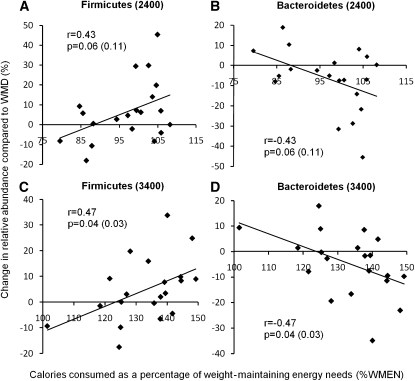
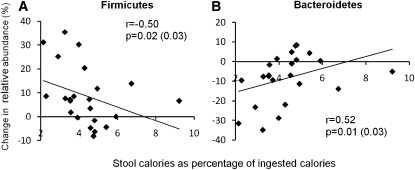
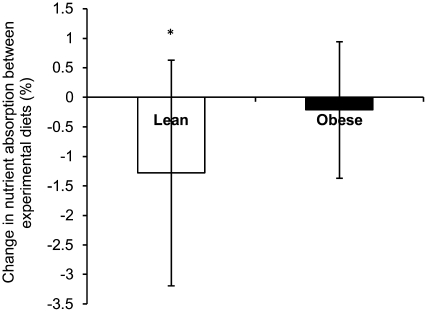
Results: The alteration of the nutrient load induced rapid changes in the gut microbiota. These changes were directly correlated with stool energy loss in lean individuals such that a 20% increase in Firmicutes and a corresponding decrease in Bacteroidetes were associated with an increased energy harvest of ≈150 kcal. A high degree of overfeeding in lean individuals was accompanied by a greater fractional decrease in stool energy loss.
Conclusions: These results show that the nutrient load is a key variable that can influence the gut (fecal) bacterial community structure over short time scales. Furthermore, the observed associations between gut microbes and nutrient absorption indicate a possible role of the human gut microbiota in the regulation of the nutrient harvest. This trial was registered at clinicaltrials.gov as NCT00414063.
Figures
Comment in
-
The hybrid science of diet, microbes, and metabolic health.Am J Clin Nutr. 2011 Jul;94(1):1-2. doi: 10.3945/ajcn.111.018473. Epub 2011 Jun 1. Am J Clin Nutr. 2011. PMID: 21633075 No abstract available.
-
Individual differences in apparent energy digestibility are larger than generally recognized.Am J Clin Nutr. 2011 Dec;94(6):1650-1. doi: 10.3945/ajcn.111.026476. Am J Clin Nutr. 2011. PMID: 22106417 No abstract available.
References
-
- Fontvieille AM, Dwyer J, Ravussin E. Resting metabolic rate and body composition of Pima Indian and Caucasian children. Int J Obes Relat Metab Disord 1992;16:535–42 - PubMed
-
- Huang KC, Kormas N, Steinbeck K, Loughnan G, Caterson ID. Resting metabolic rate in severely obese diabetic and nondiabetic subjects. Obes Res 2004;12:840–5 - PubMed
-
- Ravussin E. Energy metabolism in obesity. Studies in the Pima Indians. Diabetes Care 1993;16:232–8 - PubMed
-
- Schoeller DA. Balancing energy expenditure and body weight. Am J Clin Nutr 1998;68:956S–61S - PubMed
-
- Tataranni PA, Harper IT, Snitker S, et al. Body weight gain in free-living Pima Indians: effect of energy intake vs expenditure. Int J Obes Relat Metab Disord 2003;27:1578–83 - PubMed
Publication types
MeSH terms
Associated data
Grants and funding
LinkOut - more resources
Full Text Sources
Other Literature Sources
Medical
