


Magnetoencephalography reveals slowing of resting peak oscillatory frequency in children born very preterm
- PMID: 21544009
- PMCID: PMC3150785
- DOI: 10.1203/PDR.0b013e3182225a9e
Magnetoencephalography reveals slowing of resting peak oscillatory frequency in children born very preterm
Abstract
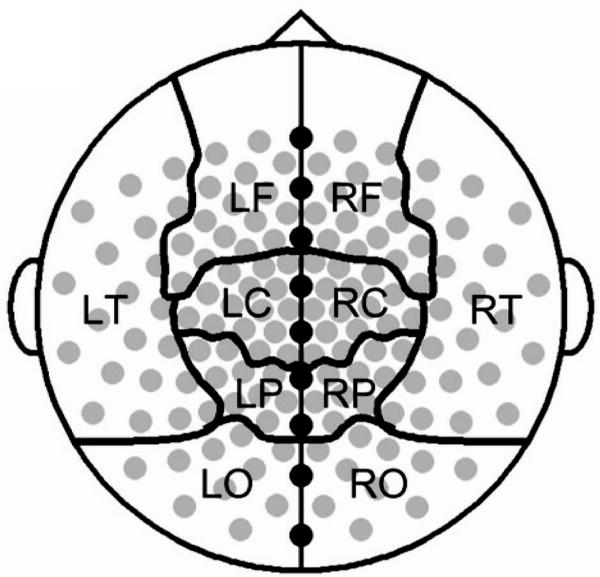
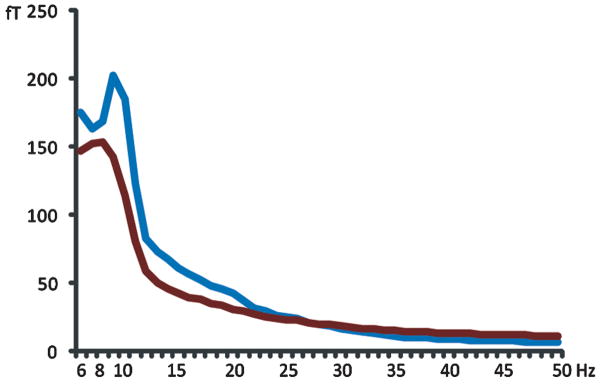
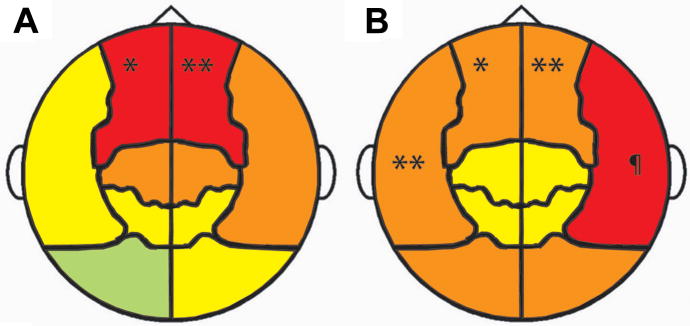
Resting cortical activity is characterized by a distinct spectral peak in the alpha frequency range. Slowing of this oscillatory peak toward the upper theta-band has been associated with a variety of neurological and neuropsychiatric conditions and has been attributed to altered thalamocortical dynamics. Children born very preterm exhibit altered development of thalamocortical systems. To test the hypothesis that peak oscillatory frequency is slowed in children born very preterm, we recorded resting magnetoencephalography (MEG) from school age children born very preterm (≤ 32 wk gestation) without major intellectual or neurological impairment and age-matched full-term controls. Very preterm children exhibit a slowing of peak frequency toward the theta-band over bilateral frontal cortex, together with reduced alpha-band power over bilateral frontal and temporal cortex, suggesting that mildly dysrhythmic thalamocortical interactions may contribute to altered spontaneous cortical activity in children born very preterm.
Figures
References
-
- Behrman RE, Butler AS Institute of Medicine (U.S.) Committee on Understanding Premature Birth and Assuring Healthy Outcomes. Preterm Birth: Causes, Consequences, and Prevention. National Academies Press; Washington DC: 2007. - PubMed
-
- Roberts G, Anderson PJ, De Luca C, Doyle LW Victorian Infant Collaborative Study Group. Changes in neurodevelopmental outcome at age eight in geographic cohorts of children born at 22-27 weeks' gestational age during the 1990s. Arch Dis Child Fetal Neonatal Ed. 2010;95:F90–F94. - PubMed
-
- Grunau R. Early pain in preterm infants. A model of long-term effects. Clin Perinatol. 2002;29:373–394. - PubMed
-
- Marlow N, Hennessy EM, Bracewell MA, Wolke D. Motor and executive function at 6 years of age after extremely preterm birth. Pediatrics. 2007;120:793–804. - PubMed
-
- Mulder H, Pichford NJ, Haggar MS, Marlow N. Development of executive function and attention in preterm children: a systematic review. Dev Neuropsychol. 2009;34:393–421. - PubMed
Publication types
MeSH terms
Grants and funding
LinkOut - more resources
Full Text Sources
