


Associations of edge-detected and manual-traced common carotid intima-media thickness measurements with Framingham risk factors: the multi-ethnic study of atherosclerosis
- PMID: 21546477
- PMCID: PMC3169166
- DOI: 10.1161/STROKEAHA.110.603449
Associations of edge-detected and manual-traced common carotid intima-media thickness measurements with Framingham risk factors: the multi-ethnic study of atherosclerosis
Abstract
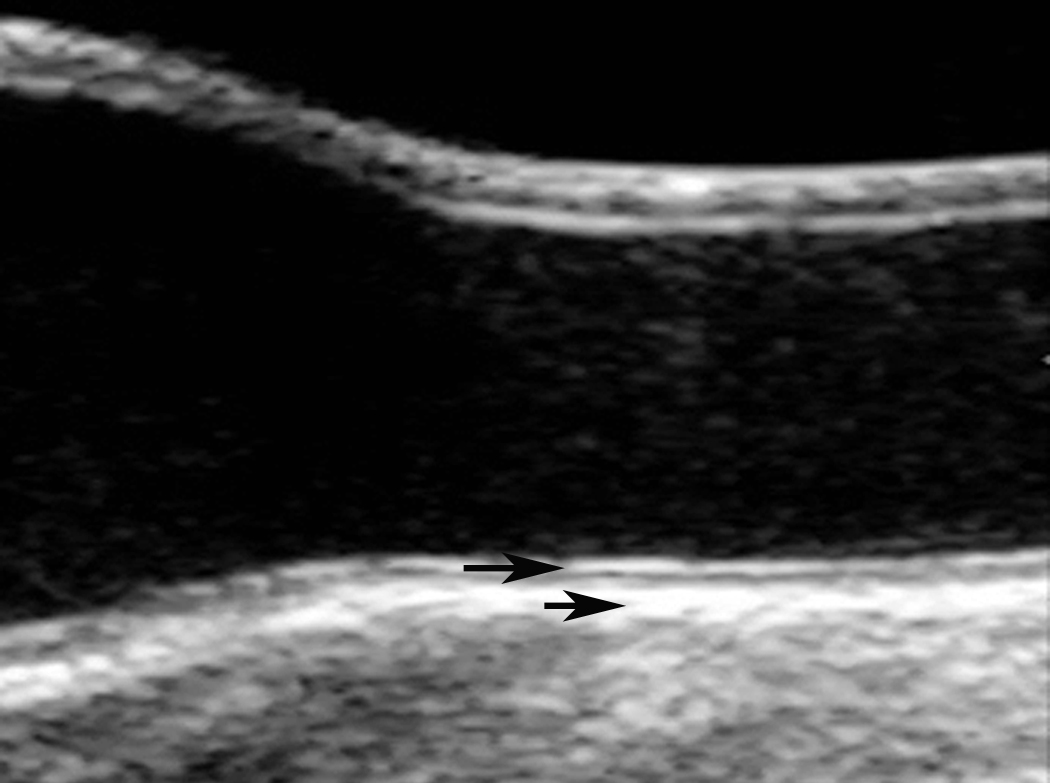
Background and purpose: Carotid intima-media thickness (IMT) is a marker of cardiovascular disease derived from ultrasound images of the carotid artery. In most outcome studies, human readers identify and trace the key IMT interfaces. We evaluate an alternate approach using automated edge detection.
Methods: We studied a subset of 5640 participants with an average age 61.7 years (48% men) of the Multi-Ethnic Study of Atherosclerosis composed of whites, Chinese, Hispanic, and blacks that are part of the Multi-Ethnic Study of Atherosclerosis IMT progression study. Manual tracing IMT (mt-IMT) and edge-detected IMT (ed-IMT) measurements of the far wall of the common carotid artery served as outcome variables for multivariable linear regression models using Framingham cardiovascular risk factors and ethnicity as independent predictors.
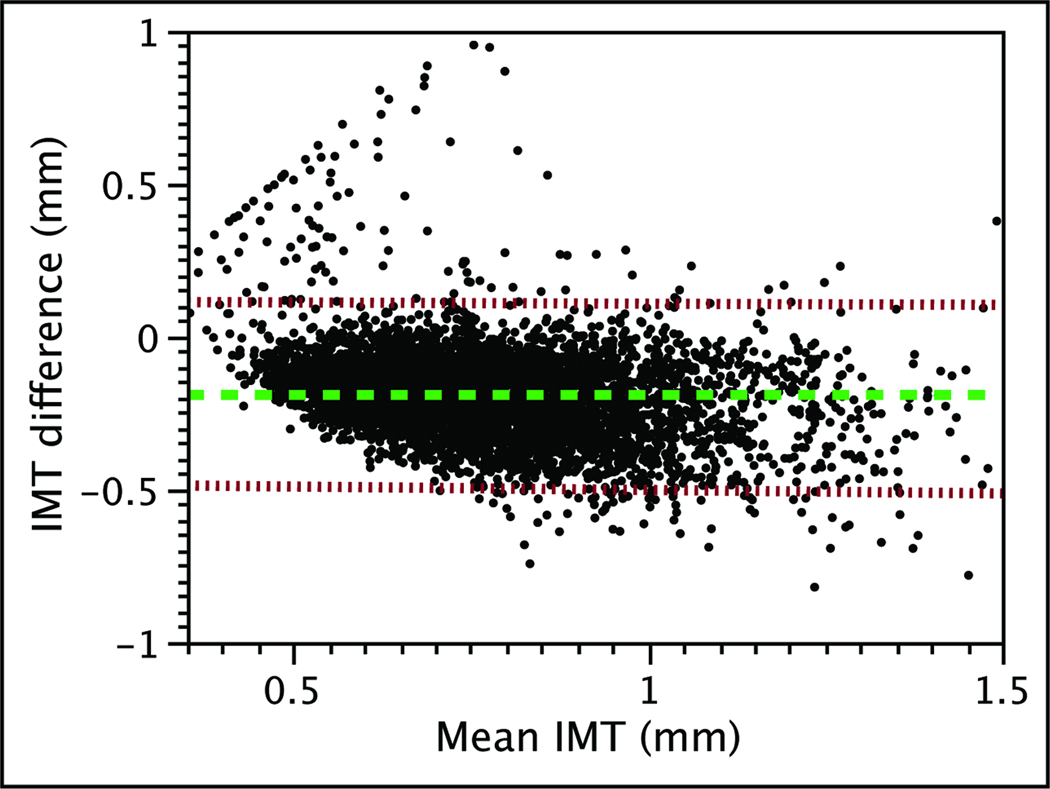
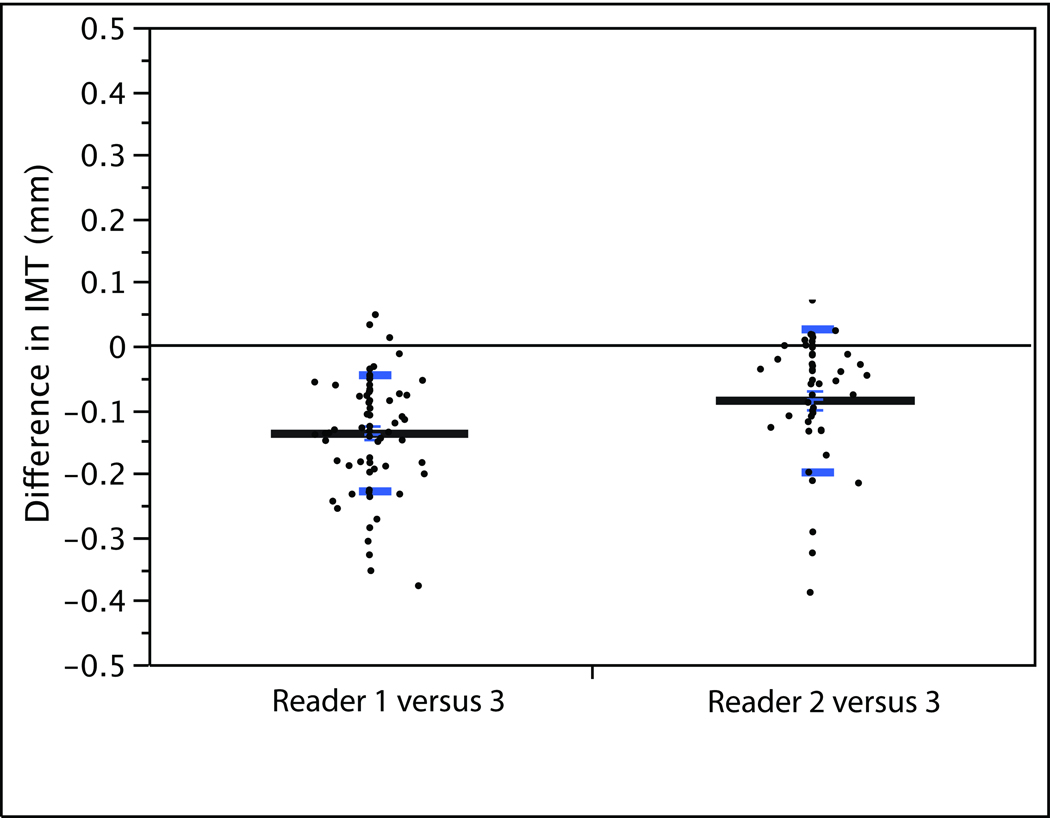
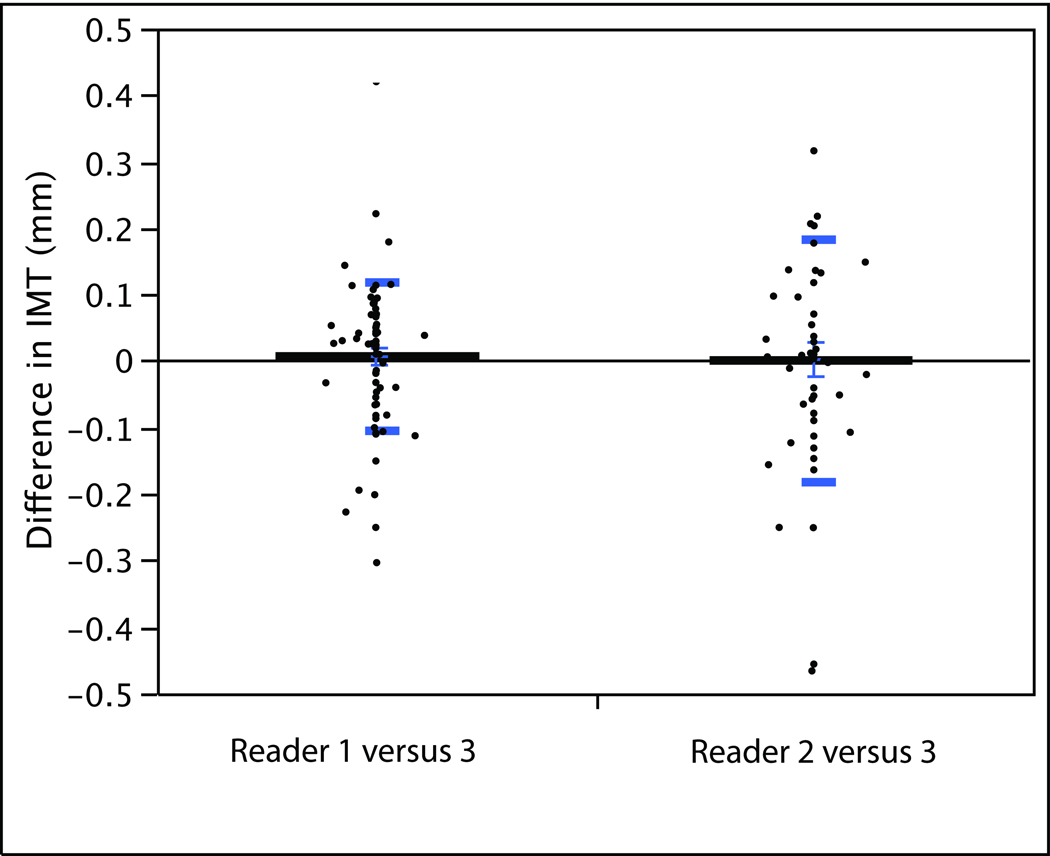
Results: Measurements of mt-IMT were obtainable in 99.9% (5633/5640) and measurements of ed-IMT were obtainable in 98.9% (5579/5640) of individuals. Average ed-IMT was 0.19 mm larger than mt-IMT. Inter-reader systematic differences (bias) in IMT measurements were apparent for mt-IMT but not ed-IMT. Based on complete data for 5538 individuals, associations of IMT with risk factors were stronger (P<0.0001) for mt-IMT (model r2, 19.5%) than for ed-IMT (model r2, 18.5%).
Conclusions: We conclude that this edge-detection process generates IMT values equivalent to manually traced ones because it preserves key associations with cardiovascular risk factors. It also decreases inter-reader bias, potentially making it applicable for use in cardiovascular risk assessment.
Figures
References
-
- Bots ML, Hoes AW, Koudstaal PJ, Hofman A, Grobbee DE. Common carotid intima-media thickness and risk of stroke and myocardial infarction: the Rotterdam Study. Circulation. 1997;96:1432–1437. - PubMed
-
- Chambless LE, Heiss G, Folsom AR, Rosamond W, Szklo M, Sharrett AR, Clegg LX. Association of coronary heart disease incidence with carotid arterial wall thickness and major risk factors: the Atherosclerosis Risk in Communities (ARIC) Study, 1987–1993. American Journal of Epidemiology. 1997;146:483–494. - PubMed
-
- OLeary DH, Polak JF, Kronmal RA, Manolio TA, Burke GL, Wolfson SK., Jr Carotid-artery intima and media thickness as a risk factor for myocardial infarction and stroke in older adults. Cardiovascular Health Study Collaborative Research Group. New England Journal of Medicine. 1999;340:14–22. - PubMed
-
- Anonymous. Atherosclerosis Risk In Communities Manual 6B Ultrasound Assessment Version 1.0. ARIC Coordinating Center Chapel Hill NC. 1989:68. Version 1B.
-
- OLeary DH, Polak JF, Wolfson SK, Jr, Bond MG, Bommer W, Sheth S, Psaty BM, Sharrett AR, Manolio TA. Use of sonography to evaluate carotid atherosclerosis in the elderly. The Cardiovascular Health Study. CHS Collaborative Research Group. Stroke. 1991;22:1155–1163. - PubMed
Publication types
MeSH terms
Grants and funding
- N01-HC-95162/HC/NHLBI NIH HHS/United States
- N01-HC-95163/HC/NHLBI NIH HHS/United States
- N01-HC-95165/HC/NHLBI NIH HHS/United States
- N01 HC095159/HL/NHLBI NIH HHS/United States
- R01 HL081352/HL/NHLBI NIH HHS/United States
- N01-HC-95164/HC/NHLBI NIH HHS/United States
- N01-HC-95160/HC/NHLBI NIH HHS/United States
- N01-HC-95161/HC/NHLBI NIH HHS/United States
- N01 HC095165/HL/NHLBI NIH HHS/United States
- R01 HL069003/HL/NHLBI NIH HHS/United States
- N01-HC-95167/HC/NHLBI NIH HHS/United States
- N01-HC-95159/HC/NHLBI NIH HHS/United States
- N01 HC095167/HL/NHLBI NIH HHS/United States
LinkOut - more resources
Full Text Sources
Medical
Molecular Biology Databases
