


Low-Income Students and the Socioeconomic Composition of Public High Schools
- PMID: 21546987
- PMCID: PMC3086272
- DOI: 10.1177/000312240907400502
Low-Income Students and the Socioeconomic Composition of Public High Schools
Abstract
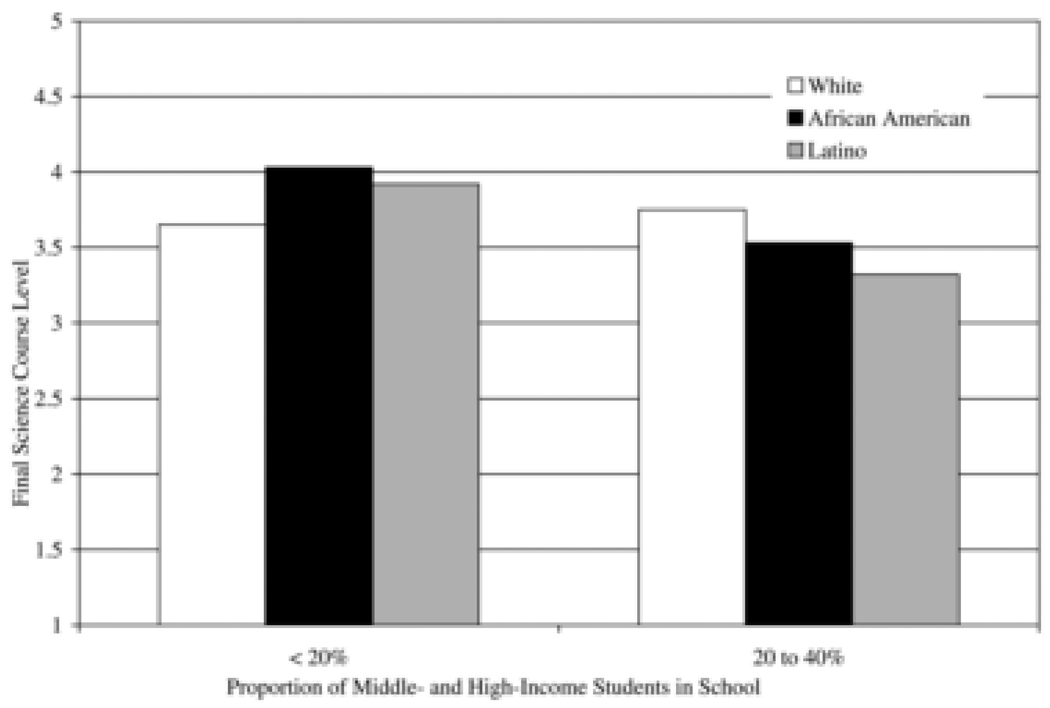
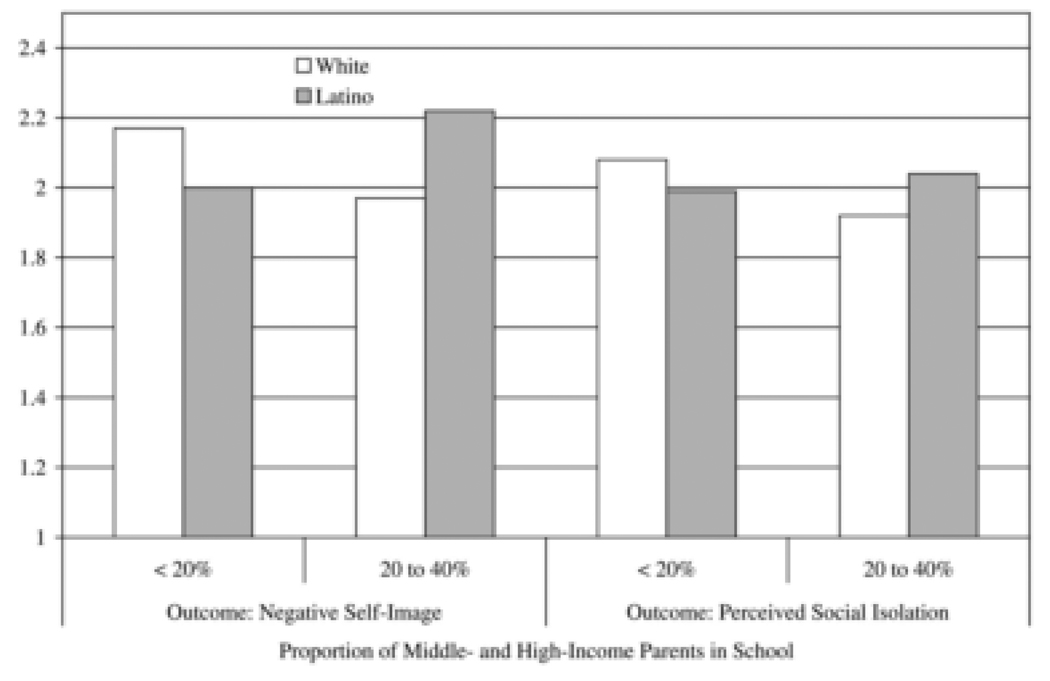
Increasing constraints placed on race-based school diversification have shifted attention to socioeconomic desegregation. Although past research suggests that socioeconomic desegregation can produce heightened achievement, the "frog pond" perspective points to potential problems with socioeconomic desegregation in nonachievement domains. Such problems are important in their own right, and they may also chip away at the magnitude of potential achievement benefits. In this article, I report conducted propensity score analyses and robustness calculations on a sample of public high schools in the National Longitudinal Study of Adolescent Health. As the proportion of the student body with middle- or high-income parents increased, low-income students progressed less far in math and science. Moreover, as the proportion of the student body with middle- or high-income or college-educated parents increased, low-income students experienced more psychosocial problems. Such patterns were often more pronounced among African American and Latino students. These findings suggest curricular and social psychological mechanisms of oft-noted frog pond effects in schools and extend the frog pond framework beyond achievement itself to demographic statuses (e.g., race/ethnicity and SES) perceptually linked to achievement. In terms of policy, these findings indicate that socioeconomic desegregation plans should also attend to equity in course enrollments and the social integration of students more generally.
Figures
References
-
- Adelman Clifford. U.S. Department of Education, Office of Educational Research and Improvement. Washington, DC: U.S. Government Printing Press; 1999. Answers in the Toolbox: Academic Intensity, Attendance Patterns, and Bachelor’s Degree Attainment.
-
- Alexander Karl L, Entwisle Doris R, Olson Linda S. Lasting Consequences of the Summer Learning Gap. American Sociological Review. 2007;72:167–180.
-
- Arum Richard. Schools and Communities: Ecological and Institutional Dimensions. Annual Review of Sociology. 2000;26:395–418.
-
- Bassis Michael. Campus as a Frog Pond: A Theoretical and Empirical Reassessment. American Journal of Sociology. 1977;82:1318–1326.
Grants and funding
LinkOut - more resources
Full Text Sources
Research Materials
Miscellaneous