


Hepatitis C in HIV-infected individuals: cure and control, right now
- PMID: 21548988
- PMCID: PMC3115833
- DOI: 10.1186/1758-2652-14-22
Hepatitis C in HIV-infected individuals: cure and control, right now
Abstract
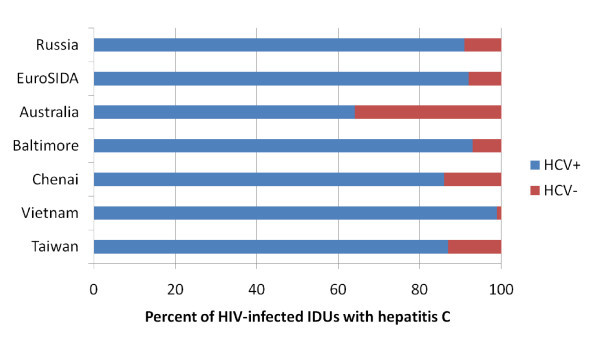
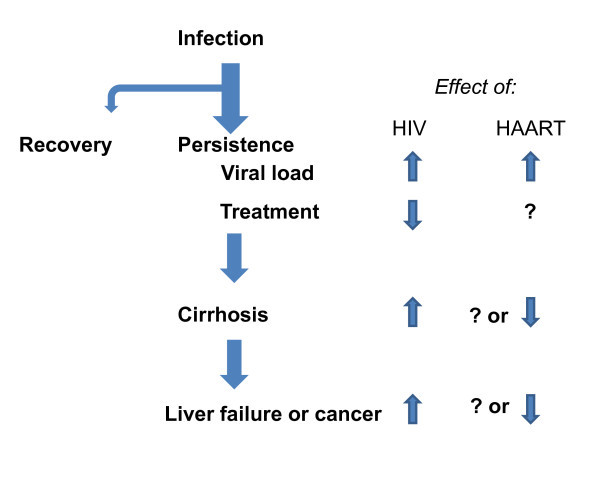
For persons living with HIV, hepatitis C is a major public health problem that must be controlled and could be eliminated. The challenge arises because the hepatitis C virus (HCV) is prevalent among HIV-infected persons in most parts of the world, because HIV worsens all HCV outcomes, and because HCV may add additional individual economic and psychosocial complications to HIV disease. Despite the major benefits of antiretroviral therapy on HIV outcomes, antiretroviral therapy is not sufficient to halt the complications of HCV. Nonetheless, HCV can be controlled at all stages, including prevention of infection and cure. Thus, HCV is an eradicable disease. There are significant inequalities worldwide in HCV control that could markedly constrain the impact of these measures.
Figures
References
-
- Rockstroh JK, Mocroft A, Soriano V, Tural C, Losso MH, Horban A, Kirk O, Phillips A, Ledergerber B, Lundgren J. Influence of hepatitis C virus infection on HIV-1 disease progression and response to highly active antiretroviral therapy. J Infect Dis. 2005;14:992–1002. - PubMed
-
- Abdala N, Carney JM, Durante AJ, Klimov N, Ostrovski D, Somlai AM, Kozlov A, Heimer R. Estimating the prevalence of syringe-borne and sexually transmitted diseases among injection drug users in St Petersburg, Russia. Int J STD AIDS. 2003;14:697–703. - PubMed
-
- Thomas DL, Vlahov D, Solomon L, Cohn S, Taylor E, Garfein R, Nelson KE. Correlates of hepatitis C virus infections among injection drug users in Baltimore. Medicine. 1995;14:212–220. - PubMed
-
- Lincoln D, Petoumenos K, Dore GJ. HIV/HBV and HIV/HCV coinfection, and outcomes following highly active antiretroviral therapy. HIV Med. 2003;14:241–249. - PubMed
-
- Solomon SS, SriKrishnan AK, Mehta SH, Vasudevan CK, Murugavel KG, Thamburaj E, Anand S, Kumar MS, Latkin C, Solomon S, Celentano DD. High prevalence of HIV, HIV/hepatitis C virus coinfection, and risk behaviors among injection drug users in Chennai, India: a cause for concern. J Acquir Immune Defic Syndr. 2008;14:327–332. - PMC - PubMed
Publication types
MeSH terms
Substances
LinkOut - more resources
Full Text Sources
Medical
