


Bisphosphonates inhibit expression of p63 by oral keratinocytes
- PMID: 21551338
- PMCID: PMC3318057
- DOI: 10.1177/0022034511407918
Bisphosphonates inhibit expression of p63 by oral keratinocytes
Abstract
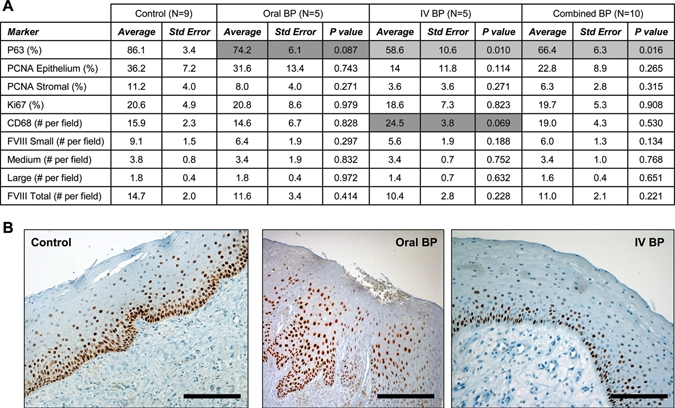
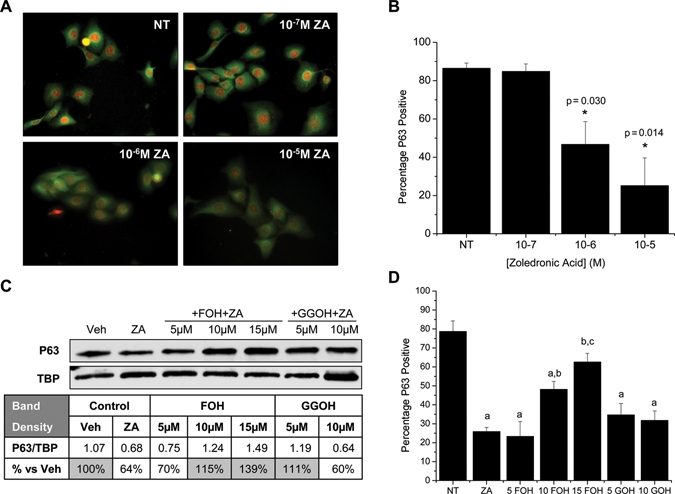
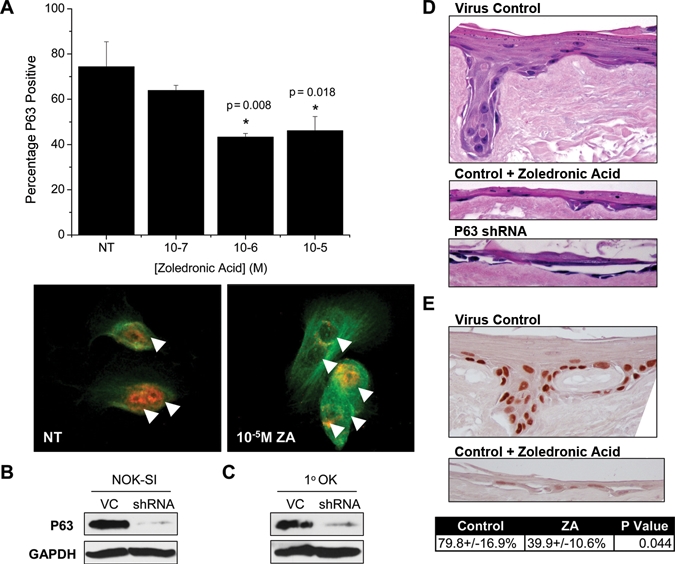
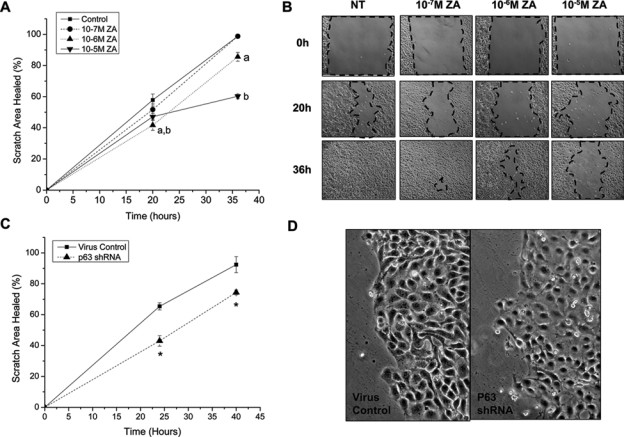
Osteonecrosis of the jaw (ONJ), a side-effect of bisphosphonate therapy, is characterized by exposed bone that fails to heal within eight weeks. Healing time of oral epithelial wounds is decreased in the presence of amino-bisphosphonates; however, the mechanism remains unknown. We examined human tissue from individuals with ONJ and non-bisphosphonate-treated control individuals to identify changes in oral epithelium and connective tissue. Oral and intravenous bisphosphonate-treated ONJ sites had reduced numbers of basal epithelial progenitor cells, as demonstrated by a 13.8±1.1% and 31.9±5.8% reduction of p63 expression, respectively. No significant differences in proliferation rates, vessel density, or macrophage number were noted. In vitro treatment of clonal and primary oral keratinocytes with zoledronic acid (ZA) inhibited p63, and expression was rescued by the addition of mevalonate pathway intermediates. In addition, both ZA treatment and p63 shRNA knock-down impaired formation of 3D Ex Vivo Produced Oral Mucosa Equivalents (EVPOME) and closure of an in vitro scratch assay. Analysis of our data suggests that bisphosphonate treatment may delay oral epithelial healing by interfering with p63-positive progenitor cells in the basal layer of the oral epithelium in a mevalonate-pathway-dependent manner. This delay in healing may increase the likelihood of osteonecrosis developing in already-compromised bone.
Conflict of interest statement
The authors declare no potential conflicts of interest with respect to the authorship and/or publication of this article.
Figures
References
-
- Amagase K, Hayashi S, Nishikawa K, Aihara E, Takeuchi K. (2007). Impairment of gastric ulcer healing by alendronate, a nitrogen-containing bisphosphonate, in rats. Dig Dis Sci 52:1879-1889 - PubMed
-
- Bergström JD, Bostedor RG, Masarachia PJ, Reszka AA, Rodan G. (2000). Alendronate is a specific, nanomolar inhibitor of farnesyl diphosphate synthase. Arch Biochem Biophys 373:231-241 - PubMed
-
- Bortoluzzi MC, Yurgel LS, Dekker NP, Jordan RC, Regezi JA. (2004). Assessment of p63 expression in oral squamous cell carcinomas and dysplasias. Oral Surg Oral Med Oral Pathol Oral Radiol Endod 98:698-704 - PubMed
-
- Fisher JE, Rogers MJ, Halasy JM, Luckman SP, Hughes DE, Masarachia PJ, et al. (1999). Alendronate mechanism of action: geranylgeraniol, an intermediate in the mevalonate pathway, prevents inhibition of osteoclast formation, bone resorption, and kinase activation in vitro. Proc Natl Acad Sci USA 96:133-138 - PMC - PubMed
Publication types
MeSH terms
Substances
Grants and funding
LinkOut - more resources
Full Text Sources
Medical
Miscellaneous
