


A deletion in exon 9 of the LIPH gene is responsible for the rex hair coat phenotype in rabbits (Oryctolagus cuniculus)
- PMID: 21552526
- PMCID: PMC3084274
- DOI: 10.1371/journal.pone.0019281
A deletion in exon 9 of the LIPH gene is responsible for the rex hair coat phenotype in rabbits (Oryctolagus cuniculus)
Abstract
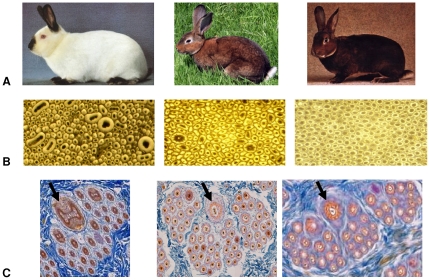
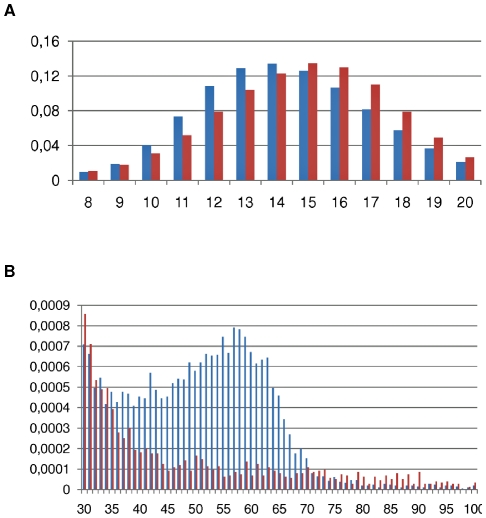
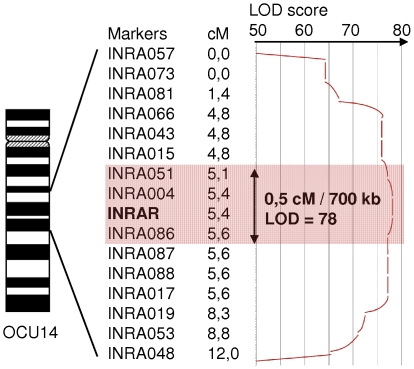
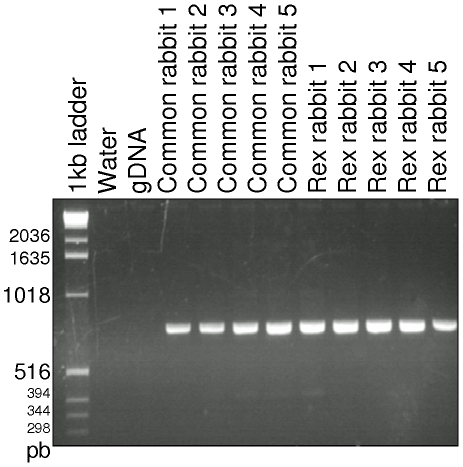
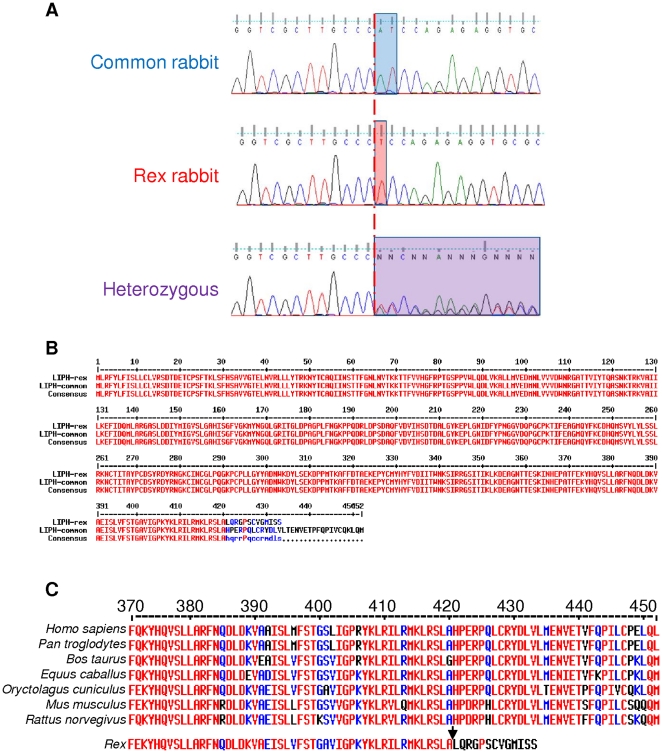
The fur of common rabbits is constituted of 3 types of hair differing in length and diameter while that of rex animals is essentially made up of amazingly soft down-hair. Rex short hair coat phenotypes in rabbits were shown to be controlled by three distinct loci. We focused on the "r1" mutation which segregates at a simple autosomal-recessive locus in our rabbit strains. A positional candidate gene approach was used to identify the rex gene and the corresponding mutation. The gene was primo-localized within a 40 cM region on rabbit chromosome 14 by genome scanning families of 187 rabbits in an experimental mating scheme. Then, fine mapping refined the region to 0.5 cM (Z = 78) by genotyping an additional 359 offspring for 94 microsatellites present or newly generated within the first defined interval. Comparative mapping pointed out a candidate gene in this 700 kb region, namely LIPH (Lipase Member H). In humans, several mutations in this major gene cause alopecia, hair loss phenotypes. The rabbit gene structure was established and a deletion of a single nucleotide was found in LIPH exon 9 of rex rabbits (1362delA). This mutation results in a frameshift and introduces a premature stop codon potentially shortening the protein by 19 amino acids. The association between this deletion and the rex phenotype was complete, as determined by its presence in our rabbit families and among a panel of 60 rex and its absence in all 60 non-rex rabbits. This strongly suggests that this deletion, in a homozygous state, is responsible for the rex phenotype in rabbits.
Conflict of interest statement
Figures
References
-
- Robinson R. German rex: a rexoid coat mutant in the cat. Genetica. 1968;39:351–352. - PubMed
-
- Robinson R. Rex mutant in the Norway rat. J Hered. 1981;72:131–132. - PubMed
-
- Kuramoto T, Hirano R, Kuwamura M, Serikawa T. Identification of the rat Rex mutation as a 7-bp deletion at splicing acceptor site of the Krt71 gene. J Vet Med Sci. 2010;72:909–912. - PubMed
-
- Fae C. Rex: a dominant autosomal monogenic coat texture character in the mouse. J Genetica. 1939;38:341–344.
Publication types
MeSH terms
Substances
LinkOut - more resources
Full Text Sources
Other Literature Sources
