


Neuromuscular electrical stimulation improves exercise tolerance in chronic obstructive pulmonary disease patients with better preserved fat-free mass
- PMID: 21552662
- PMCID: PMC3071998
- DOI: 10.1590/s1807-59322011000300006
Neuromuscular electrical stimulation improves exercise tolerance in chronic obstructive pulmonary disease patients with better preserved fat-free mass
Abstract
Background: High-frequency neuromuscular electrical stimulation increases exercise tolerance in patients with advanced chronic obstructive pulmonary disease (COPD patients). However, it is conceivable that its benefits are more prominent in patients with better-preserved peripheral muscle function and structure.
Objective: To investigate the effects of high-frequency neuromuscular electrical stimulation in COPD patients with better-preserved peripheral muscle function.
Design: Prospective and cross-over study.
Methods: Thirty COPD patients were randomly assigned to either home-based, high-frequency neuromuscular electrical stimulation or sham stimulation for six weeks. The training intensity was adjusted according to each subject's tolerance. Fat-free mass, isometric strength, six-minute walking distance and time to exercise intolerance (Tlim) were assessed.
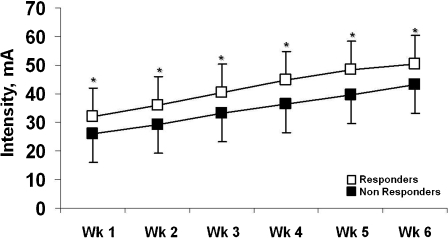
Results: Thirteen (46.4%) patients responded to high-frequency neuromuscular electrical stimulation; that is, they had a post/pre Δ Tlim >10% after stimulation (unimproved after sham stimulation). Responders had a higher baseline fat-free mass and six-minute walking distance than their seventeen (53.6%) non-responding counterparts. Responders trained at higher stimulation intensities; their mean amplitude of stimulation during training was significantly related to their fat-free mass (r = 0.65; p<0.01). Logistic regression revealed that fat-free mass was the single independent predictor of Tlim improvement (odds ratio [95% CI] = 1.15 [1.04-1.26]; p<0.05).
Conclusions: We conclude that high-frequency neuromuscular electrical stimulation improved the exercise capacity of COPD patients with better-preserved fat-free mass because they tolerated higher training stimulus levels. These data suggest that early training with high-frequency neuromuscular electrical stimulation before tissue wasting begins might enhance exercise tolerance in patients with less advanced COPD.
Figures
References
-
- American Thoracic Society, European Respiratory Society. Skeletal muscle dysfunction in chronic obstructive pulmonary disease: a statement of the American Thoracic Society and European Respiratory Society. Am J Respir Crit Care Med. 1999;159:S1–S40. - PubMed
-
- Whittom F, Jobin J, Simard PM, LeBlanc P, Simard C, Bernard S, et al. Histochemical and morphological characteristics of the vastus lateralis muscle in patients with chronic obstructive pulmonary disease. Med Sci Sports Exerc. 1998;30:1467–74. 10.1097/00005768-199810000-00001 - DOI - PubMed
-
- Wouters EF. Local and systemic inflammation in chronic obstructive pulmonary disease. Proc Am Thorac Soc. 2005;2:26–33. 10.1513/pats.200408-039MS - DOI - PubMed
-
- Sabino PG, Silva BM, Brunetto AF. Nutritional status is related to fat-free mass, exercise capacity and inspiratory strength in severe chronic obstructive pulmonary disease patients. Clinics. 2010 Jun;65:599–605. 10.1590/S1807-59322010000600007 - DOI - PMC - PubMed
-
- Regueiro EM, Di Lorenzo VA, Basso RP, Pessoa BV, Jamami M, Costa D. Relationship of BODE Index to functional tests in chronic obstructive pulmonary disease. Clinics. 2009;64:983–8. 10.1590/S1807-59322009001000008 - DOI - PMC - PubMed
Publication types
MeSH terms
LinkOut - more resources
Full Text Sources
Medical
