


Adverse drug events in U.S. adult ambulatory medical care
- PMID: 21554271
- PMCID: PMC3168717
- DOI: 10.1111/j.1475-6773.2011.01269.x
Adverse drug events in U.S. adult ambulatory medical care
Abstract
Objective: To estimate the incidence of adverse drug events (ADEs) associated with health care visits among U.S. adults across all ambulatory settings.
Data source: We analyzed data from two nationally representative probability sample surveys: the National Ambulatory Medical Care Survey and the National Hospital and Ambulatory Medical Care Survey. From 2005 to 2007, the presence of an ADE was specifically defined, requested, and recorded in these surveys.
Study design: Secondary data analysis.
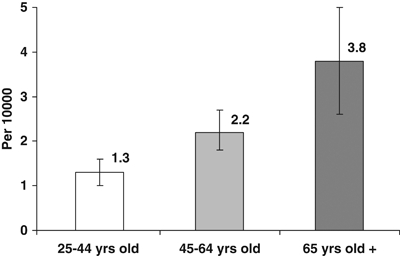
Principal findings: An estimated 13.5 million ADE-related visits occurred between 2005 and 2007 (0.5 percent of all visits), the large majority (72 percent) occurring in outpatient practice settings, and the remaining in emergency departments. Older patients (age ≥65 years) had the highest age-specific ADE rate, 3.8 ADEs per 10,000 persons per year. In adjusted analyses of outpatient visits, there was an increased odds of an ADE-related visit with increased medication burden (odds ratio [OR] for six to eight medications compared with no medications, OR 3.83 [2.20, 6.65]), and increased odds of ADEs associated with primary care visits compared with specialty visits (OR 2.22 [1.70, 2.89]).
Conclusions: Approximately 4.5 million ambulatory visits related to ADEs occur each year, the majority of these in outpatient office practices. A greater focus on ADE prevention and detection is warranted among patients receiving multiple medications in primary care practices.
© Health Research and Educational Trust.
Figures
References
-
- Bates DW, Cullen DJ, Laird N, Petersen LA, Small SD, Servi D, Laffel G, Sweitzer BJ, Shea BF, Hallisey R, Vander Vliet M, Nemeskal R, Leape LL. Incidence of Adverse Drug Events and Potential Adverse Drug Events. Implications for Prevention. ADE Prevention Study Group. Journal of American Medical Association. 1995;274(1):29–34. - PubMed
-
- Blumenthal D. Launching HITECH. New England Journal of Medicine. 2010;362(5):382–5. - PubMed
-
- Budnitz DS, Pollock DA, Weidenbach KN, Mendelsohn AB, Schroeder TJ, Annest JL. National Surveillance of Emergency Department Visits for Outpatient Adverse Drug Events. Journal of American Medical Association. 2006;296(15):1858–66. - PubMed
-
- Budnitz DS, Shehab N, Kegler SR, Richards CL. Medication Use Leading to Emergency Department Visits for Adverse Drug Events in Older Adults. Annals of Internal Medicine. 2007;147(11):755–65. - PubMed
Publication types
MeSH terms
Grants and funding
LinkOut - more resources
Full Text Sources
Other Literature Sources
Medical
