


A values-based Motivational Interviewing (MI) intervention for pediatric obesity: study design and methods for MI Values
- PMID: 21554994
- PMCID: PMC3148306
- DOI: 10.1016/j.cct.2011.04.010
A values-based Motivational Interviewing (MI) intervention for pediatric obesity: study design and methods for MI Values
Abstract
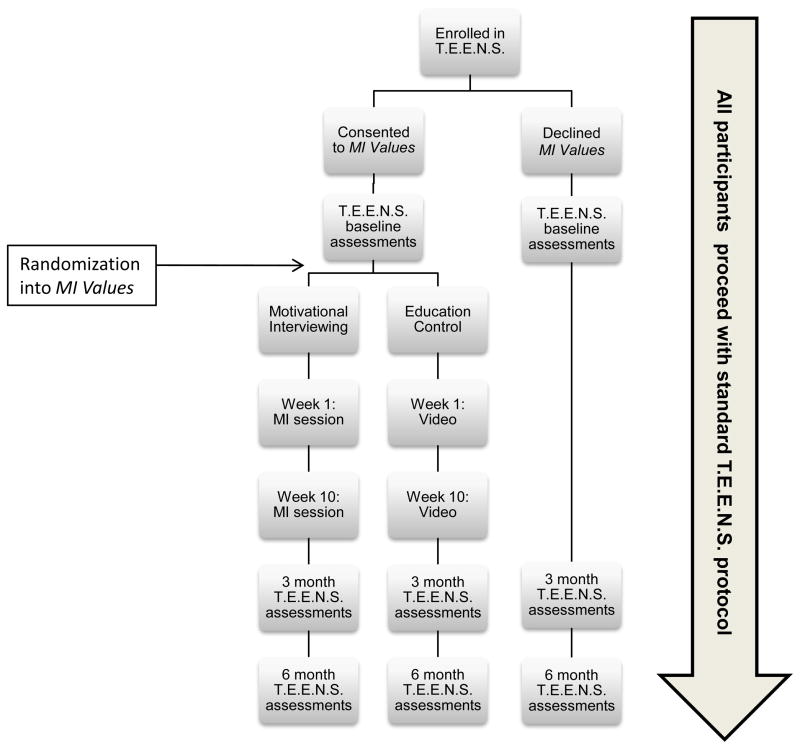
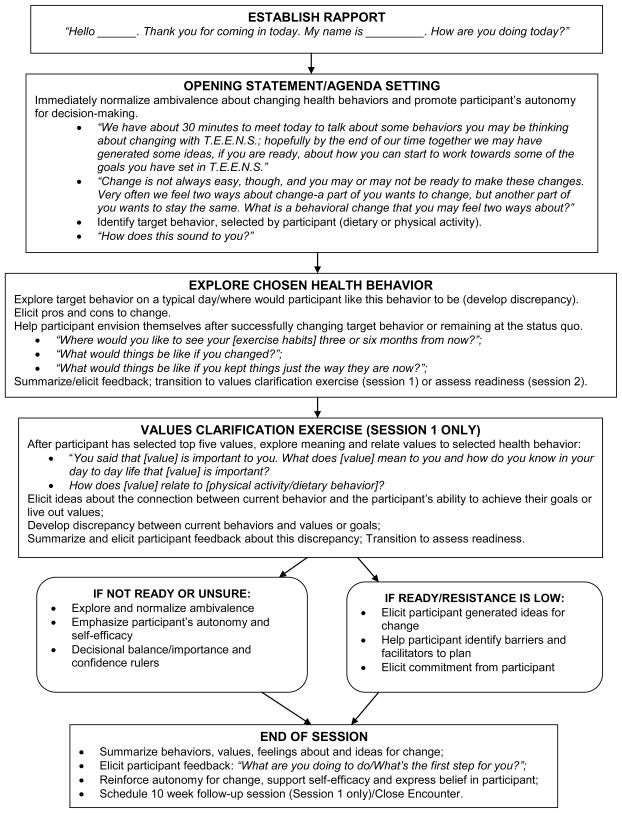
To reduce pediatric obesity in clinical settings, multidisciplinary behaviorally-based treatment programs are recommended. High attrition and poor compliance are two difficulties frequently encountered in such programs. A brief, empathic and directive clinical intervention, Motivational Interviewing (MI), might help address these motivational and behavioral issues, ultimately resulting in more positive health outcomes. The efficacy of MI as an adjunct in the treatment of pediatric obesity remains relatively understudied. MI Values was developed to implement within an existing multidisciplinary treatment program for obese, ethnically diverse adolescents, the T.E.E.N.S. Program (Teaching, Encouragement, Exercise, Nutrition, Support). T.E.E.N.S. participants who consent to MI Values are randomized to either MI or an education control condition. At weeks 1 and 10 of T.E.E.N.S. participation, the subset of participants assigned to the MI condition engages in individual MI sessions and control participants view health education videos. All MI sessions are audiotaped and coded to monitor treatment fidelity, which has been satisfactory thus far. Participants complete comprehensive assessments at baseline, 3- and 6-month follow-ups. We hypothesize that MI participants will demonstrate greater reductions in Body Mass Index (BMI) percentile, improved diet and physical activity behaviors, better compliance with T.E.E.N.S., and lower attrition than participants in the control group. We present study design and methods for MI Values as well as data on feasibility of recruitment methods and treatment integrity. At study completion, findings will contribute to the emerging literature examining the efficacy of MI in the treatment of pediatric obesity.
Copyright © 2011 Elsevier Inc. All rights reserved.
Figures
References
-
- Ogden CL, Carroll MD, Curtin LR, Lamb MM, Flegal KM. Prevalence of High Body Mass Index in US Children and Adolescents, 2007–2008. JAMA: The Journal of the American Medical Association. 2010;303:242–9. - PubMed
-
- Kiess W, Galler A, Reich A, Muller G, Kapellen T, Deutscher J, et al. Clinical aspects of obesity in childhood and adolescence. Obes Rev. 2001;2:29–36. - PubMed
-
- Sorof J, Daniels S. Obesity hypertension in children: a problem of epidemic proportions. Hypertension. 2002;40:441–7. - PubMed
-
- Schwimmer JB, Burwinkle TM, Varni JW. Health-related quality of life of severely obese children and adolescents. JAMA. 2003;289:1813–9. - PubMed
Publication types
MeSH terms
Grants and funding
LinkOut - more resources
Full Text Sources
Medical
Miscellaneous
