


Triangulating the neural, psychological, and economic bases of guilt aversion
- PMID: 21555080
- PMCID: PMC3114404
- DOI: 10.1016/j.neuron.2011.02.056
Triangulating the neural, psychological, and economic bases of guilt aversion
Abstract
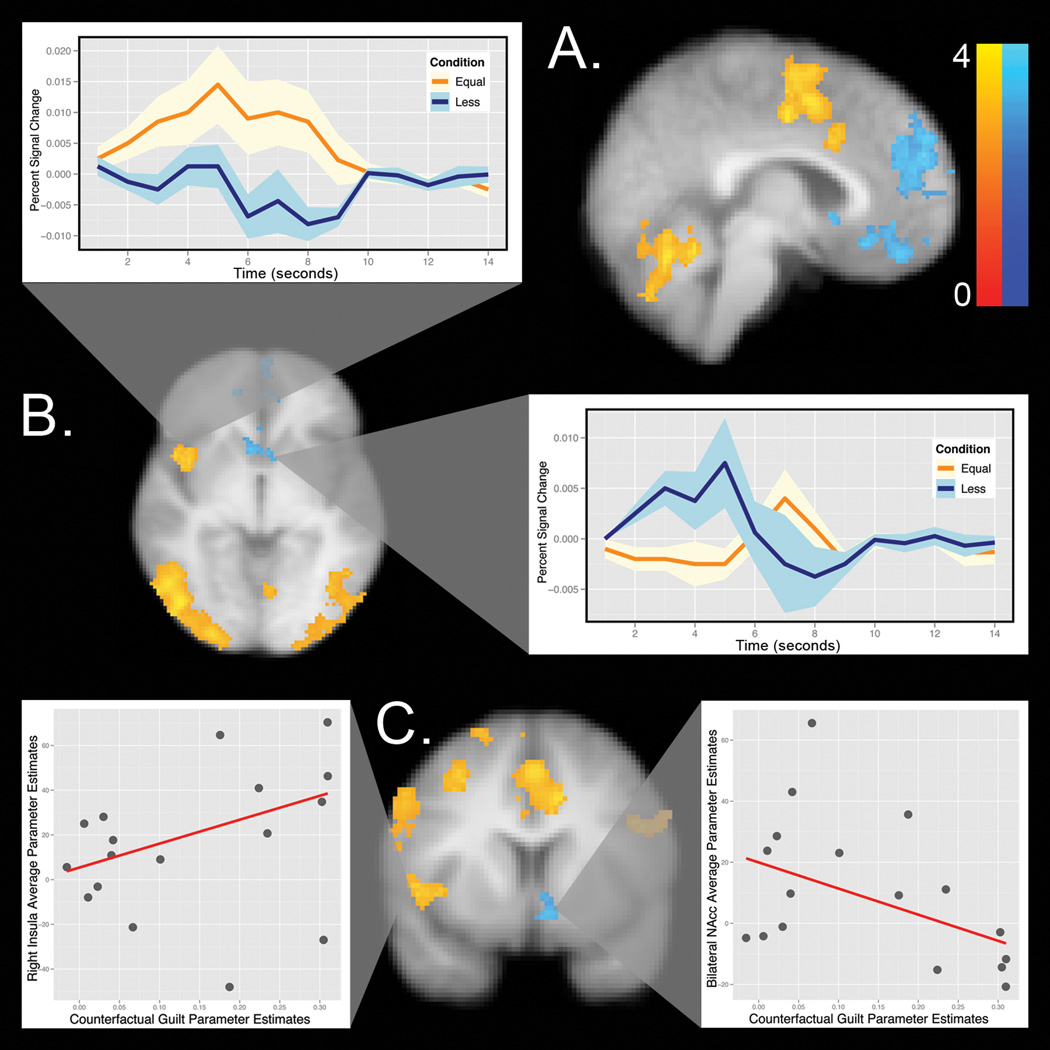
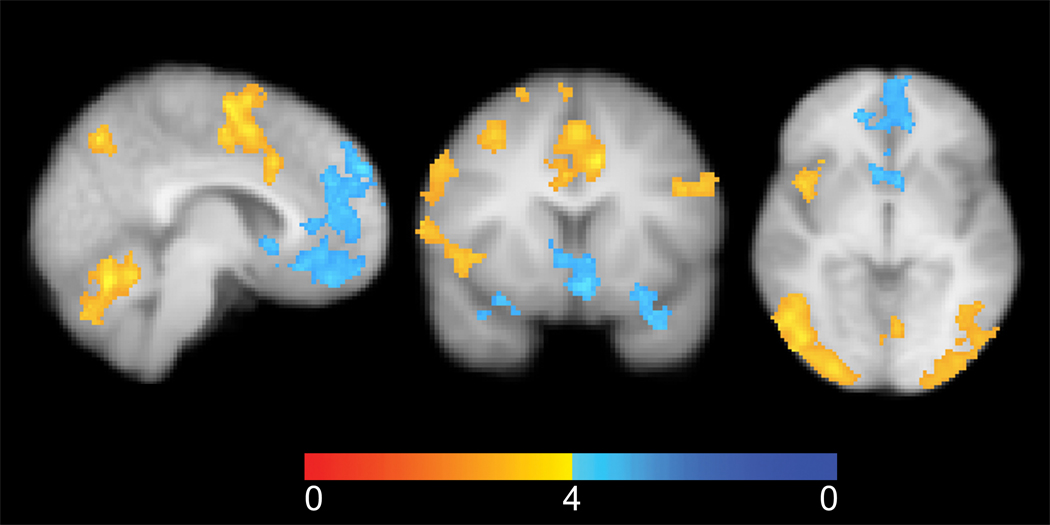
Why do people often choose to cooperate when they can better serve their interests by acting selfishly? One potential mechanism is that the anticipation of guilt can motivate cooperative behavior. We utilize a formal model of this process in conjunction with fMRI to identify brain regions that mediate cooperative behavior while participants decided whether or not to honor a partner's trust. We observed increased activation in the insula, supplementary motor area, dorsolateral prefrontal cortex (PFC), and temporal parietal junction when participants were behaving consistent with our model, and found increased activity in the ventromedial PFC, dorsomedial PFC, and nucleus accumbens when they chose to abuse trust and maximize their financial reward. This study demonstrates that a neural system previously implicated in expectation processing plays a critical role in assessing moral sentiments that in turn can sustain human cooperation in the face of temptation.
Copyright © 2011 Elsevier Inc. All rights reserved.
Figures
References
-
- Amodio DM, Frith CD. Meeting of minds: the medial frontal cortex and social cognition. Nat Rev Neurosci. 2006;7:268–277. - PubMed
-
- Andreoni J. Impre altruism and donations to public goods: a theory of warm-glow giving. The Economic Journal. 1990;100:464–477.
-
- Baayen RH, Davidson DJ, Bates DM. Mixed-effects modeling with crossed random effects for subjects and items. Journal of Memory and Language. 2008;59:340–412.
-
- Bates D, Maechler M, Dai B. lme4: Linear mixed-effects models using s4 classes. 2008
-
- Battigalli P, Dufwenberg M. Guilt in games. American Economic Review. 2007;97:170–176.
Publication types
MeSH terms
Substances
Grants and funding
LinkOut - more resources
Full Text Sources
Miscellaneous
