Unique aspects of transcription regulation in male germ cells
- PMID: 21555408
- PMCID: PMC3119912
- DOI: 10.1101/cshperspect.a002626
Unique aspects of transcription regulation in male germ cells
Abstract
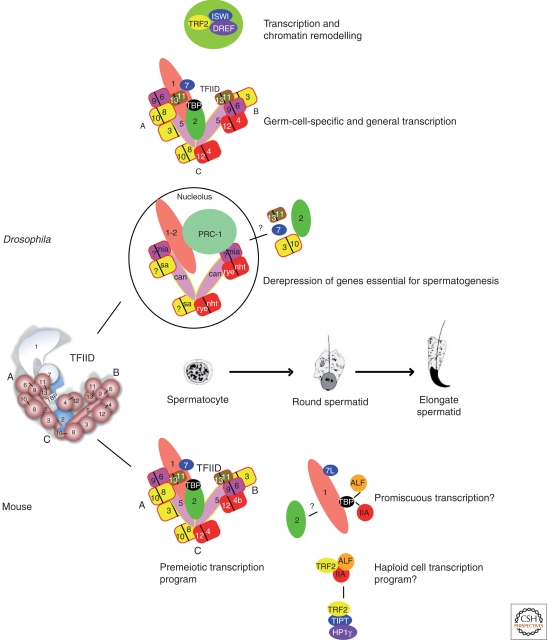
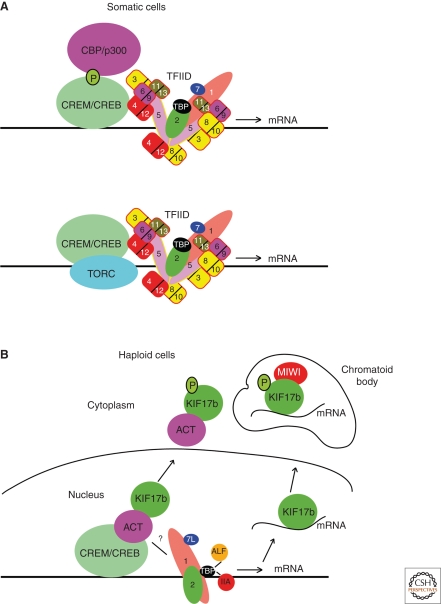
Spermatogenesis is a complex and ordered differentiation process in which the spermatogonial stem cell population gives rise to primary spermatocytes that undergo two successive meiotic divisions followed by a major biochemical and structural reorganization of the haploid cells to generate mature elongate spermatids. The transcriptional regulatory programs that orchestrate this process have been intensively studied in model organisms such as Drosophila melanogaster and mouse. Genetic and biochemical approaches have identified the factors involved and revealed mechanisms of action that are unique to male germ cells. In a well-studied example, cofactors and pathways distinct from those used in somatic tissues mediate the action of CREM in male germ cells. But perhaps the most striking feature concerns the paralogs of somatically expressed transcription factors and of components of the general transcription machinery that act in distinct regulatory mechanisms in both Drosophila and murine spermatogenesis.
Figures
References
-
- Albert M, Peters AH 2009. Genetic and epigenetic control of early mouse development. Curr Opin Genet Dev 19: 113–121 - PubMed
-
- Alphey L, Jimenez J, White-Cooper H, Dawson I, Nurse P, Glover DM 1992. twine, a cdc25 homolog that functions in the male and female germline of Drosophila. Cell 69: 977–988 - PubMed
-
- Ayyar S, Jiang J, Collu A, White-Cooper H, White RA 2003. Drosophila TGIF is essential for developmentally regulated transcription in spermatogenesis. Development 130: 2841–2852 - PubMed
-
- Barreau C, Benson E, Gudmannsdottir E, Newton F, White-Cooper H 2008. Post-meiotic transcription in Drosophila testes. Development 135: 1897–1902 - PubMed
-
- Bartfai R, Balduf C, Hilton T, Rathmann Y, Hadzhiev Y, Tora L, Orban L, Muller F 2004. TBP2, a vertebrate-specific member of the TBP family, is required in embryonic development of zebrafish. Curr Biol 14: 593–598 - PubMed
Publication types
MeSH terms
Substances
Grants and funding
LinkOut - more resources
Full Text Sources
Molecular Biology Databases