


A longitudinal analysis of intimacy processes and psychological distress among couples coping with head and neck or lung cancers
- PMID: 21556790
- PMCID: PMC4461872
- DOI: 10.1007/s10865-011-9349-1
A longitudinal analysis of intimacy processes and psychological distress among couples coping with head and neck or lung cancers
Abstract
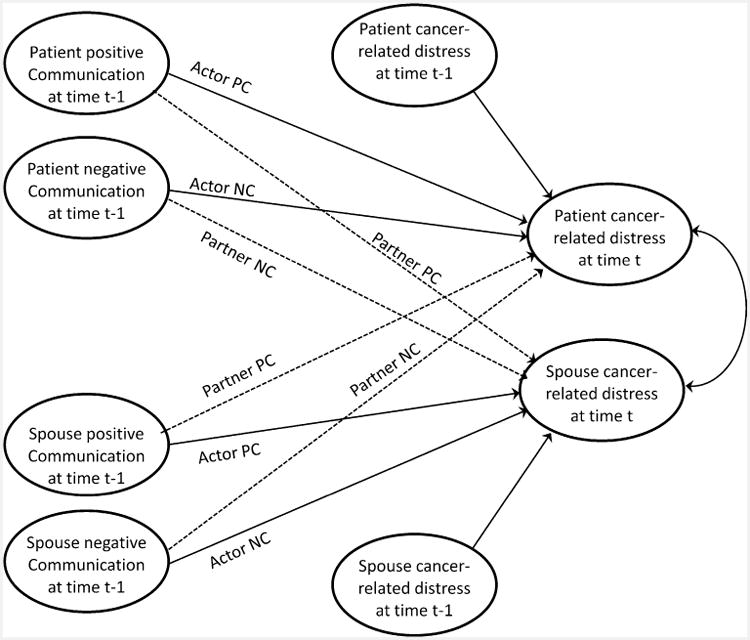
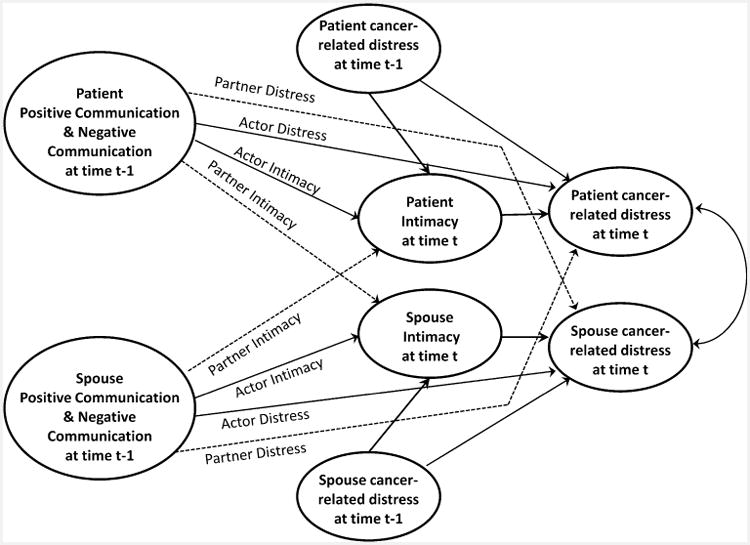
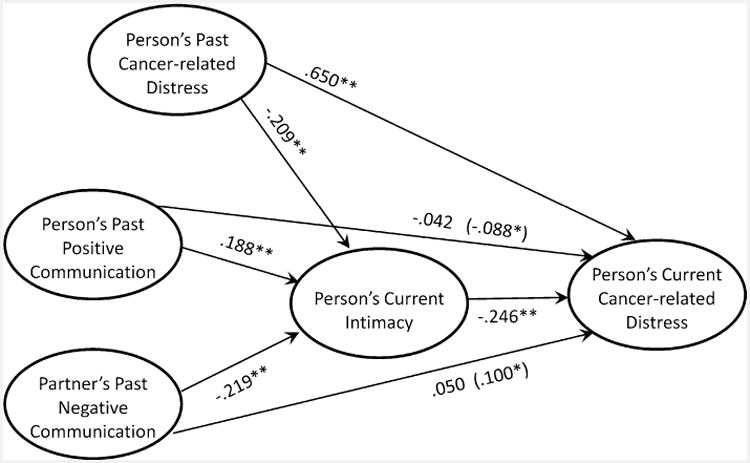
Individuals diagnosed with lung and head and neck (HN) cancers and their spouses are at increased risk for distress. This study assessed whether the way couples communicate about cancer and their perceptions of relationship intimacy influenced both partners' adjustment. One-hundred thirty-nine patients and their spouses [For purposes of clarity, we refer to the patients' intimate partner as the spouse, regardless of actual marital status and we reserve the term partner to refer to the other person in the couple (i.e., the patient's partner is the spouse and the spouse's partner is the patient)] completed measures of spousal communication, intimacy, and distress at three time points over 6 months. Using multilevel modeling, an over-time actor-partner interdependence model was specified that examined whether intimacy mediated associations between one's own and one's partner's reports of communication at baseline and later distress. Patients and spouses who reported greater baseline distress reported more negative baseline communication as well as lower levels of intimacy and greater distress over time. Mediation analyses showed patients' and spouses' reports of positive spousal communication were associated with less subsequent distress largely through their effects on intimacy. Clinicians working with head and neck or lung cancer patients should assess communication and intimacy because both impact couples' distress.
Figures
References
-
- Ayres J. Strategies to maintain relationships: Their identification and perceived usage. Communication Quarterly. 1983;31:62–67.
-
- Baile WF, Gibertini M, Scott LL, Endicotte J. Depression and tumor stage in cancer of the head and neck. Psychooncology. 1992;1:15–24. doi: 10.1002/pon.2960010104. - DOI
-
- Banthia R, Malcarne VL, Varni JW, Ko CM, Sadler GR, Greenbergs HL. The effects of dyadic strength and coping styles on psychological distress in couples faced with prostate cancer. Journal of Behavioral Medicine. 2003;26:31–52. - PubMed
Publication types
MeSH terms
Grants and funding
LinkOut - more resources
Full Text Sources
Medical
