


Synaptic dysfunction and abnormal behaviors in mice lacking major isoforms of Shank3
- PMID: 21558424
- PMCID: PMC3131048
- DOI: 10.1093/hmg/ddr212
Synaptic dysfunction and abnormal behaviors in mice lacking major isoforms of Shank3
Abstract
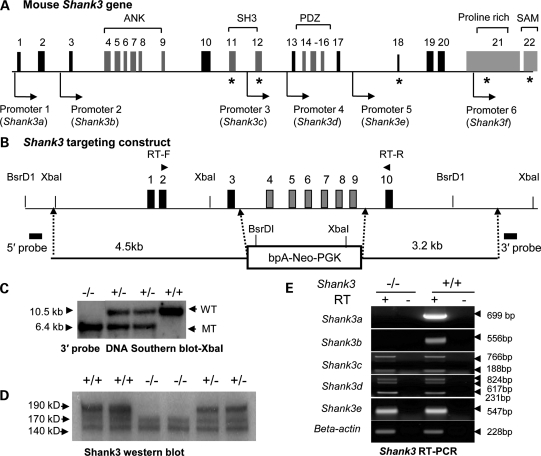
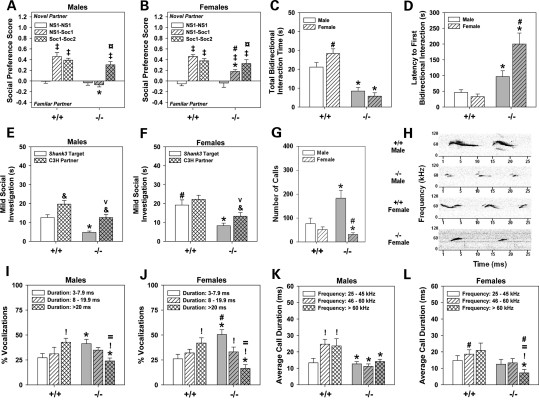
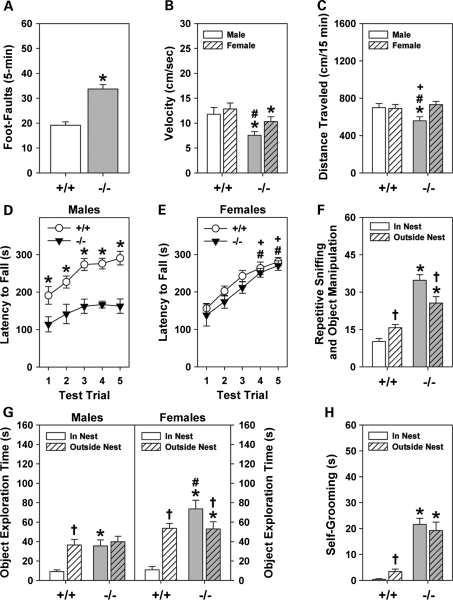
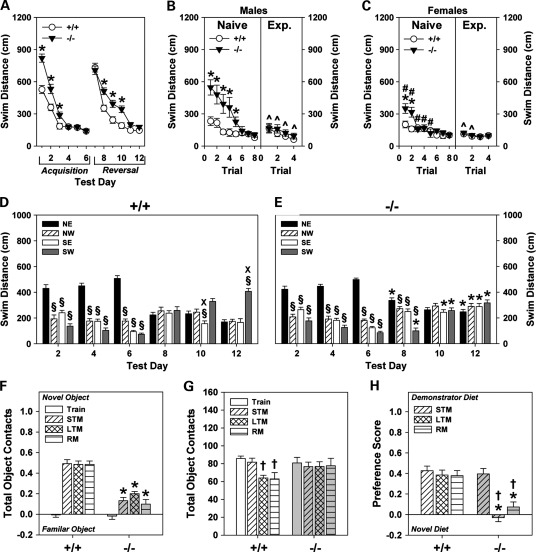
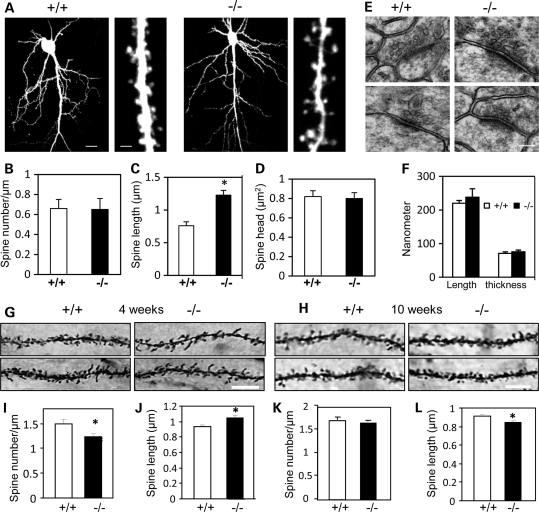
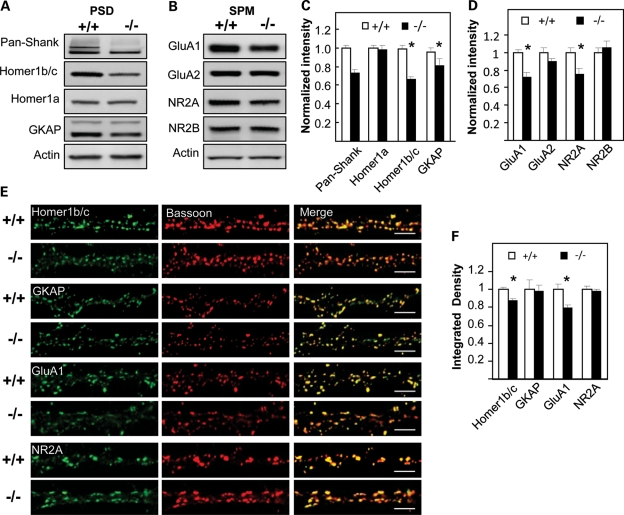
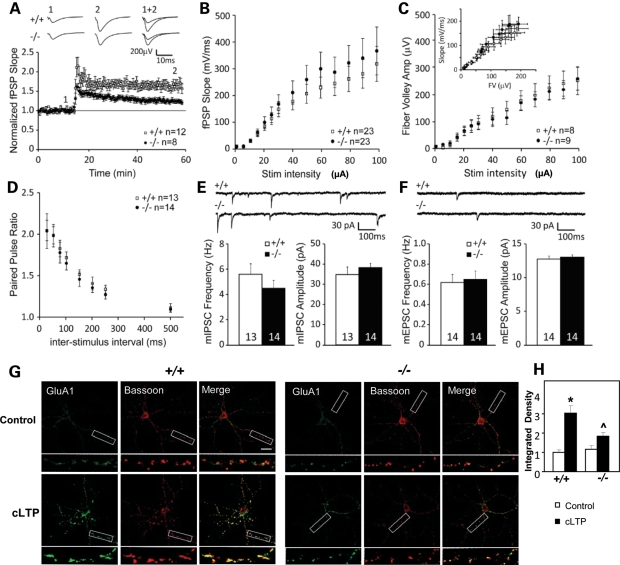
SHANK3 is a synaptic scaffolding protein enriched in the postsynaptic density (PSD) of excitatory synapses. Small microdeletions and point mutations in SHANK3 have been identified in a small subgroup of individuals with autism spectrum disorder (ASD) and intellectual disability. SHANK3 also plays a key role in the chromosome 22q13.3 microdeletion syndrome (Phelan-McDermid syndrome), which includes ASD and cognitive dysfunction as major clinical features. To evaluate the role of Shank3 in vivo, we disrupted major isoforms of the gene in mice by deleting exons 4-9. Isoform-specific Shank3(e4-9) homozygous mutant mice display abnormal social behaviors, communication patterns, repetitive behaviors and learning and memory. Shank3(e4-9) male mice display more severe impairments than females in motor coordination. Shank3(e4-9) mice have reduced levels of Homer1b/c, GKAP and GluA1 at the PSD, and show attenuated activity-dependent redistribution of GluA1-containing AMPA receptors. Subtle morphological alterations in dendritic spines are also observed. Although synaptic transmission is normal in CA1 hippocampus, long-term potentiation is deficient in Shank3(e4-9) mice. We conclude that loss of major Shank3 species produces biochemical, cellular and morphological changes, leading to behavioral abnormalities in mice that bear similarities to human ASD patients with SHANK3 mutations.
Figures
References
-
- Naisbitt S., Kim E., Tu J.C., Xiao B., Sala C., Valtschanoff J., Weinberg R.J., Worley P.F., Sheng M. Shank, a novel family of postsynaptic density proteins that binds to the NMDA receptor/PSD-95/GKAP complex and cortactin. Neuron. 1999;23:569–582. - PubMed
-
- Tu J.C., Xiao B., Naisbitt S., Yuan J.P., Petralia R.S., Brakeman P., Doan A., Aakalu V.K., Lanahan A.A., Sheng M., et al. Coupling of mGluR/Homer and PSD-95 complexes by the Shank family of postsynaptic density proteins. Neuron. 1999;23:583–592. - PubMed
-
- Boeckers T.M., Winter C., Smalla K.H., Kreutz M.R., Bockmann J., Seidenbecher C., Garner C.C., Gundelfinger E.D. Proline-rich synapse-associated proteins ProSAP1 and ProSAP2 interact with synaptic proteins of the SAPAP/GKAP family. Biochem. Biophys. Res. Commun. 1999;264:247–252. - PubMed
-
- Sheng M., Kim E. The Shank family of scaffold proteins. J. Cell. Sci. 2000;113:1851–1856. - PubMed
-
- Gundelfinger E.D., Boeckers T.M., Baron M.K., Bowie J.U. A role for zinc in postsynaptic density asSAMbly and plasticity? Trends Biochem. Sci. 2006;31:366–373. - PubMed
Publication types
MeSH terms
Substances
Grants and funding
LinkOut - more resources
Full Text Sources
Other Literature Sources
Molecular Biology Databases
Research Materials
Miscellaneous
