


FaceTime for Physicians: Using Real Time Mobile Phone-Based Videoconferencing to Augment Diagnosis and Care in Telemedicine
- PMID: 21559249
- PMCID: PMC3087505
FaceTime for Physicians: Using Real Time Mobile Phone-Based Videoconferencing to Augment Diagnosis and Care in Telemedicine
Abstract
Objective/background: Telemedicine has, even in its infancy, had an impact on the provision of healthcare, particularly in rural communities. However, this often relies on an expensive and ponderous infrastructure that reduces the rapid use and spontaneity for consultations.
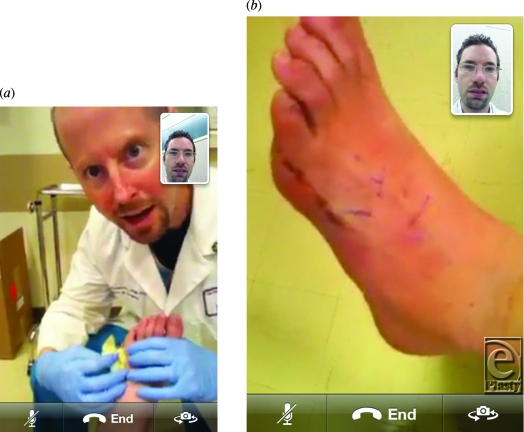
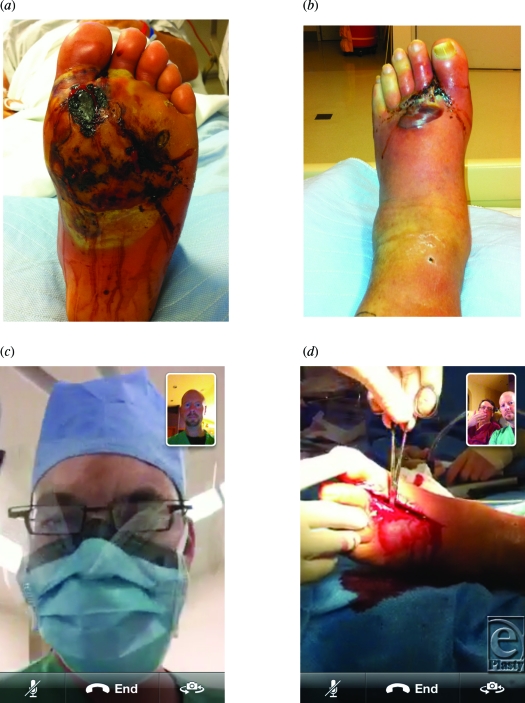
Methods: Using postoperative and intraoperative examples, we describe the use of one rapid and widely available technology (iPhone FaceTime, Cupertino, California).
Results: The device, in allowing "one button connection" similar to making a phone call, reduced the need for preplanning that is generally required for real-time telemedicine consultation.
Conclusions: The ability to communicate quickly with something that is an afterthought has the potential to alter how we work with our colleagues and patients. Just as with the iPod in music and the laptop in computing, it is not the change in technology, but the change in form factor and ubiquity that alters this landscape.
Figures
References
-
- Kaufman N. Internet and information technology use in treatment of diabetes. Int J Clin Pract Suppl. 2010;64(166):41–6. - PubMed
-
- Johnston B, Wheeler L, Deuser J, Sousa KH. Outcomes of the Kaiser Permanente Tele-Home Health Research Project. Arch Fam Med. 2000;9(1):40–5. - PubMed
-
- Lim TH, Choi HJ, Kang BS. Feasibility of dynamic cardiac ultrasound transmission via mobile phone for basic emergency teleconsultation. J Telemed Telecare. 2010;16(5):281–5. - PubMed
-
- Colloff E. The promise of technology in the management of the patient with diabetes. Diabetes Technol Ther. 2000;2(1):91–9. - PubMed
LinkOut - more resources
Full Text Sources
Miscellaneous