


Effect of stroke on fall rate, location and predictors: a prospective comparison of older adults with and without stroke
- PMID: 21559367
- PMCID: PMC3084849
- DOI: 10.1371/journal.pone.0019431
Effect of stroke on fall rate, location and predictors: a prospective comparison of older adults with and without stroke
Abstract
Background: The literature suggests that stroke is a major risk factor for falls, but there is a lack of prospective, controlled studies which quantify fall-risk after stroke. The purpose of this study was to compare the rates, location and predictors among individuals recently discharged home from stroke rehabilitation to age and sex matched controls.
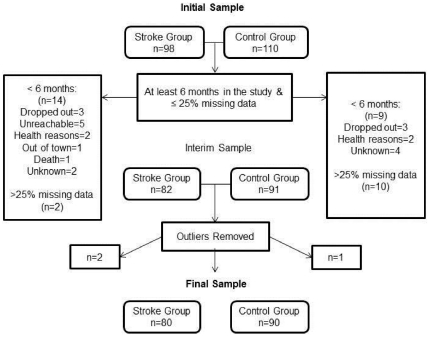
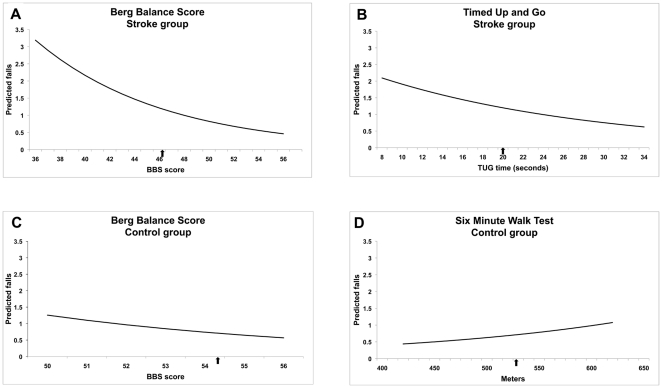
Methodology/principal findings: A sample of 80 people with stroke and 90 controls received baseline assessments of balance, mobility and balance confidence. Falls were recorded prospectively over 13 months for both groups. Group differences in fall rates and contribution of clinical measures to falls were determined using negative binomial regression. Fall location was compared between groups using χ(2) statistics. The rate of falls for individuals with stroke was 1.77 times the rate for the control group. People with stroke were more likely to fall at home. Poorer balance (Berg Balance Scale) was associated with greater falls for both stroke and control groups (incidence rate ratio [IRR]: 0.908 and IRR: 0.877 respectively). A faster Timed Up and Go Test was associated with greater falls for the stroke group (IRR: 0.955) while better walking endurance (Six Minute Walk Test) was associated with greater falls for the controls (IRR: 1.004). Balance confidence was not an independent predictor in either group.
Conclusions: Individuals recently discharged home are at greater risk of falling than individuals without stroke. Attention to home environment is warranted. Balance function can predict falls for both people with stroke and age and sex matched controls. Increased mobility may increase exposure to fall opportunities.
Conflict of interest statement
Figures
References
-
- Weerdeseteyn V, de Niet M, van Duijnhoven HJ, Geurts AC. Falls in individuals with stroke. J Rehabil Res Dev. 2008;45:1195–1213. - PubMed
-
- Ramnemark A, Nyberg L, Borssen B, Olsson T, Gustafson Y. Fractures after stroke. Osteoporos Int. 1998;8:92–95. - PubMed
-
- Watanabe Y. Fear of falling among stroke survivors after discharge from inpatient rehabilitation. Int J Rehabil Res. 2005;28:149–152. - PubMed
-
- Mackintosh SF, Hill K, Dodd KJ, Goldie P, Culham E. Falls and injury prevention should be part of every stroke rehabilitation plan. Clin Rehabil. 2005;19:441–451. - PubMed
Publication types
MeSH terms
Grants and funding
LinkOut - more resources
Full Text Sources
Medical
