. 2011 Apr 29;6(4):e18775.
doi: 10.1371/journal.pone.0018775.

Complex interaction of sensory and motor signs and symptoms in chronic CRPS

Affiliations

Complex interaction of sensory and motor signs and symptoms in chronic CRPS

Volker Huge et al. PLoS One. .

Abstract

Spontaneous pain, hyperalgesia as well as sensory abnormalities, autonomic, trophic, and motor disturbances are key features of Complex Regional Pain Syndrome (CRPS). This study was conceived to comprehensively characterize the interaction of these symptoms in 118 patients with chronic upper limb CRPS (duration of disease: 43±23 months). Disease-related stress, depression, and the degree of accompanying motor disability were likewise assessed. Stress and depression were measured by Posttraumatic Stress Symptoms Score and Center for Epidemiological Studies Depression Test. Motor disability of the affected hand was determined by Sequential Occupational Dexterity Assessment and Michigan Hand Questionnaire. Sensory changes were assessed by Quantitative Sensory Testing according to the standards of the German Research Network on Neuropathic Pain. Almost two-thirds of all patients exhibited spontaneous pain at rest. Hand force as well as hand motor function were found to be substantially impaired. Results of Quantitative Sensory Testing revealed a distinct pattern of generalized bilateral sensory loss and hyperalgesia, most prominently to blunt pressure. Patients reported substantial motor complaints confirmed by the objective motor disability testings. Interestingly, patients displayed clinically relevant levels of stress and depression. We conclude that chronic CRPS is characterized by a combination of ongoing pain, pain-related disability, stress and depression, potentially triggered by peripheral nerve/tissue damage and ensuing sensory loss. In order to consolidate the different dimensions of disturbances in chronic CRPS, we developed a model based on interaction analysis suggesting a complex hierarchical interaction of peripheral (injury/sensory loss) and central factors (pain/disability/stress/depression) predicting motor dysfunction and hyperalgesia.


Conflict of interest statement

Competing Interests: The authors have declared that no competing interests exist.

Figures

Figure 1
Figure 1. Patient disposition.
Disposition of patients eligible for the study. Eligible patients had been treated at the pain clinic and were diagnosed with chronic CRPS (Duration of disease more than 12 months).
Figure 2
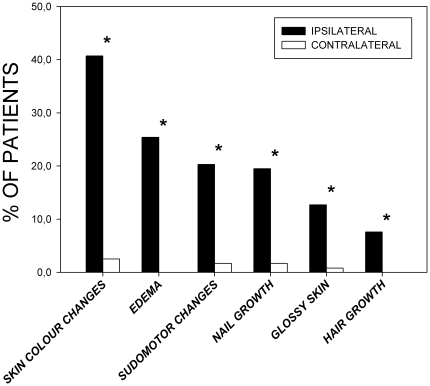
Figure 2. Clinical assessment of sudomotor dysfunction, throphic dysfunction, and edema.
Bars represent the percentage of patients displaying the respective signs or symptoms. Significance: * p<0.05 ipsilateral hand vs. contralateral hand, Wilcoxon signed ranks method test.
Figure 3
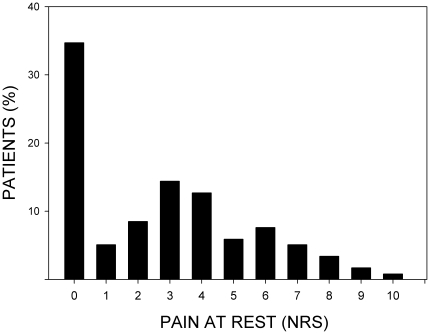
Figure 3. Pain at rest by means of Numeric Rating Scale (NRS).
0 indicates no pain at rest, and 10 indicating the worst pain. Bars display the percentage of patients in the respective category. The majority of patients (77/118 = 65.3%) reported spontaneous ongoing pain (44 patients with pain scores ≥4 = 37.3%). Mean NRS-score: 2.8±2.7; median NRS-score: 3.
Figure 4
Figure 4. Standardized comparison of QST data normalized to mean and standard deviation of the control group (z-normalisation).
A: Somatosensory profile of thermal and mechanical thresholds: Thermal Detection Thresholds: CDT: Cold Detection Threshold; WDT: Warm Detection Threshold; TSL: Thermal Sensory Limen. Thermal Pain Thresholds: CPT: Cold Pain Threshold; HPT: Heat Pain Threshold. Mechanical Pain Thresholds: PPT: Pressure Pain Threshold; MPT: Mechanical Pain Threshold; MPS: Mechanical Pain Sensitivity; WUR: Wind-up ratio. Mechanical Detection Thresholds: MDT: Mechanical Detection Threshold; VDT: Vibration Detection Threshold. B: PHS: Paradoxical Heat Sensation (PHS); Dynamic Mechanical Allodynia (DMA). Significance: ipsilateral hand vs. control: * p<0.05. Significance contralateral hand vs. control: + p<0.05. Patients with chronic CRPS displayed a bilateral hyperalgesia in every painful somatosensory modality as well as bilateral somatosensory loss.
Figure 5
Figure 5. Hand force in chronic CRPS.
Bars show a homogeneous reduction of hand force in Newton as compared to the contralateral side throughout the applied tasks. Significance: * p<0.001 ipsilateral vs. contralateral hand, paired t-test.
Figure 6
Figure 6. Impairment of hand motor function.
Bars display the percentage of patients displaying the respective motor impairment. Significance: * p<0.001 ipsilateral vs. contralateral hand, Wilcoxon signed ranks method test.
Figure 7
Figure 7. Overview on correlational and predictive interaction of sensory function, pain, hyperalgesia, and motor and psychological functioning.
Multiple correlation was calculated to analyse correlations between functional blocks of parameters using the stepwise forward method of building regression equations. Median split analysis was then applied to assign direction of influence of parameters included in the regression equation, i.e. to identify predictors.
Figure 8
Figure 8. Suggested model of functional connection between sensory loss, the degree of ongoing “central” pain, pain sensitivity, depression and stress, and the degree of hand dysfunction in chronic CRPS.
Based on multiple regression analysis the proposed model holds that initial sensory loss, possibly caused by a peripheral neurogenic inflammation, accounts for the induction of ongoing pain. The degree of ongoing “central” pain, depression and stress, determines the development and degree of hand dysfunction and the amount of evoked pain in chronic CRPS. The impact of parameters is depicted by the width of arrows, representing the respective correlation coefficients.

References

    1. Stanton-Hicks M, Janig W, Hassenbusch S, Haddox JD, Boas R, et al. Reflex sympathetic dystrophy: changing concepts and taxonomy. Pain. 1995;63:127–133. - PubMed
    1. Bruehl S, Harden RN, Galer BS, Saltz S, Bertram M, et al. External validation of IASP diagnostic criteria for Complex Regional Pain Syndrome and proposed research diagnostic criteria. International Association for the Study of Pain. Pain. 1999;81:147–154. - PubMed
    1. Vaneker M, Wilder-Smith OHG, Schrombges P, Oerlemans HM. Impairments as measured by ISS do not greatly change between one and eight years after CRPS 1 diagnosis. European Journal of Pain. 2006;10:639–644. - PubMed
    1. Birklein F, Kunzel W, Sieweke N. Despite clinical similarities there are significant differences between acute limb trauma and complex regional pain syndrome I (CRPS I). Pain. 2001;93:165–171. - PubMed
    1. Oaklander AL, Fields HL. Is reflex sympathetic dystrophy/complex regional pain syndrome type I a small-fiber neuropathy? Ann Neurol. 2009;65:629–638. - PubMed

Publication types