


Effectiveness of physical therapy for improving gait and balance in individuals with traumatic brain injury: a systematic review
- PMID: 21561297
- PMCID: PMC3319122
- DOI: 10.3109/02699052.2011.576306
Effectiveness of physical therapy for improving gait and balance in individuals with traumatic brain injury: a systematic review
Abstract
Primary objective: The purpose of this review was to investigate the efficacy or effectiveness of non-aerobic exercise interventions to improve balance and gait in functionally mild-to-moderate individuals with TBI (those who demonstrate the ability or capacity to ambulate) and to provide evidence-based guidelines for clinical practice.
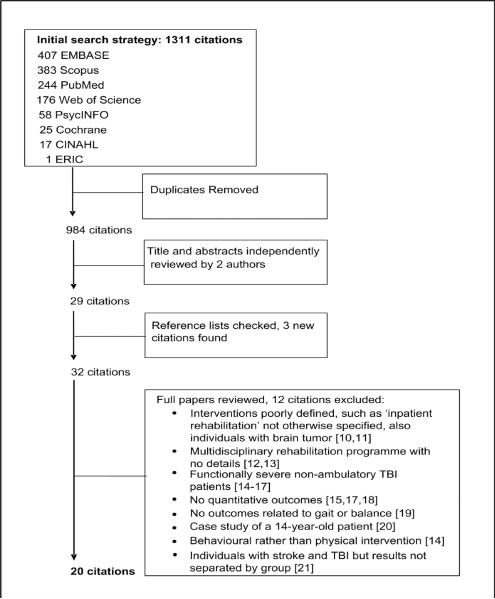
Methods: The authors searched eight databases for papers including exercise interventions to improve gait and balance post-TBI. Twenty papers fully met inclusion criteria. The quality of studies was determined by the Physiotherapy Evidence Database (PEDro) scale and strength by Sackett's Levels of Evidence.
Results: This study found limited evidence of the positive effects of balance, gait or the combination of both interventions in TBI rehabilitation. Most studies included small sample sizes with heterogeneous groups and the interventions were variable and lacked standardization. The outcome measures were variable and low in quality.
Conclusions: The state of evidence for gait and balance interventions in patients with mild-to-moderate TBI is surprisingly poor. Greater consideration and conformity in the choice of outcome measures and attention in the design and standardization treatment approaches are essential in future research to advance practice.
References
-
- Teasell R, Bayona N, Marshall S, et al. A systematic review of the rehabilitation of moderate to severe acquired brain injuries. Brain Inj. 2007;21(2):107–112. - PubMed
-
- Langlois JA, Rutland-Brown W, Wald MM. The epidemiology and impact of traumatic brain injury: a brief overview. J Head Trauma Rehabil. 2006;21(5):375–378. - PubMed
-
- Powell JM, Temkin NR, Machamer JE, Dikmen SS. Nonrandomized studies of rehabilitation for traumatic brain injury: can they determine effectiveness? Arch Phys Med Rehabil. 2002;83(9):1235–1244. - PubMed
-
- Basford JR, Chou LS, Kaufman KR, et al. An assessment of gait and balance deficits after traumatic brain injury. Arch Phys Med Rehabil. 2003;84(3):343–349. - PubMed
-
- Marshall S, Teasell R, Bayona N, et al. Motor impairment rehabilitation post acquired brain injury. Brain Inj. 2007;21(2):133–160. - PubMed
Publication types
MeSH terms
Grants and funding
LinkOut - more resources
Full Text Sources
Medical
Miscellaneous
