


Improvement of cardiac functions by chronic metformin treatment is associated with enhanced cardiac autophagy in diabetic OVE26 mice
- PMID: 21562078
- PMCID: PMC3114402
- DOI: 10.2337/db10-0351
Improvement of cardiac functions by chronic metformin treatment is associated with enhanced cardiac autophagy in diabetic OVE26 mice
Abstract
Objective: Autophagy is a critical cellular system for removal of aggregated proteins and damaged organelles. Although dysregulated autophagy is implicated in the development of heart failure, the role of autophagy in the development of diabetic cardiomyopathy has not been studied. We investigated whether chronic activation of the AMP-activated protein kinase (AMPK) by metformin restores cardiac function and cardiomyocyte autophagy in OVE26 diabetic mice.
Research design and methods: OVE26 mice and cardiac-specific AMPK dominant negative transgenic (DN)-AMPK diabetic mice were treated with metformin or vehicle for 4 months, and cardiac autophagy, cardiac functions, and cardiomyocyte apoptosis were monitored.
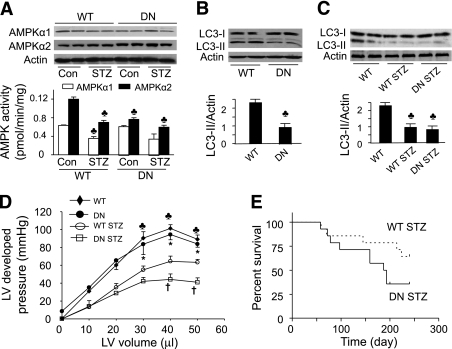
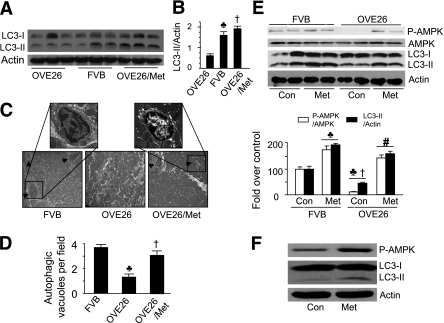
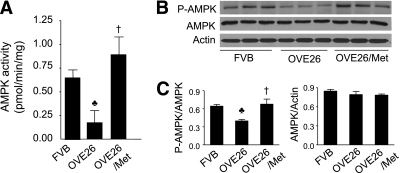
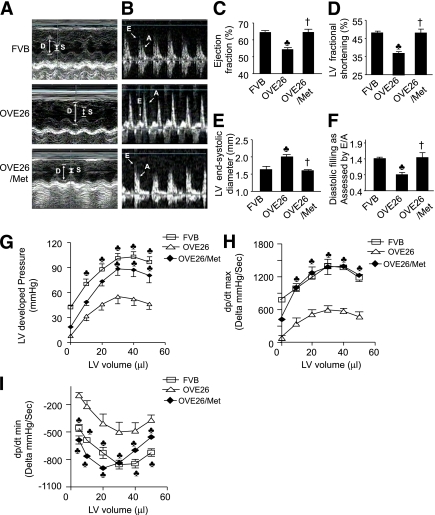
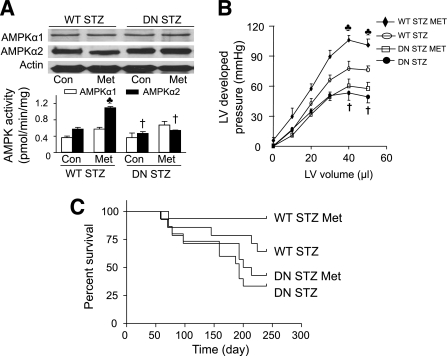
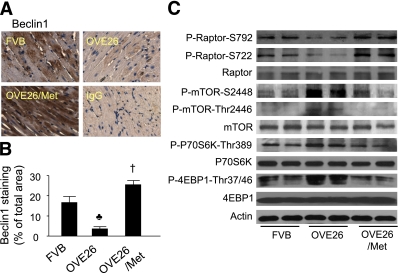
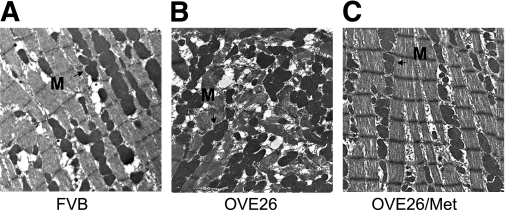
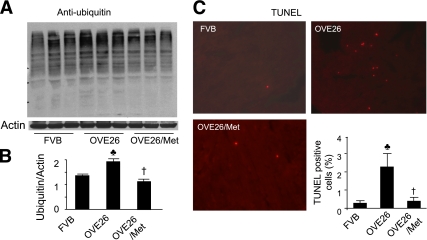
Results: Compared with control mice, diabetic OVE26 mice exhibited a significant reduction of AMPK activity in parallel with reduced cardiomyocyte autophagy and cardiac dysfunction in vivo and in isolated hearts. Furthermore, diabetic OVE26 mouse hearts exhibited aggregation of chaotically distributed mitochondria between poorly organized myofibrils and increased polyubiquitinated protein and apoptosis. Inhibition of AMPK by overexpression of a cardiac-specific DN-AMPK gene reduced cardiomyocyte autophagy, exacerbated cardiac dysfunctions, and increased mortality in diabetic mice. Finally, chronic metformin therapy significantly enhanced autophagic activity and preserved cardiac functions in diabetic OVE26 mice but not in DN-AMPK diabetic mice.
Conclusions: Decreased AMPK activity and subsequent reduction in cardiac autophagy are important events in the development of diabetic cardiomyopathy. Chronic AMPK activation by metformin prevents cardiomyopathy by upregulating autophagy activity in diabetic OVE26 mice. Thus, stimulation of AMPK may represent a novel approach to treat diabetic cardiomyopathy.
Figures
References
-
- Levine B, Klionsky DJ. Development by self-digestion: molecular mechanisms and biological functions of autophagy. Dev Cell 2004;6:463–477 - PubMed
-
- Gustafsson AB, Gottlieb RA. Mechanisms of apoptosis in the heart. J Clin Immunol 2003;23:447–459 - PubMed
-
- Nakai A, Yamaguchi O, Takeda T, et al. The role of autophagy in cardiomyocytes in the basal state and in response to hemodynamic stress. Nat Med 2007;13:619–624 - PubMed
-
- UK Prospective Diabetes Study (UKPDS) Group Effect of intensive blood-glucose control with metformin on complications in overweight patients with type 2 diabetes (UKPDS 34). Lancet 1998;352:854–865 - PubMed
Publication types
MeSH terms
Substances
Grants and funding
- R01 HL089920/HL/NHLBI NIH HHS/United States
- R01 HL074399/HL/NHLBI NIH HHS/United States
- R01 HL079584/HL/NHLBI NIH HHS/United States
- HL-080499/HL/NHLBI NIH HHS/United States
- HL-074399/HL/NHLBI NIH HHS/United States
- R01 HL080499/HL/NHLBI NIH HHS/United States
- 1P20-RR-02421501/RR/NCRR NIH HHS/United States
- HL-096032/HL/NHLBI NIH HHS/United States
- HL-079584/HL/NHLBI NIH HHS/United States
- R01 HL110488/HL/NHLBI NIH HHS/United States
- R01 HL105157/HL/NHLBI NIH HHS/United States
- HL-089920/HL/NHLBI NIH HHS/United States
- R01 HL096032/HL/NHLBI NIH HHS/United States
LinkOut - more resources
Full Text Sources
Medical
Molecular Biology Databases
