


Health outcomes and green renovation of affordable housing
- PMID: 21563714
- PMCID: PMC3072905
- DOI: 10.1177/00333549111260S110
Health outcomes and green renovation of affordable housing
Abstract
Objective: This study sought to determine whether renovating low-income housing using "green" and healthy principles improved resident health and building performance.
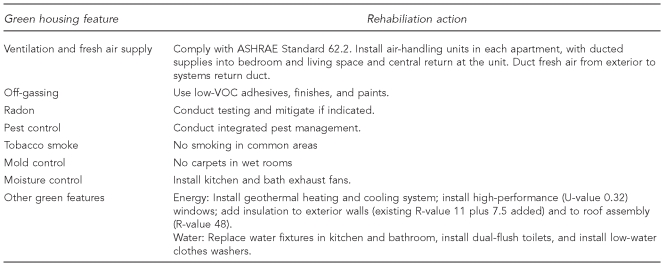
Methods: We investigated resident health and building performance outcomes at baseline and one year after the rehabilitation of low-income housing using Enterprise Green Communities green specifications, which improve ventilation; reduce moisture, mold, pests, and radon; and use sustainable building products and other healthy housing features. We assessed participant health via questionnaire, provided Healthy Homes training to all participants, and measured ventilation, carbon dioxide, and radon.
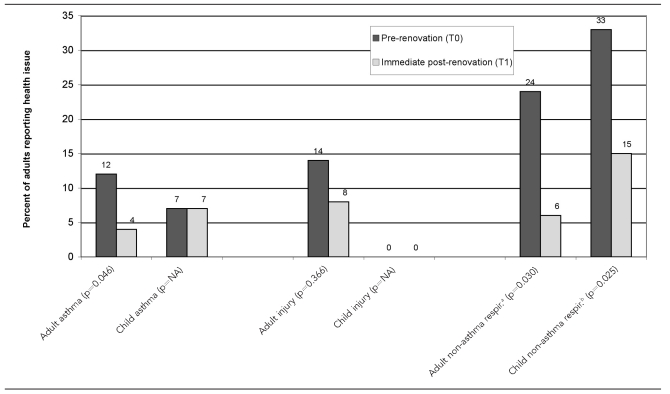
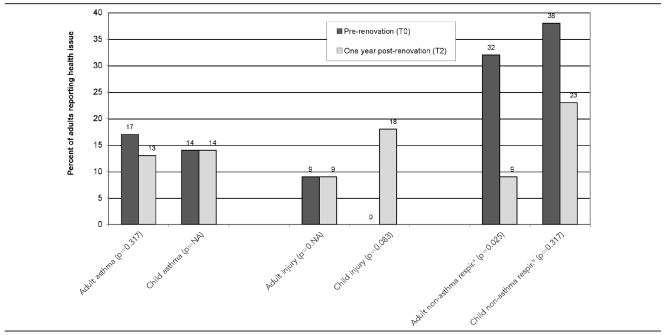
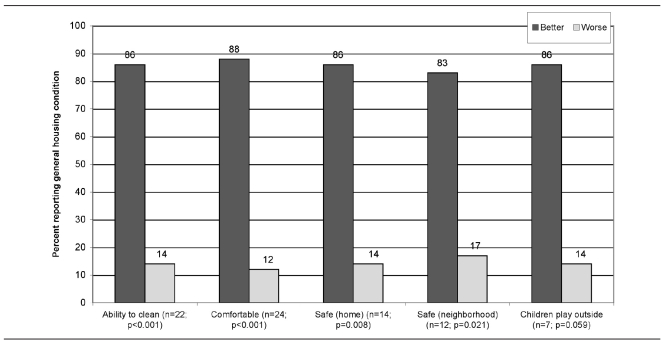
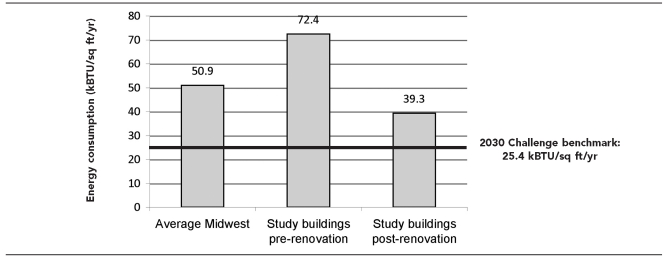
Results: Adults reported statistically significant improvements in overall health, asthma, and non-asthma respiratory problems. Adults also reported that their children's overall health improved, with significant improvements in non-asthma respiratory problems. Post-renovation building performance testing indicated that the building envelope was tightened and local exhaust fans performed well. New mechanical ventilation was installed (compared with no ventilation previously), with fresh air being supplied at 70% of the American Society of Heating, Refrigerating, and Air-Conditioning Engineers standard. Radon was < 2 picocuries per liter of air following mitigation, and the annual average indoor carbon dioxide level was 982 parts per million. Energy use was reduced by 45% over the one-year post-renovation period.
Conclusions: We found significant health improvements following low-income housing renovation that complied with green standards. All green building standards should include health requirements. Collaboration of housing, public health, and environmental health professionals through integrated design holds promise for improved health, quality of life, building operation, and energy conservation.
Figures
References
-
- Blood lead levels—United States, 1999–2002. MMWR Morb Mortal Wkly Rep. 2005;54(20):513–6. - PubMed
-
- Mannino DM, Homa DM, Akinbami LJ, Moorman JE, Gwynn C, Redd SC. Surveillance for asthma—United States, 1980–1999. MMWR Surveill Summ. 2002;51(1):1–13. - PubMed
-
- World Health Organization. Report of the WHO technical workshop on quantifying disease from inadequate housing, Bonn, Germany, 28–30 November 2005. Geneva: WHO; 2006.
Publication types
MeSH terms
LinkOut - more resources
Full Text Sources
