


Nurse case management and housing interventions reduce allergen exposures: the Milwaukee randomized controlled trial
- PMID: 21563716
- PMCID: PMC3072907
- DOI: 10.1177/00333549111260S112
Nurse case management and housing interventions reduce allergen exposures: the Milwaukee randomized controlled trial
Abstract
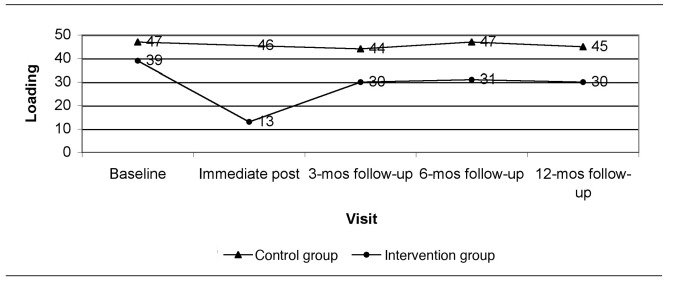
Objective: We examined the impact of a combination of home environmental interventions and nurse case management services on total settled dust loadings and on allergen concentrations in the homes of asthmatic children. METHODS Using a randomized longitudinal controlled trial study design, we randomly assigned homes of asthmatic children in Milwaukee to either a control (n = 64) or an intervention (n = 57) group. Control group homes received a visual assessment, education, bed/pillow dust mite encasings, and treatment of lead-based paint hazards. The intervention group received these same services plus nurse case management that included tailored, individual asthma action plans, provision of minor home repairs, home cleaning using special vacuuming and wet washing, and integrated pest management. Dust vacuum samples were collected from measured surface areas of floors in the TV room, kitchen, and child's bedroom at baseline and at three-, six-, and 12-month follow-up visits. Dust loading (mass per surface area) is a means of measuring total dust and the total amount of allergen present.
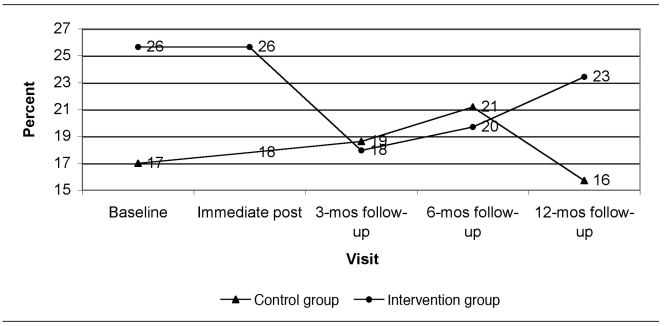
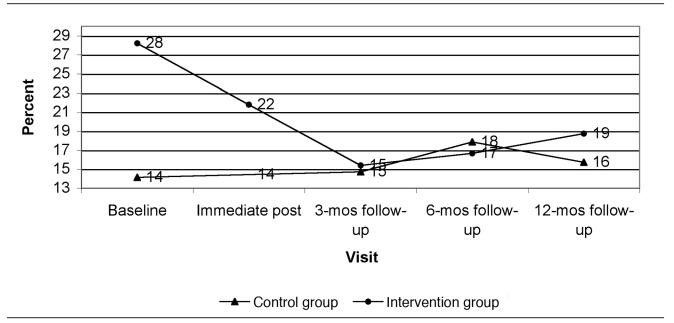
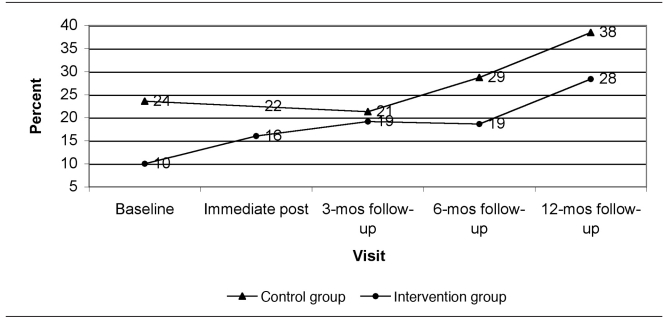
Results: For the intervention group, geometric mean dust loadings declined significantly from baseline (39 milligrams per square foot [mg/ft2]) to postintervention (11 mg/ft2) (p < 0.001). Baseline dust loading, treatment group, visit, and season were significant predictors of follow-up dust loadings. Mean post-intervention dust loadings were 72% higher in the control group. The total amount of allergen in settled house dust declined significantly following the intervention because total dust loading declined; the concentration of allergens in settled dust did not change significantly.
Conclusion: The combination of nurse case management and home environmental interventions promotes collaboration between health and housing professionals and is effective in reducing exposures to allergens in settled dust.
Figures
References
-
- Institute of Medicine, Division of Health Promotion and Disease Prevention, Committee on the Assessment of Asthma and Indoor Air. Clearing the air: asthma and indoor air exposures. Washington: National Academy Press; 2000.
-
- Meurer JR, Cohn JH, Kuhn EM, Bolton M, Fiore BJ. Asthma surveillance in an urban WIC office; Presented at the Pediatric Academic Societies Annual Meeting of the Ambulatory Pediatric Association; 2003 May 3–6; Seattle.
-
- Eggleston PA, Bush RK American Academy of Asthma, Allergy and Immunology. Environmental allergen avoidance: an overview. J Allergy Clin Immunol. 2001;107(3) Suppl:S403–5. - PubMed
-
- Rosenstreich DL, Eggleston P, Kattan M, Baker D, Slavin RG, Gergen P, et al. The role of cockroach allergy and exposure to cockroach allergen in causing morbidity among inner-city children with asthma. N Engl J Med. 1997;336:1356–63. - PubMed
-
- Phipatanakul W, Eggleston PA, Wright EC, Wood RA National Cooperative Inner-City Asthma Study. Mouse allergen. II. The relationship of mouse allergen exposure to mouse sensitization and asthma morbidity in inner-city children with asthma. J Allergy Clin Immunol. 2000;106:1075–80.
