


Frailty is associated with impairment of vaccine-induced antibody response and increase in post-vaccination influenza infection in community-dwelling older adults
- PMID: 21565245
- PMCID: PMC3129421
- DOI: 10.1016/j.vaccine.2011.04.077
Frailty is associated with impairment of vaccine-induced antibody response and increase in post-vaccination influenza infection in community-dwelling older adults
Abstract
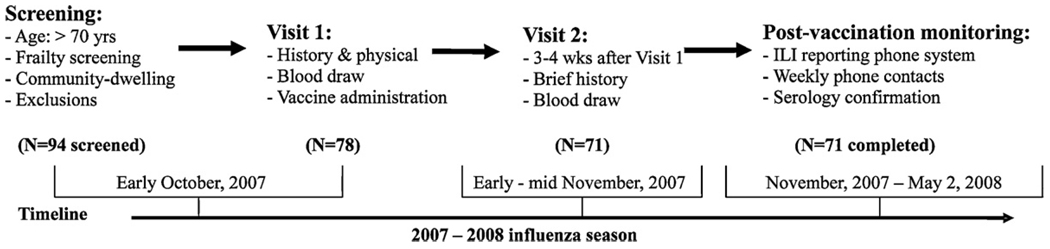
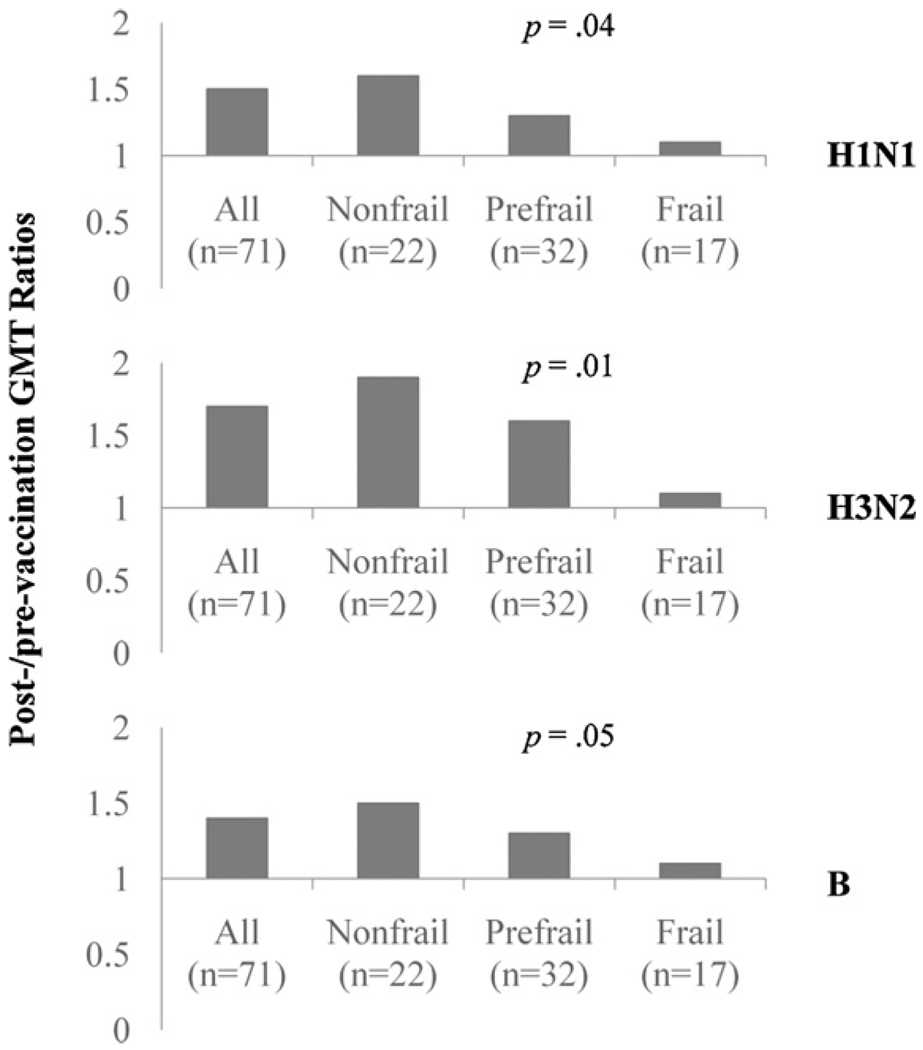
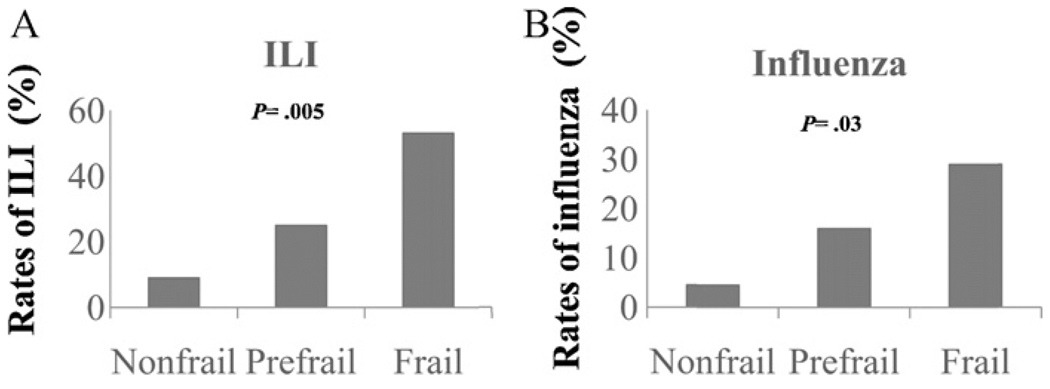
Annual immunization with a trivalent inactivated vaccine (TIV) is considered efficacious for prevention of seasonal influenza in older adults. However, significant controversy exists in the current literature regarding the clinical effectiveness of TIV immunization in this highly heterogeneous population. Frailty is an important geriatric syndrome characterized by decreased physiologic reserve and increased vulnerability to stressors. Using a validated set of frailty criteria, we conducted a prospective observational study to evaluate TIV-induced strain-specific hemagglutination inhibition (HI) antibody titers and post-vaccination rates of influenza-like illness (ILI) and infection in frail and nonfrail older adults. The results indicate that frailty was associated with significant impairment in TIV-induced strain-specific HI titers and increased rates of ILI and laboratory-confirmed influenza infection. These findings suggest that assessing frailty status in the elderly may identify those who are less likely to respond to TIV immunization and be at higher risk for seasonal influenza and its complications.
Copyright © 2011 Elsevier Ltd. All rights reserved.
Figures
References
-
- Thompson WW, Shay DK, Weintraub E, et al. Influenza-associated hospitalizations in the United States. JAMA. 2004 September;292(11):1333–1340. - PubMed
-
- Molinari NA, Ortega-Sanchez IR, Messonnier ML, et al. The annual impact of seasonal influenza in the US: measuring disease burden and costs. Vaccine. 2007 June;25(227):5086–5096. - PubMed
-
- Thompson WW, Shay DK, Weintraub E, et al. Mortality associated with influenza and respiratory syncytial virus in the United States. JAMA. 2003 January;289(2):179–186. - PubMed
-
- Rivetti D, Jefferson T, Thomas R, et al. Vaccines for preventing influenza in the elderly. Cochrane Database Syst Rev. 2006;3 CD004876. - PubMed
-
- Govaert TM, Thijs CT, Masurel N, Sprenger MJ, Dinant GJ, Knottnerus JA. The efficacy of influenza vaccination in elderly individuals. A randomized double-blind placebo-controlled trial. JAMA. 1994 December;272(21):1661–1665. - PubMed
Publication types
MeSH terms
Substances
Grants and funding
LinkOut - more resources
Full Text Sources
Other Literature Sources
Medical
