


Psychophysiologic treatment for patients with medically unexplained symptoms: a randomized controlled trial
- PMID: 21565593
- PMCID: PMC3403725
- DOI: 10.1016/j.psym.2011.01.015
Psychophysiologic treatment for patients with medically unexplained symptoms: a randomized controlled trial
Abstract
Background: Patients presenting with medically unexplained physical symptoms (MUPS) typically present with significant distress and marked impairment in functioning and pose a unique challenge to health care providers. The purpose of this study was to examine the efficacy of a psychophysiological treatment (PT) for MUPS.
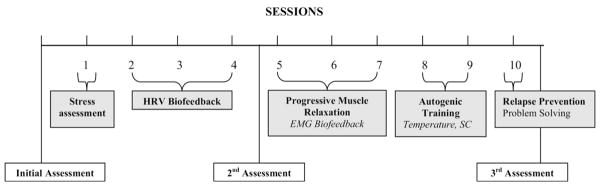
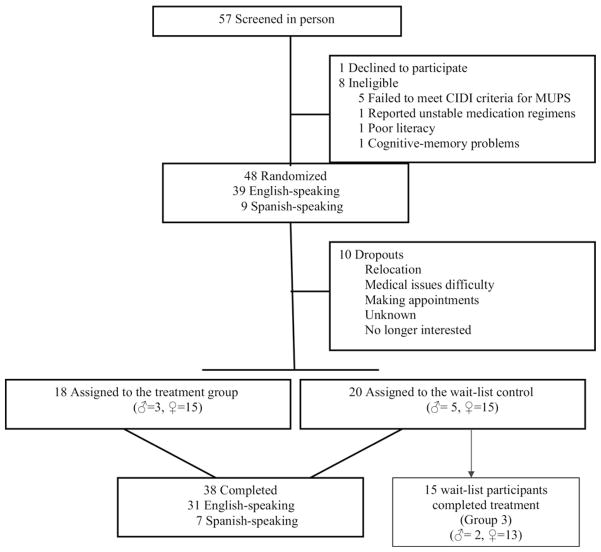
Methods: Thirty-eight participants meeting criteria for subthreshold somatization disorder (abridged somatization) were randomly assigned to one of two conditions: (1) standard medical care augmented by a psychiatric consultation intervention (wait-list) or (2) a 10-session, manualized, individually-administered PT added to the psychiatric consultation intervention. Assessments were conducted at baseline, at midpoint (after four sessions), and after completing the last session. The primary outcome measure was the severity scale of the Clinical Global Impression Scale anchored for Somatic Symptoms (CGI-SD). Secondary outcome measures were responder status as determined by clinical ratings, self-report measures of mental and physical functioning.
Results: At the end of the trial, the severity (and frequency) of physical symptoms improved significantly more (p<0.05) in the intervention group. The average improvement in the CGI-SD was 0.80 points greater in the intervention group than in the wait-list group. PT was also associated with greater improvements in self-reported functioning and depressive symptomatology. The effect sizes at the final assessment point indicate that this intervention had a robust effect on complex somatic symptom presentations.
Conclusion: For patients with high levels of MUPS (abridged somatization), PT produces significant improvements in symptoms and functional status.
Copyright © 2011 The Academy of Psychosomatic Medicine. Published by Elsevier Inc. All rights reserved.
Figures
References
-
- Mayou R, Kirmayer LJ, Simon G, et al. Somatoform disorders: time for a new approach in DSM-V. Am J Psychiatry. 2005;162:847– 855. - PubMed
-
- Kroenke K, Mangelsdorff D. Common symptoms in ambulatory care: incidence, evaluation, therapy, and outcome. Arch Int Med. 1989;86:262–266. - PubMed
-
- Kroenke K, Spitzer RL, Williams JB. Physical symptoms in primary care. Predictors of psychiatric disorders and functional impairment. Arch Family Med. 1994;3:774–779. - PubMed
-
- Fiedler N, Kipen H, DeLuca J, et al. A controlled comparison of multiple chemical sensitivities and chronic fatigue syndrome. Psychosom Med. 1996;58(1):38– 49. - PubMed
-
- Fink P, Toft T, Hansen M, et al. Symptoms and syndromes of bodily distress: an exploratory study of 978 internal medical, neurological, and primary care patients. Psychosom med. 2007;69:30–39. - PubMed
Publication types
MeSH terms
Grants and funding
LinkOut - more resources
Full Text Sources
