


An innovative multiphased strategy to recruit underserved adults into a randomized trial of a community-based diabetes risk reduction program
- PMID: 21565823
- PMCID: PMC3092977
- DOI: 10.1093/geront/gnr026
An innovative multiphased strategy to recruit underserved adults into a randomized trial of a community-based diabetes risk reduction program
Abstract
Purpose: To conduct and evaluate a two-phased community-based approach to recruit lower socioeconomic status, minority, or Spanish-speaking adults at risk of developing diabetes to a randomized trial of a lifestyle intervention program delivered by a public health department.
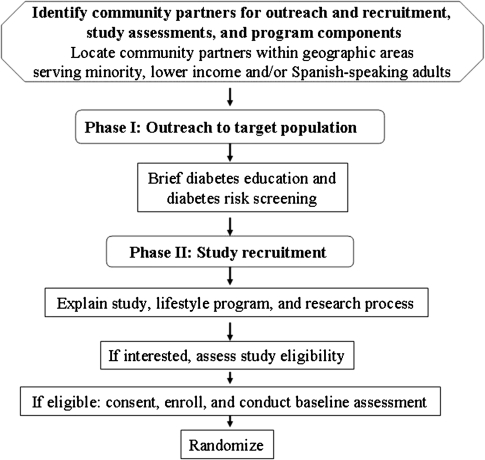
Design: Within geographic areas comprising our target population, 4 community organizations provided local space for conducting the study and program. Phase I-outreach in venues surrounding these organizations-included diabetes education, a short diabetes risk appraisal (DRA), and diabetes risk screening based on a fasting fingerstick glucose test. Phase II-trial recruitment-began concurrently for those found to be at risk of developing diabetes in Phase I by explaining the study, lifestyle program, and research process. Those interested and eligible enrolled in the 1-year study.
Results: Over 2 years, approximately 5,110 individuals received diabetes education, 1,917 completed a DRA, and 1,164 were screened of which 641 (55%) had an elevated fingerstick result of ≥ 106 mg/dl. Of the study sampling frame-persons over age 25 at risk of developing diabetes (N = 544)-238 (43%) enrolled in the trial; of those who were study eligible (n = 427), 56% enrolled. In the final sample, mean age was 56 years (SD = 17), 78% were ethnic minorities, 32% were Spanish-speaking, and 15% had a high school education or less.
Implications: Providing diabetes health education and screening prior to study recruitment may help overcome barriers to research participation in underserved communities, thus helping address difficulties recruiting minority and older populations into research, particularly research pertaining to chronic disease risk factors.
Figures

References
-
- Brown DR, Topcu M. Willingness to participate in clinical treatment research among older African Americans and Whites. The Gerontologist. 2003;43:62–72. - PubMed
-
- Centers for Disease Control and Prevention. National diabetes fact sheet: General information and national estimates on diabetes in the United States, 2007. Atlanta, GA: U.S. Department of Health and Human Services, Centers for Disease Control and Prevention; 2008.
-
- City of Berkeley Public Health Division Community Health Action and Assessment Section. City of Berkeley health status report, 2007. Berkeley, CA: Department of Health and Human Services, Public Health Division; 2007.
