MAGE-A inhibits apoptosis in proliferating myeloma cells through repression of Bax and maintenance of survivin
- PMID: 21565982
- PMCID: PMC3131419
- DOI: 10.1158/1078-0432.CCR-10-1820
MAGE-A inhibits apoptosis in proliferating myeloma cells through repression of Bax and maintenance of survivin
Abstract
Purpose: The type I Melanoma Antigen GEnes (MAGEs) are commonly expressed in cancers, fueling speculation that they may be therapeutic targets with oncogenic potential. They form complexes with RING domain proteins that have E3 ubiquitin ligase activity and promote p53 degradation. MAGE-A3 was detected in tumor specimens from patients with multiple myeloma and its expression correlated with higher frequencies of Ki-67(+) malignant cells. In this report, we examine the mechanistic role of MAGE-A in promoting survival of proliferating multiple myeloma cells.
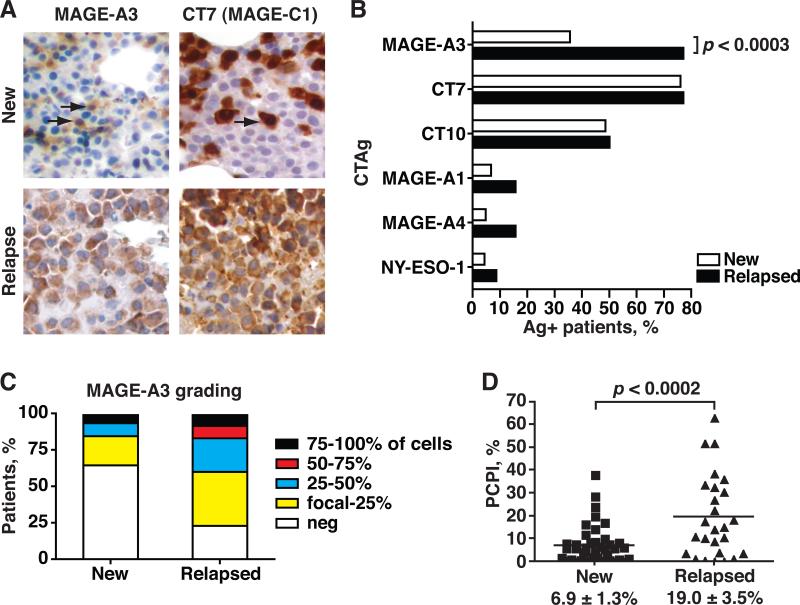
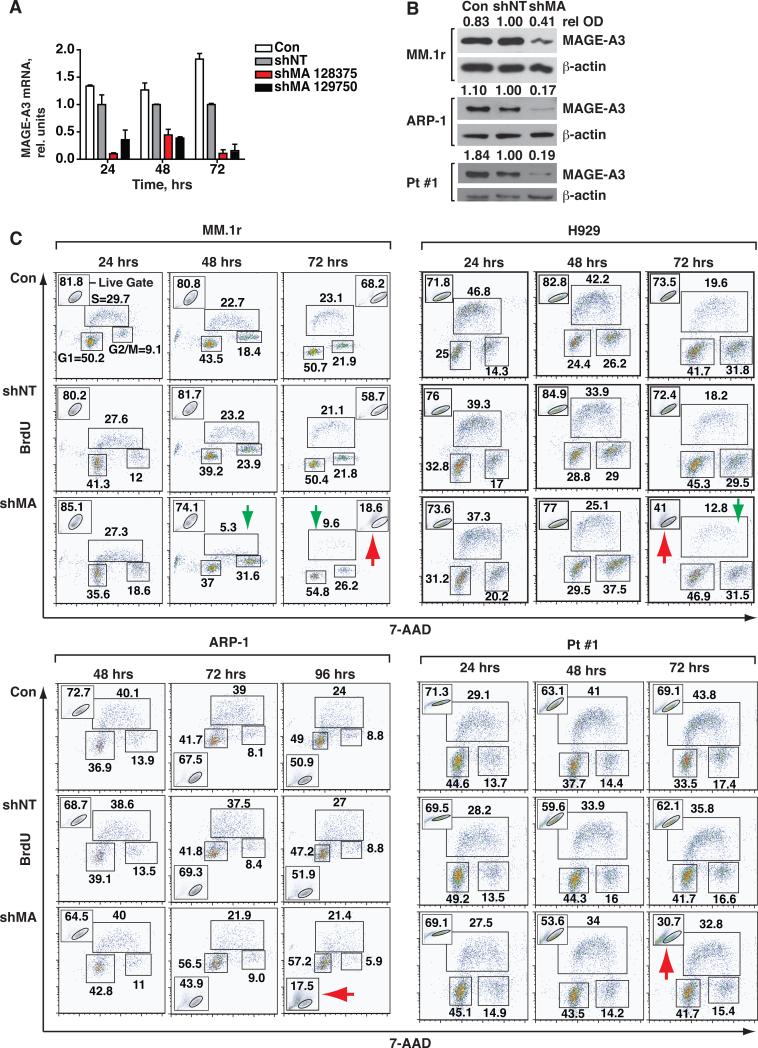
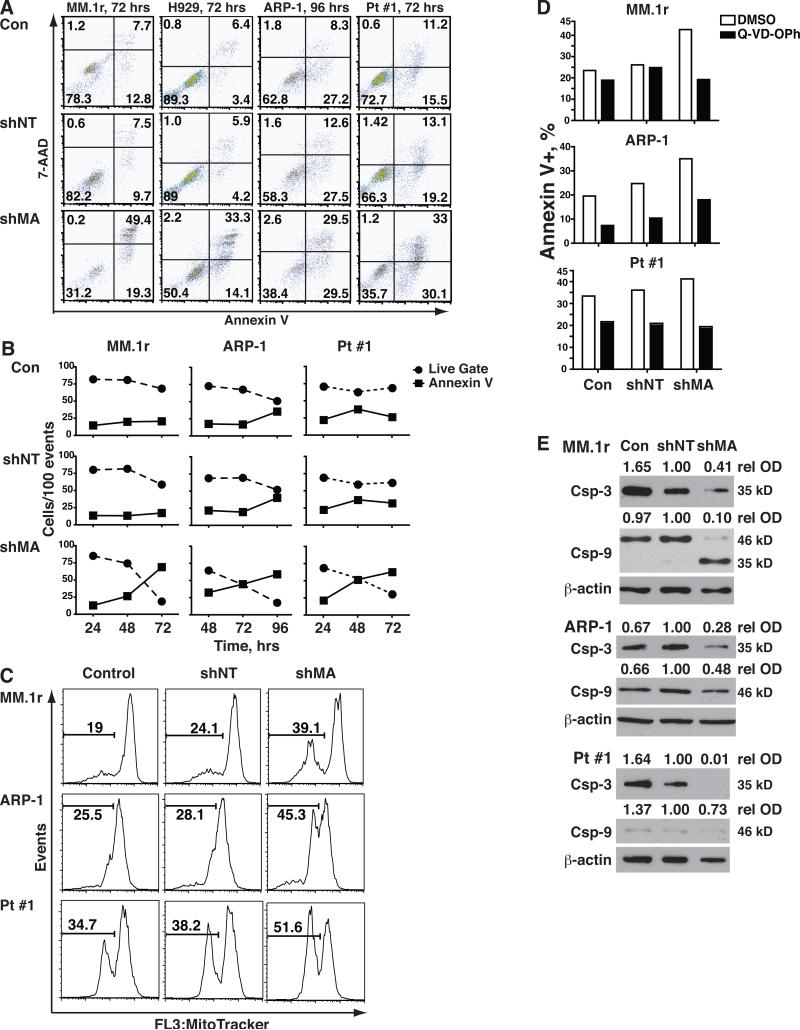
Experimental design: The impact of MAGE-A3 expression on survival and proliferation in vivo was examined by immunohistochemical analysis in an independent set of tumor specimens segregated into two groups: newly diagnosed, untreated patients and patients who had relapsed after chemotherapy. The mechanisms of MAGE-A3 activity were investigated in vitro by silencing its expression by short hairpin RNA interference in myeloma cell lines and primary cells and assessing the resultant effects on proliferation and apoptosis.
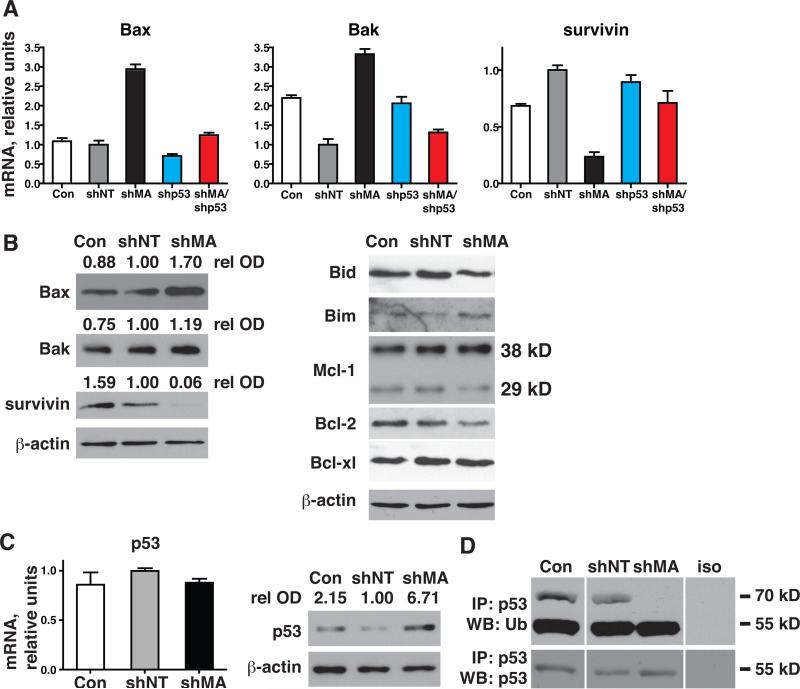
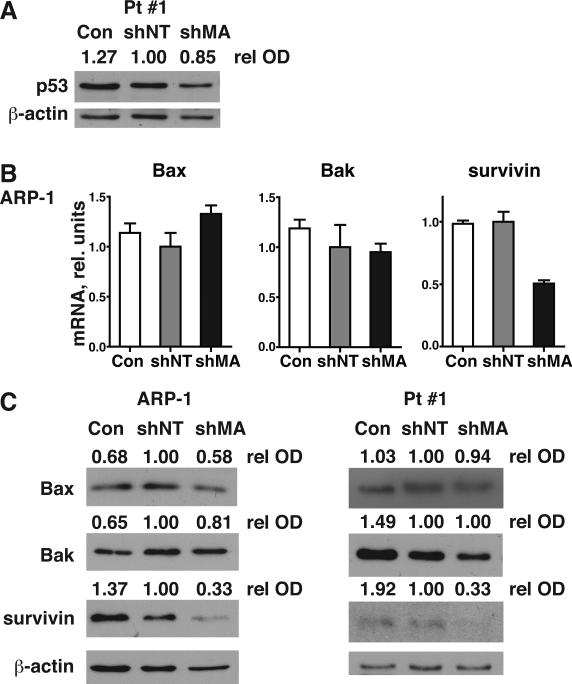
Results: MAGE-A3 was detected in a significantly higher percentage of relapsed patients compared with newly diagnosed, establishing a novel correlation with progression of disease. Silencing of MAGE-A showed that it was dispensable for cell cycling, but was required for survival of proliferating myeloma cells. Loss of MAGE-A led to apoptosis mediated by p53-dependent activation of proapoptotic Bax expression and by reduction of survivin expression through both p53-dependent and -independent mechanisms.
Conclusions: These data support a role for MAGE-A in the pathogenesis and progression of multiple myeloma by inhibiting apoptosis in proliferating myeloma cells through two novel mechanisms.
Figures
References
-
- Simpson AJ, Caballero OL, Jungbluth A, Chen YT, Old LJ. Cancer/testis antigens, gametogenesis and cancer. Nat Rev Cancer. 2005;5:615–25. - PubMed
-
- Scanlan MJ, Gure AO, Jungbluth AA, Old LJ, Chen YT. Cancer/testis antigens: an expanding family of targets for cancer immunotherapy. Immunol Rev. 2002;188:22–32. - PubMed
-
- Jungbluth AA, Ely S, DiLiberto M, et al. The cancer-testis antigens CT7 (MAGE-C1) and MAGE-A3/6 are commonly expressed in multiple myeloma and correlate with plasma-cell proliferation. Blood. 2005;106:167–74. - PubMed
Publication types
MeSH terms
Substances
Grants and funding
LinkOut - more resources
Full Text Sources
Medical
Research Materials
Miscellaneous