Cerebral venous sinus density on noncontrast CT correlates with hematocrit
- PMID: 21566009
- PMCID: PMC7966032
- DOI: 10.3174/ajnr.A2504
Cerebral venous sinus density on noncontrast CT correlates with hematocrit
Abstract
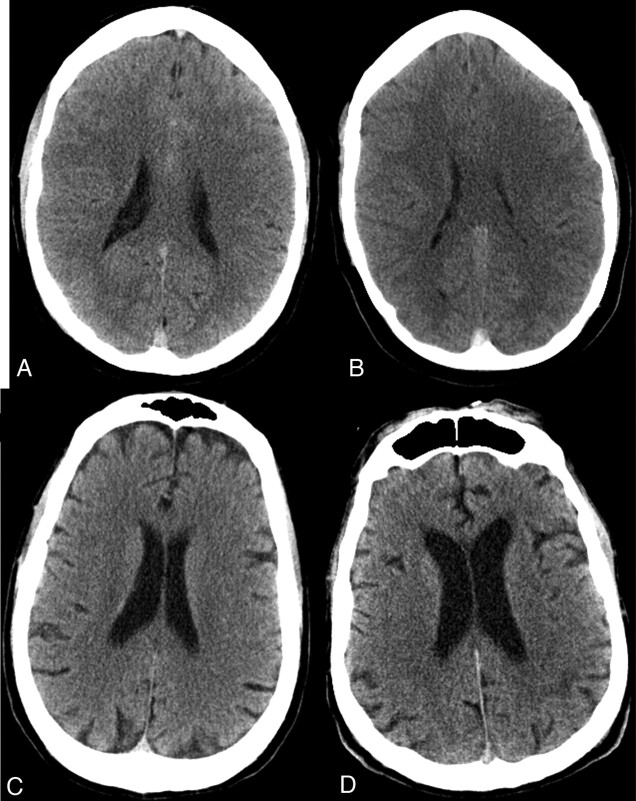
Background and purpose: A positive correlation between HCT and CT attenuation of intravascular blood has long been assumed but has never been established by using substantial patient numbers and modern CT equipment. The purpose of this study was to determine whether apparent increased attenuation on CT in cerebral venous sinuses can be attributed to hemoconcentration alone and to assess whether sinus thrombosis can be differentiated from hemoconcentrated blood based on attenuation values alone.
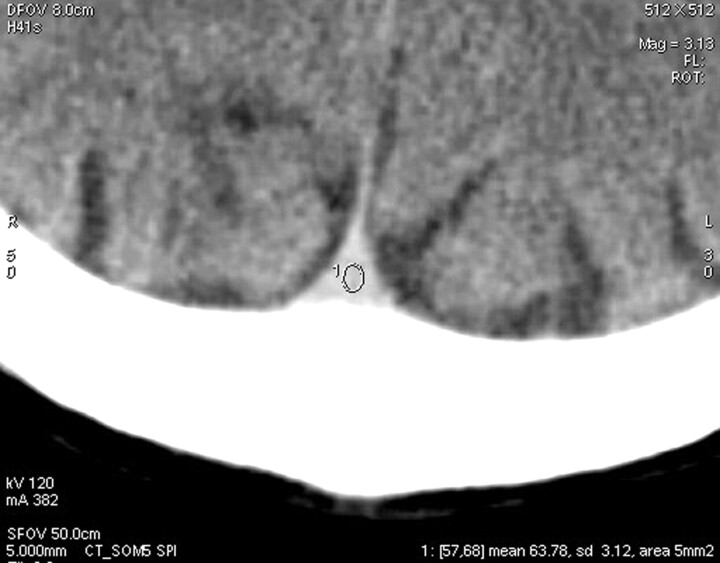
Materials and methods: We measured HUs in a region of interest within the confluence of dural venous sinuses in 166 unenhanced head CTs and correlated these data with HCT and HGB values in male and female patients aged 2 to 100 years. We then compared these data with similar measurements in 8 patients with recent venous sinus thrombosis. Two-tailed t test and linear regression analyses were performed to evaluate HGB and HCT between groups and with measured CT attenuation of intravascular blood, respectively.
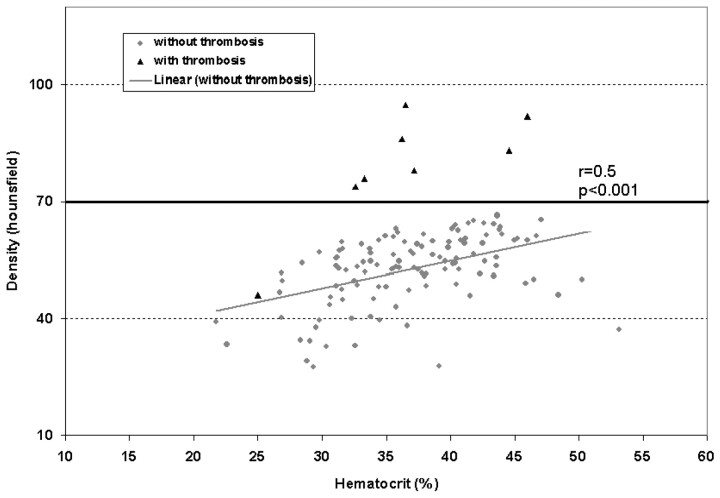
Results: A statistically significant relationship was noted between both HCT and HGB with CT attenuation. Seven of 8 patients with sinus thrombosis had attenuation values >70, but none of the normal subjects had HUs >70.
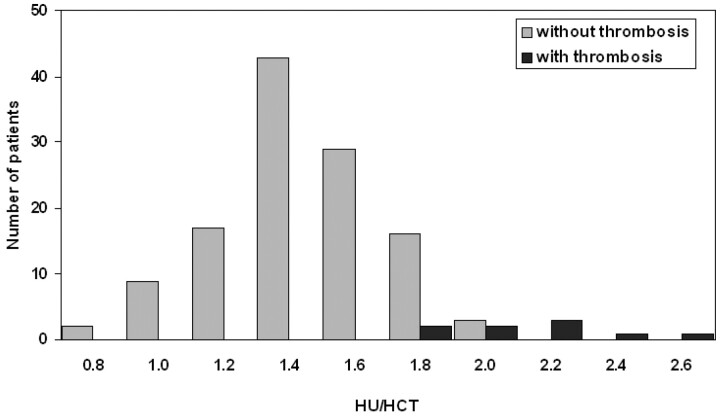
Conclusions: Hemoconcentration correlates with CT attenuation in cerebral venous sinuses. Our findings suggest that comparing the ratio of HUs to HCT may be useful in gauging concern for sinus thrombosis.
Figures
References
-
- Ben Salem D, Osseby GV, Rezaizadeh-Bourdariat K, et al. Spontaneous hyperdense intracranial vessels seen on CT scan in polycythemia cases. J Radiol 2003;84:605–08 - PubMed
-
- New PF, Aronow S. Attenuation measurements of whole blood and blood fractions in computed tomography. Radiology 1976;121:635–40 - PubMed
Publication types
MeSH terms
LinkOut - more resources
Full Text Sources
Other Literature Sources
Medical
Research Materials