The promise of human embryonic stem cells in aging-associated diseases
- PMID: 21566262
- PMCID: PMC3156600
- DOI: 10.18632/aging.100328
The promise of human embryonic stem cells in aging-associated diseases
Abstract
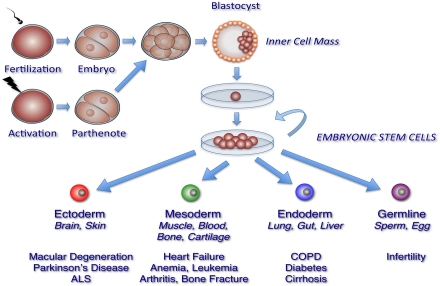
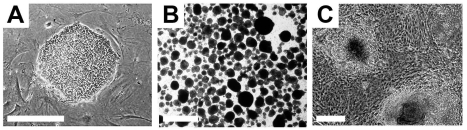
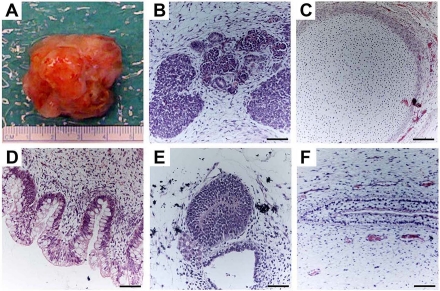
Aging-associated diseases are often caused by progressive loss or dysfunction of cells that ultimately affect the overall function of tissues and organs. Successful treatment of these diseases could benefit from cell-based therapy that would regenerate lost cells or otherwise restore tissue function. Human embryonic stem cells (hESCs) promise to be an important therapeutic candidate in treating aging-associated diseases due to their unique capacity for self-renewal and pluripotency. To date, there are numerous hESC lines that have been developed and characterized. We will discuss how hESC lines are derived, their molecular and cellular properties, and how their ability to differentiate into all three embryonic germ layers is determined. We will also outline the methods currently employed to direct their differentiation into populations of tissue-specific, functional cells. Finally, we will highlight the general challenges that must be overcome and the strategies being developed to generate highly-purified hESC-derived cell populations that can safely be used for clinical applications.
Conflict of interest statement
The authors of this manuscript have no conflict of interest to declare.
Figures
References
-
- United States Census Bureau State and County QuickFacts. 2010 http://quickfacts.census.gov/qfd/states/00000.html [Date accessed 12 April 2011].
-
- Ferrari AU, Radaelli A, Centola M. Invited review: Aging and the cardiovascular system. J Appl Physiol. 2003;95:2591–7. - PubMed
-
- Yoshida T, Tuder RM. Pathobiology of cigarette smoke-induced chronic obstructive pulmonary disease. Physiol Rev. 2007;87:1047–82. - PubMed
-
- Chung Y, Klimanskaya I, Becker S, Li T, Maserati M, Lu SJ, Zdravkovic T, Ilic D, Genbacev O, Fisher S, Krtolica A, Lanza R. Human embryonic stem cell lines generated without embryo destruction. Cell Stem Cell. 2008;2:113–7. - PubMed
Publication types
MeSH terms
Grants and funding
LinkOut - more resources
Full Text Sources
Other Literature Sources
Medical