


A crossover study of short burst oxygen therapy (SBOT) for the relief of exercise-induced breathlessness in severe COPD
- PMID: 21569473
- PMCID: PMC3117831
- DOI: 10.1186/1471-2466-11-23
A crossover study of short burst oxygen therapy (SBOT) for the relief of exercise-induced breathlessness in severe COPD
Abstract
Background: Previous small studies suggested SBOT may be ineffective in relieving breathlessness after exercise in COPD.
Methods: 34 COPD patients with FEV1 <40% predicted and resting oxygen saturation ≥93% undertook an exercise step test 4 times. After exercise, patients were given 4 l/min of oxygen from a simple face mask, 4 l/min air from a face mask (single blind), air from a fan or no intervention.
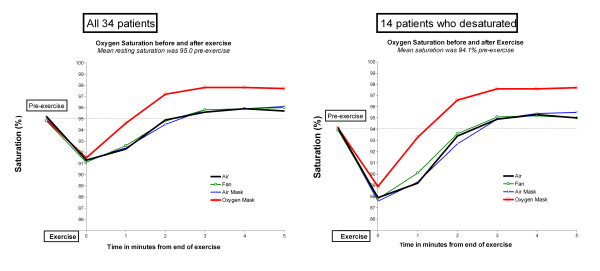
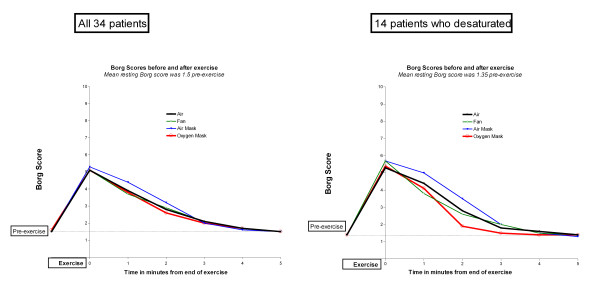
Results: Average oxygen saturation fell from 95.0% to 91.3% after exercise. The mean time to subjective recovery was 3.3 minutes with no difference between treatments. The mean Borg breathlessness score was 1.5/10 at rest, rising to 5.1/10 at the end of exercise (No breathlessness = 0, worst possible breathlessness = 10). Oxygen therapy had no discernable effect on Borg scores even for 14 patients who desaturated below 90%. 15 patients had no preferred treatment, 7 preferred oxygen, 6 preferred the fan, 3 preferred air via a mask and 3 preferred room air.
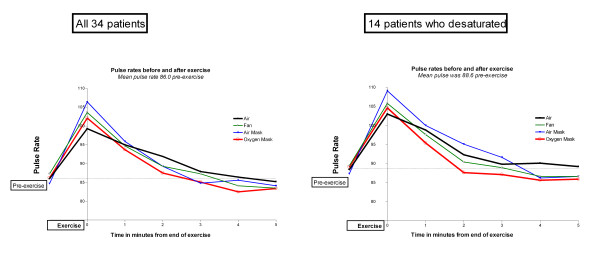
Conclusions: This study provides no support for the idea that COPD patients who are not hypoxaemic at rest derive noticeable benefit from oxygen therapy after exercise. Use of air from a mask or from a fan had no apparent physiological or placebo effect.
Figures
References
-
- National Institute for Clinical Excellence. NICE Guideline CG101. Chronic Obstructive Pulmonary Disease (2010 update) 2011. http://www.nice.org.uk/nicemedia/live/13029/49425/49425.pdf
-
- Nocturnal Oxygen Therapy Trial Group. Continuous or nocturnal oxygen therapy in hypoxemic chronic obstructive lung disease: a clinical trial. Annals of Internal Medicine. 1980;93(3):391–398. - PubMed
-
- Report of the Medical Research Council Working Party. Long-term domiciliary oxygen therapy in chronic hypoxic cor pulmonale complicating chronic bronchitis and emphysema. Lancet. 1981;1:681–685. - PubMed
Publication types
MeSH terms
LinkOut - more resources
Full Text Sources
Medical
