


Update on the regulation of mammalian melanocyte function and skin pigmentation
- PMID: 21572549
- PMCID: PMC3093193
- DOI: 10.1586/edm.10.70
Update on the regulation of mammalian melanocyte function and skin pigmentation
Abstract
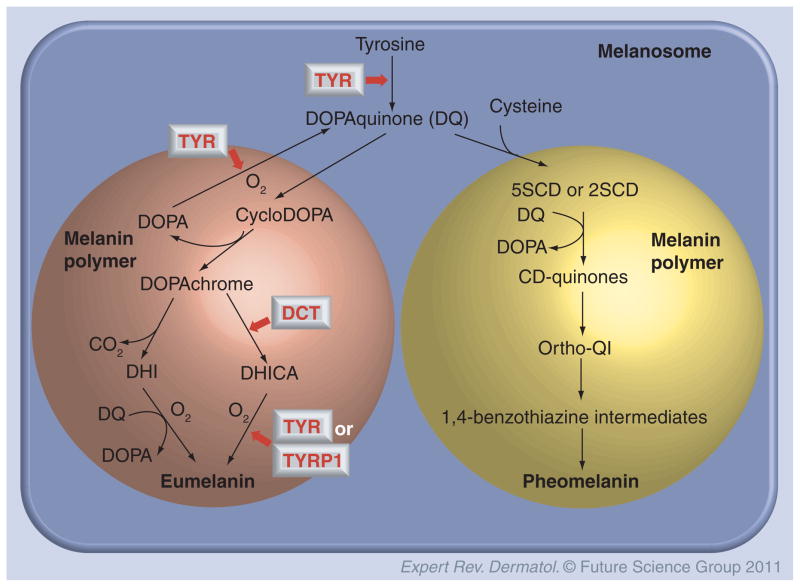
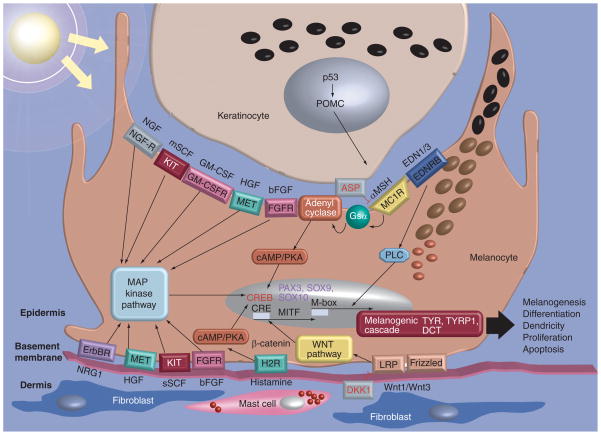
Melanogenesis is the unique process of producing pigmented biopolymers that are sequestered within melanosomes, which provides color to the skin, hair and eyes of animals and, in the case of human skin, also protects the underlying tissues from UV damage. We review the current understanding of melanogenesis, focusing on factors important to the biochemistry of pigment synthesis, the biogenesis of melanosomes, signaling pathways and factors that regulate melanogenesis, intramelanosomal pH, transport and transfer of melanosomes, and pigmentary disorders related to the dysfunction of melanosome-related proteins. Although it has been known for some time that many of the factors that affect melanogenesis are derived from keratinocytes, fibroblasts, endothelial cells, hormones, inflammatory cells and nerves, a number of new factors that are involved in that regulation have recently been reported, such as factors that regulate melanosome pH and ion transport.
Figures
References
-
- Ito S, Wakamatsu K. Chemistry of Melanins. In: Nordlund JJ, Boissy RE, Hearing VJ, King RA, Oetting WS, Ortonne JP, editors. The Pigmentary System. Physiology and Pathophysiology. 2. Blackwell Publishing; Oxford, UK: 2006. pp. 282–310. Good overview of the chemical background of melanogenesis.
-
- Land EJ, Ito S, Wakamatsu K, et al. Rate constants for the first two chemical steps of eumelanogenesis. Pigment Cell Res. 2003;16:487–493. - PubMed
-
- Palumbo A, d’Ischia M, Prota G. Tyrosinase-promoted oxidation of 5,6-dihydroxyindole-2-carboxylic acid to melanin. Isolation and characterization of oligomer intermediates. Tetrahedron. 1987;43:4203–4206.
-
- Palumbo A, Solano F, Misuraca G, et al. Comparative action of dopachrome tautomerase and metal ions on the rearrangement of dopachrome. Biochim Biophys Acta. 1991;1115:1–5. - PubMed
Grants and funding
LinkOut - more resources
Full Text Sources
Other Literature Sources