


Cow placenta extract promotes murine hair growth through enhancing the insulin - like growth factor-1
- PMID: 21572784
- PMCID: PMC3088926
- DOI: 10.4103/0019-5154.77544
Cow placenta extract promotes murine hair growth through enhancing the insulin - like growth factor-1
Abstract
Background: Hair loss is seen as an irreversible process. Most research concentrates on how to elongate the anagen, reduce the negative factors of obstructing hair growth and improve the hair number and size.
Aim: In our experiment, we tried to prove that the cow placenta extract can promote hair growth by elongating hair shaft and increasing hair follicle number.
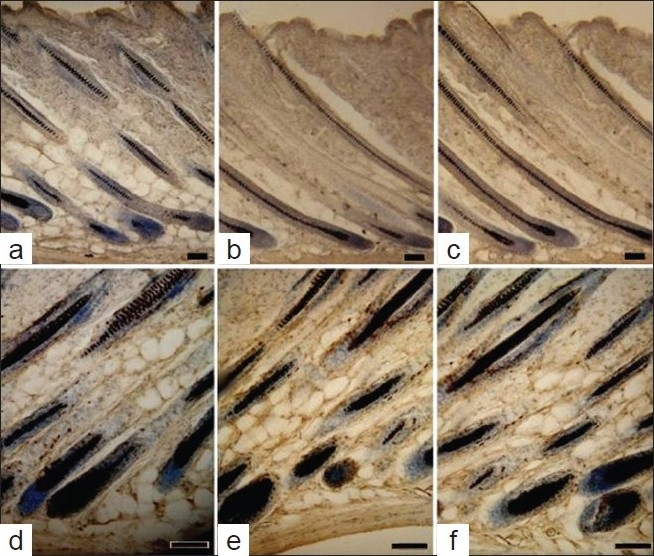
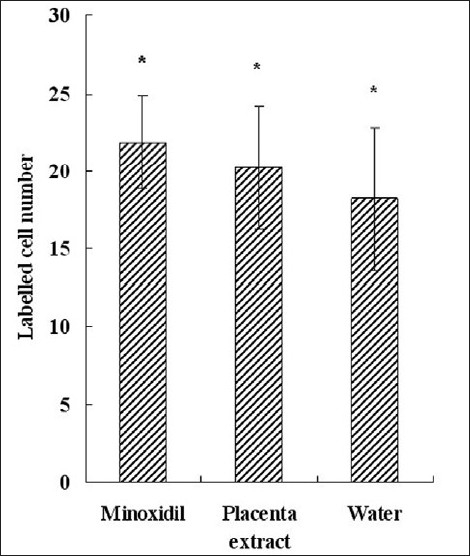
Materials and methods: Cow placenta extract (CPE), water and minoxidil applied separately on the back of depilated B57CL/6 mice for the case, negative and positive control respectively. We checked the proliferation of cells which are resident in hair sheath, and the expression of a few growth factors which stimulate hair growth.
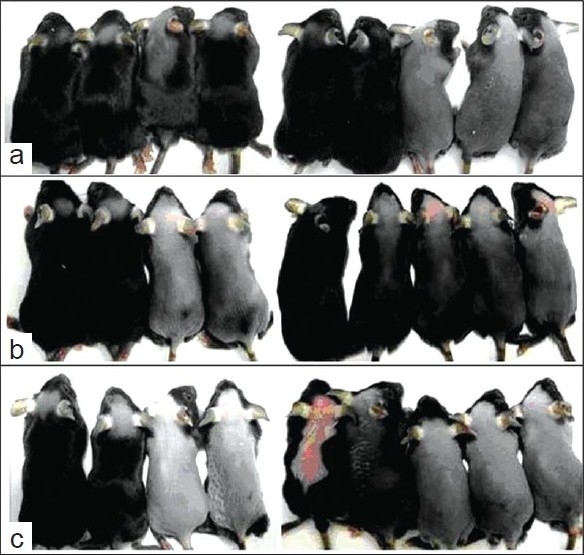
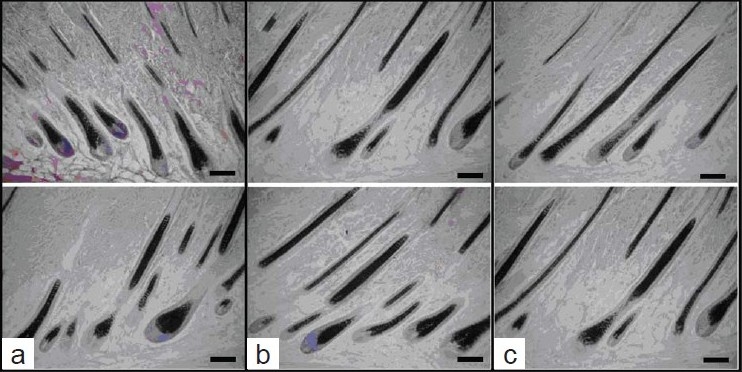
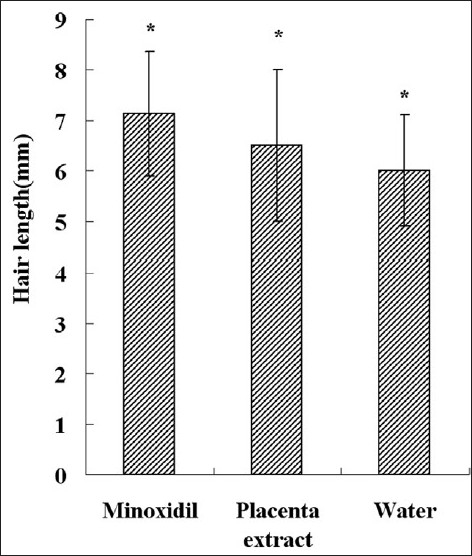
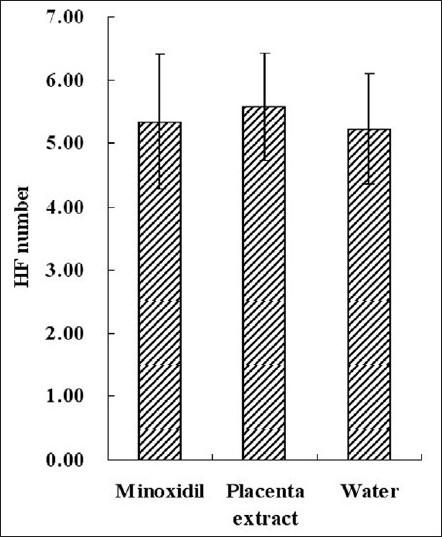
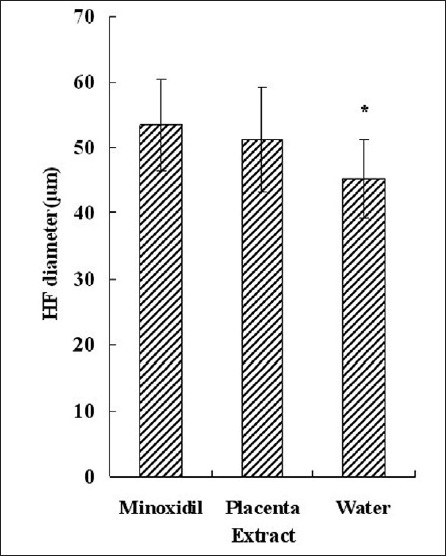
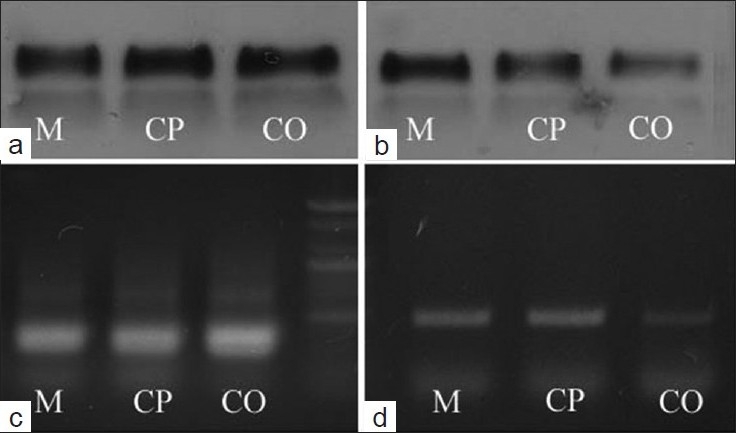
Results: Result shows that placenta extract more efficiently accelerates cell division and growth factor expression, by raising the insulin-like growth factor (IGF-1) mRNA and protein level to increase HF size and hair length.
Conclusions: The extract is not a purified product; so, it is less effective than minoxidil, which is approved by the US FDA for the treatment of male pattern baldness. If refinement is done, the placenta extract would be a good candidate medicine for hair loss.
Keywords: Cell proliferation; cow placenta extract; hair follicle; minoxidil.
Conflict of interest statement
Figures
References
-
- Ota Y, Saitoh Y, Suzuki S, Ozawa K, Kawano M, Imamura T. Fibroblast growth factor 5 inhibits hair growth by blocking dermal papilla cell activation. Biochem Biophys Res Commun. 2002;290:169–76. - PubMed
-
- Stenn KS, Paus R. Controls of hair follicle cycling. Physiol Rev. 2001;811:449–94. - PubMed
-
- Botchkarev VA, Botchkareva NV, Nakamura M, Huber O, Funa K, Lauster R, et al. Noggin is required for induction of the hair follicle growth phase in postnatal skin. Faseb J. 2001;15:2205–14. - PubMed
-
- Yamauchi K, Kurosaka A. Inhibition of glycogen synthase kinase-3 enhances the expression of alkaline phosphatase and insulin-like growth factor-1 in human primary dermal papilla cell culture and maintains mouse hair bulbs in organ culture. Arch Dermatol Res. 2009;301:357–65. - PubMed
LinkOut - more resources
Full Text Sources
Other Literature Sources
Research Materials
Miscellaneous