


The level of protein in milk formula modifies ileal sensitivity to LPS later in life in a piglet model
- PMID: 21573022
- PMCID: PMC3090415
- DOI: 10.1371/journal.pone.0019594
The level of protein in milk formula modifies ileal sensitivity to LPS later in life in a piglet model
Abstract
Background: Milk formulas have higher protein contents than human milk. This high protein level could modify the development of intestinal microbiota, epithelial barrier and immune functions and have long-term consequences.
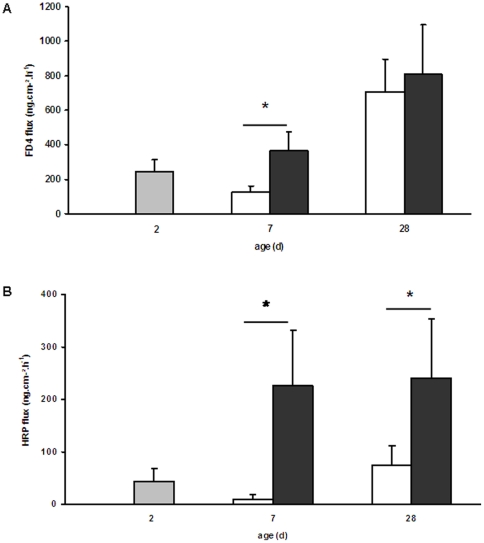
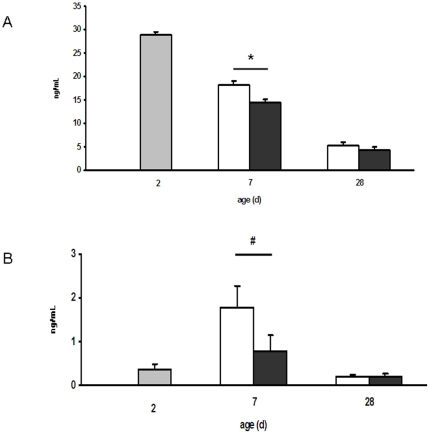
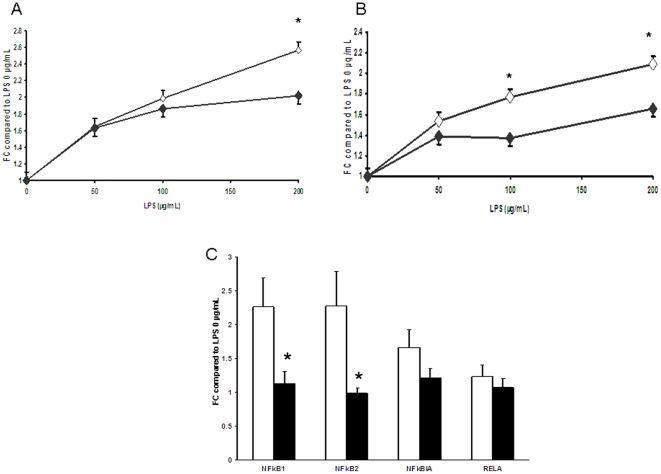
Methodology/principal findings: We investigated the effect of a high protein formula on ileal microbiota and physiology during the neonatal period and later in life. Piglets were fed from 2 to 28 days of age either a normoprotein (NP, equivalent to sow milk) or a high protein formula (HP, +40% protein). Then, they received the same solid diet until 160 days. During the formula feeding period ileal microbiota implantation was accelerated in HP piglets with greater concentrations of ileal bacteria at d7 in HP than NP piglets. Epithelial barrier function was altered with a higher permeability to small and large probes in Ussing chambers in HP compared to NP piglets without difference in bacterial translocation. Infiltration of T cells was increased in HP piglets at d28. IL-1β and NF-κB sub-units mRNA levels were reduced in HP piglets at d7 and d28 respectively; plasma haptoglobin also tended to be reduced at d7. Later in life, pro-inflammatory cytokines secretion in response to high doses of LPS in explants culture was reduced in HP compared to NP piglets. Levels of mRNA coding the NF-κB pathway sub-units were increased by the challenge with LPS in NP piglets, but not HP ones.
Conclusions/significance: A high protein level in formula affects the postnatal development of ileal microbiota, epithelial barrier and immune function in piglets and alters ileal response to inflammatory mediators later in life.
Conflict of interest statement
Figures
Comment in
-
Effect of neonatal nutrition on long-term barrier function and gut inflammation.Gastroenterology. 2011 Nov;141(5):1939-41. doi: 10.1053/j.gastro.2011.09.028. Epub 2011 Sep 23. Gastroenterology. 2011. PMID: 21946348 No abstract available.
References
-
- Jost R, Maire JC, Maynard F, Secretin MC. Aspects of whey protein usage in infant nutrition, a brief review. Int J Food Sci Technol. 1999;34:533–542.
-
- Macé K, Steenhout P, Klassen P, Donnet A. Protein quality and quantity in cow's milk-based formula for healthy term infants: past, present and future. Protein and Energy Requirements in Infancy and Childhood. 2006;58:189–205. - PubMed
-
- Embleton ND, Cooke RJ. Protein requirements in preterm infants: effect of different levels of protein intake on growth and body composition. Pediatr Res. 2005;58:855–860. - PubMed
-
- Thureen P, Heird WC. Protein and energy requirements of the preterm/low birthweight (LBW) infant. Pediatr Res. 2005;57:95R–98R. - PubMed
-
- Koletzko B, von Kries R, Closa R, Escribano J, Scaglioni S, et al. Lower protein in infant formula is associated with lower weight up to age 2 y: a randomized clincal trial. Am J Clin Nutr. 2009;89:1836–1845. - PubMed
Publication types
MeSH terms
Substances
LinkOut - more resources
Full Text Sources
Other Literature Sources
Medical
Research Materials
Miscellaneous
