


NF-kappaB dysregulation in microRNA-146a-deficient mice drives the development of myeloid malignancies
- PMID: 21576471
- PMCID: PMC3107319
- DOI: 10.1073/pnas.1105398108
NF-kappaB dysregulation in microRNA-146a-deficient mice drives the development of myeloid malignancies
Abstract
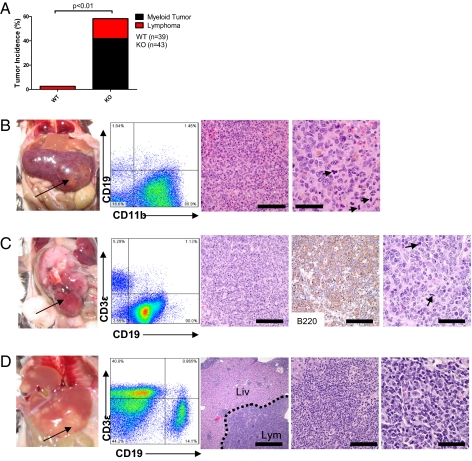
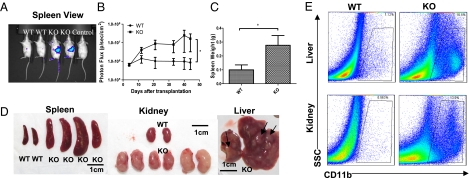
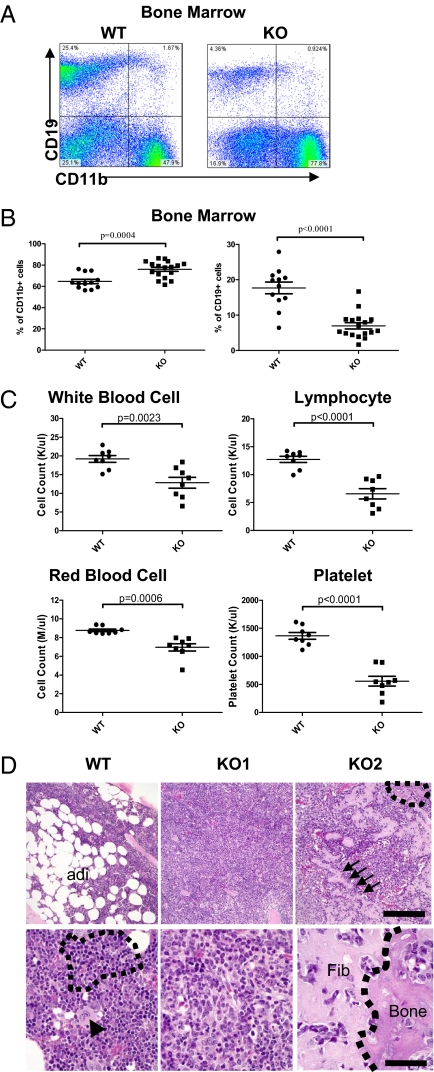
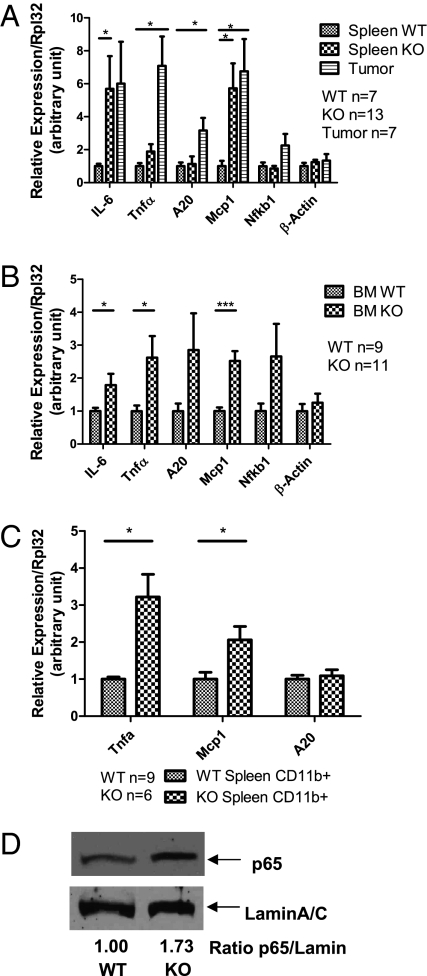
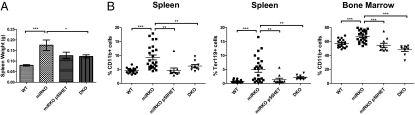
MicroRNA miR-146a has been implicated as a negative feedback regulator of NF-κB activation. Knockout of the miR-146a gene in C57BL/6 mice leads to histologically and immunophenotypically defined myeloid sarcomas and some lymphomas. The sarcomas are transplantable to immunologically compromised hosts, showing that they are true malignancies. The animals also exhibit chronic myeloproliferation in their bone marrow. Spleen and marrow cells show increased transcription of NF-κB-regulated genes and tumors have higher nuclear p65. Genetic ablation of NF-κB p50 suppresses the myeloproliferation, showing that dysregulation of NF-κB is responsible for the myeloproliferative disease.
Conflict of interest statement
Conflict of interest statement: D.B. is a member of the board of directors and M.P.B. and K.D.T. are employees of Regulus Therapeutics Inc., a company developing microRNA-based therapeutics.
Figures
References
-
- O'Connell RM, Rao DS, Chaudhuri AA, Baltimore D. Physiological and pathological roles for microRNAs in the immune system. Nat Rev Immunol. 2010;10:111–122. - PubMed
-
- Xiao C, Rajewsky K. MicroRNA control in the immune system: Basic principles. Cell. 2009;136:26–36. - PubMed
-
- Calin GA, Croce CM. MicroRNA signatures in human cancers. Nat Rev Cancer. 2006;6:857–866. - PubMed
Publication types
MeSH terms
Substances
Grants and funding
LinkOut - more resources
Full Text Sources
Other Literature Sources
Molecular Biology Databases
Research Materials
