


First experiences with negative pressure wound therapy and instillation in the treatment of infected orthopaedic implants: a clinical observational study
- PMID: 21584643
- PMCID: PMC3167463
- DOI: 10.1007/s00264-011-1274-y
First experiences with negative pressure wound therapy and instillation in the treatment of infected orthopaedic implants: a clinical observational study
Abstract
Purpose: Infections associated with orthopaedic implants remain a serious complication. The main objective in acute infection control is component retention, whereas this option is usually not considered for chronic infections.
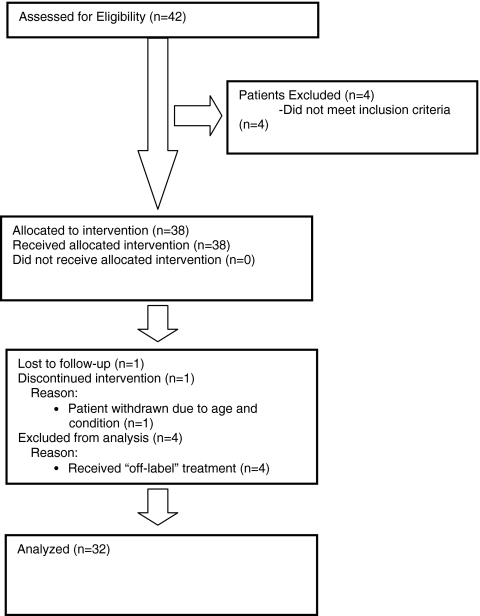
Methods: This multi-centre prospective, non-randomised observational study investigated one possible treatment option for implant retention in combination with negative pressure wound therapy with instillation (NPWTi). Thirty-two patients with an infected orthopaedic implant were analysed. Twenty-two patients had an acute infection (< 8 weeks after implantation) and ten patients had a chronic infection (> 8 weeks and < 36 weeks after implant placement). Polyhexanide was used as the instillation solution in 31 of the 32 cases.
Results: Nineteen patients (86.4%) with an acute infection and eight patients (80%) with a chronic infection retained their implant at 4-6 months follow-up after treatment.
Conclusions: Our study showed that NPWTi can be used as adjunctive therapy for salvage of acutely infected orthopaedic implants and may even be considered for early chronically infected implants.
References
-
- Buchholz HW, Elson RA, Engelbrecht E, Lodenkämper H, Röttger J, Siegel A. Management of deep infection of total hip replacement. J Bone Joint Surg Br. 1981;63-B(3):342–353. - PubMed
-
- Chiu FY, Chen CM. Surgical débridement and parenteral antibiotics in infected revision total knee arthroplasty. Clin Orthop Relat Res. 2007;461:130–135. - PubMed
-
- Cobo J, Miguel LG, Euba G, Rodríguez D, García-Lechuz JM, Riera M, Falgueras L, Palomino J, Benito N, Toro MD, Pigrau C, Ariza J. Early prosthetic joint infection: outcomes with debridement and implant retention followed by antibiotic therapy. Clin Microbiol Infect. 2010 - PubMed
Publication types
MeSH terms
Substances
LinkOut - more resources
Full Text Sources
