


Predictive and concurrent validity of parent concern about young children at risk for autism
- PMID: 21584850
- PMCID: PMC3319367
- DOI: 10.1007/s10803-011-1282-1
Predictive and concurrent validity of parent concern about young children at risk for autism
Abstract
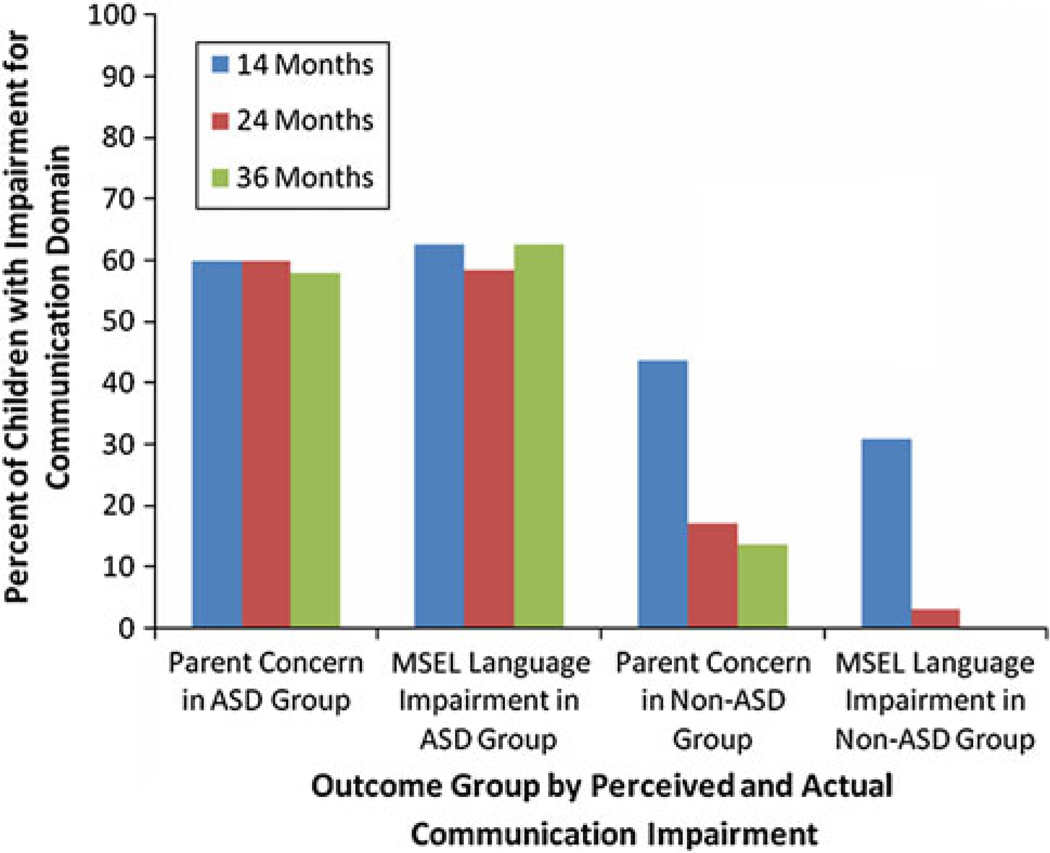
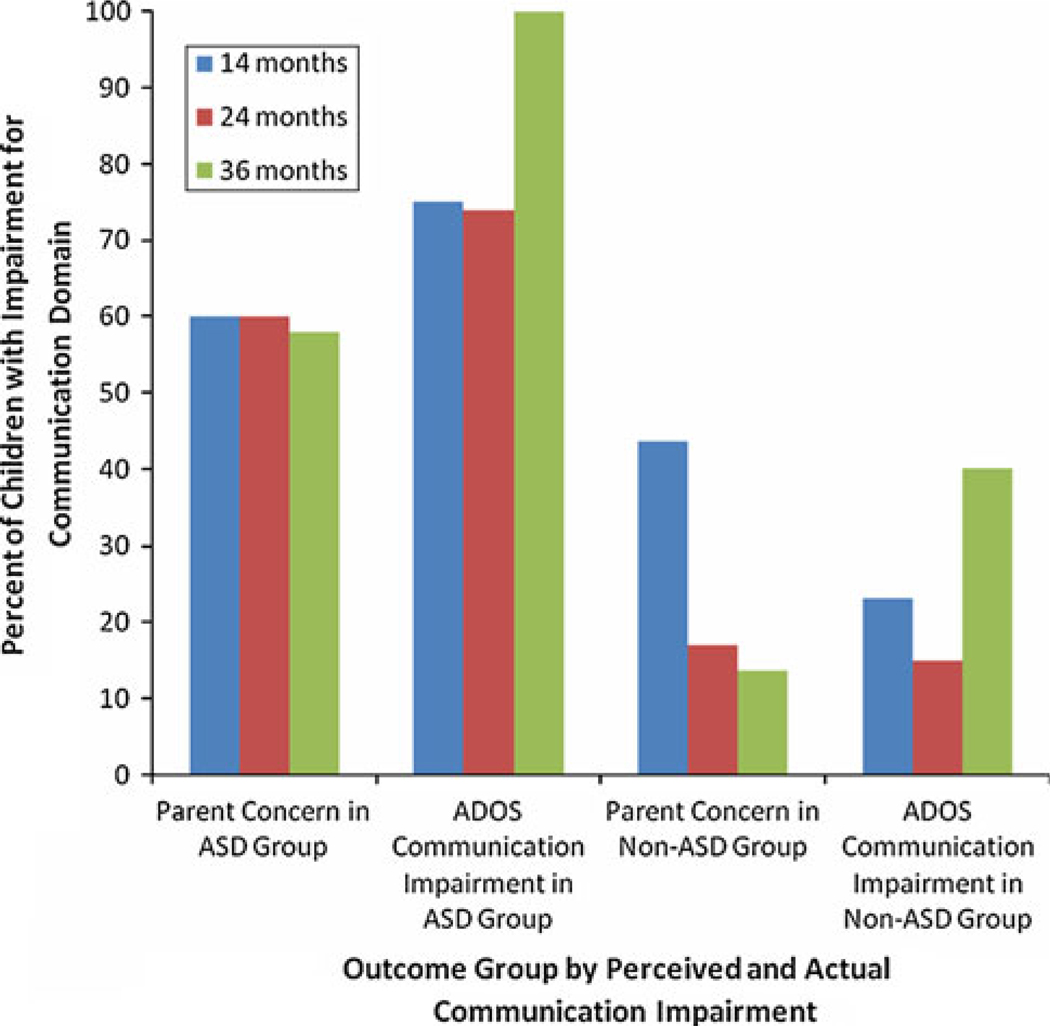
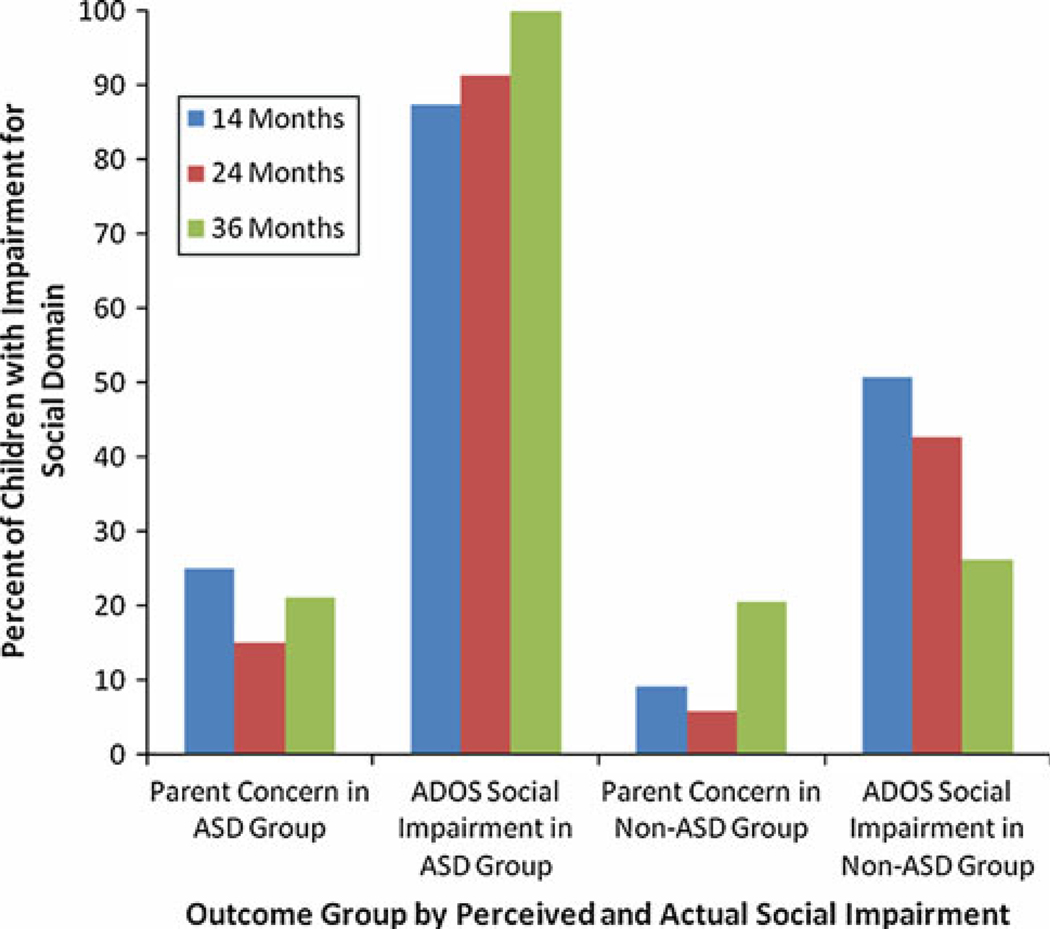
Parents' concerns about their children's development were examined prospectively at 14, 24, and 36 months for 89 younger siblings of a child with autism. Parent reported concern was high at all ages (40-75%) and was higher at 24 and 36 months in children with ASD than non-ASD outcomes (p < .05). Communication concerns were reported most frequently. Parent concern compared to impairment classification based on concurrent standardized tests provided better specificity than sensitivity, and was better for communication than social functioning. Parent communication concern (but not social concern) at 24 months and 36 months predicted ASD versus non-ASD outcome; however, children's impairment on standardized tests yielded greater predictive value at all ages (p < .001). Close monitoring of this at risk group is warranted.
Figures
References
-
- American Academy of Pediatrics. Developmental surveillance and screening of infants and young children. Pediatrics. 2001;108(1):192–195. - PubMed
-
- Aylward G. Practioner’s guide to developmental and psychological testing. New York: Plenum Medical Book Company; 1994.
-
- Chawarska K, Paul R, Klin A, Hannigen S, Dichtel LE, Volkmar F. Parental recognition of developmental problems in toddlers with autism spectrum disorders. Journal of Autism and Developmental Disorders. 2007;37(1):62–72. - PubMed
-
- De Giacomo A, Fombonne E. Parental recognition of developmental abnormalities in autism. European Child and Adolescent Psychiatry. 1998;7:131–136. - PubMed
Publication types
MeSH terms
Grants and funding
LinkOut - more resources
Full Text Sources
Medical
