


Biomarkers for cognitive aging part I: telomere length, blood pressure and cognition among individuals with hypertension
- PMID: 21586494
- PMCID: PMC4698336
- DOI: 10.1177/1099800411406433
Biomarkers for cognitive aging part I: telomere length, blood pressure and cognition among individuals with hypertension
Abstract
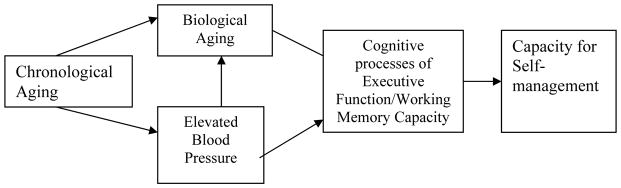
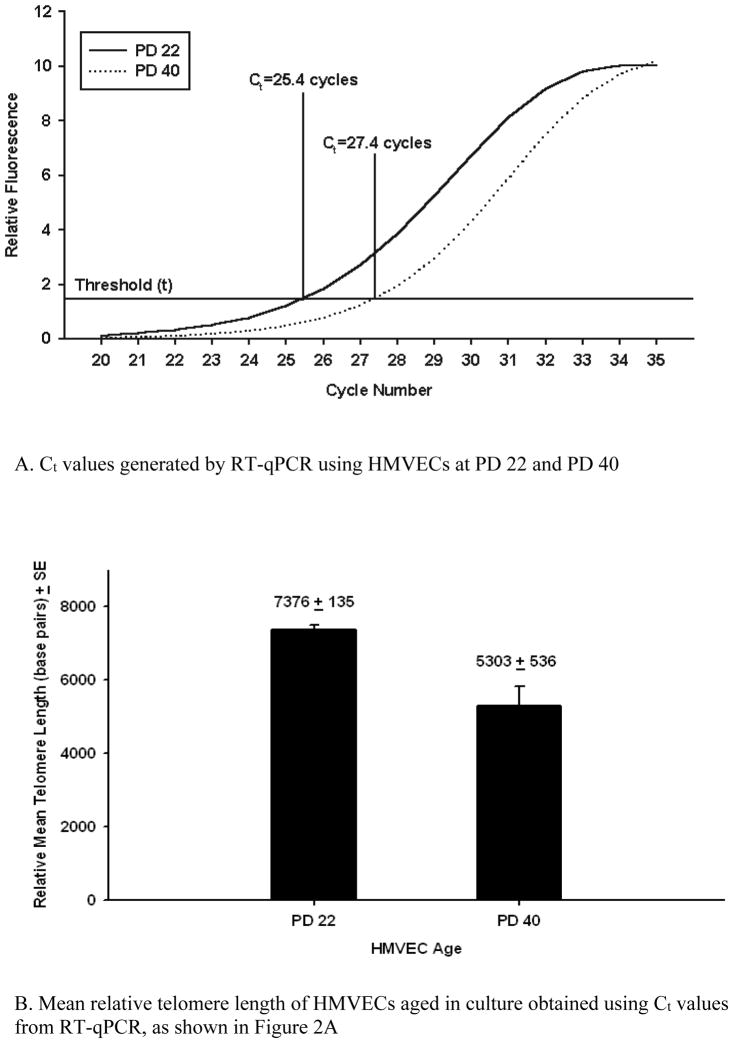
Chronological age is used as a marker for age-associated changes in cognitive function. However, there is great interindividual variability in cognitive ability among people of the same age. Physiological age rather than chronological age should be more closely associated with age-related cognitive changes because these changes are not universal and are likely dependent on several factors in addition to the number of years lived. Cognitive function is associated with successful self-management, and a biological marker that reflects physiological age and is associated with cognitive function could be used to identify risk for failure to self-manage. The purpose of this study was to investigate the association between telomere length, a known biomarker of age; blood pressure; cognitive assessments; and adherence to antihypertensive medication among community-dwelling middle-aged and older adults. The authors administered a battery of cognitive assessments to 42 participants (M = 69 years of age), collected blood samples, and isolated peripheral blood mononuclear leukocytes for genomic DNA. The authors determined relative telomere length using Cawthon's method for real-time quantitative polymerase chain reaction (RT-qPCR) and measured medication adherence using an electronic medication monitoring system (MEMS by Aardex) over 8 weeks. Findings indicate that telomere length was inversely associated with systolic blood pressure (r = -.38, p < .01) and diastolic blood pressure (r = -.42, p < .01) but not with cognitive assessments or adherence. The authors discuss the nonsignificant findings between telomere length and cognitive assessments including the potential modifying role of gender.
Figures
References
-
- Aardex C. Advanced Analytic Research on Drug Exposure. 2010 Retrieved 7/12/10, 2010, from ttp:// www.aardexgroup.com/aardex_index.php?group=aardex&id=85.
-
- Anstey KJ, Lord SR, Williams P. Strength in the lower limbs, visual contrast sensitivity, and simple reaction time predict cognition in older women. Psychology & Aging. 1997;12(1):137–144. - PubMed
-
- Aviv A. Telomeres and human somatic fitness. Journals of Gerontology Series A Biological Sciences & Medical Sciences. 2006;61(8):871–873. - PubMed
-
- Aviv A. The epidemiology of human telomeres: faults and promises. Journals of Gerontology Series A Biological Sciences & Medical Sciences. 2008;63(9):979–983. - PubMed
-
- Benetos A, Gardner JP, Zureik M, Labat C, Xiaobin L, Adamopoulos C, et al. Short telomeres are associated with increased carotid atherosclerosis in hypertensive subjects. Hypertension. 2004;43(2):182–185. - PubMed
Publication types
MeSH terms
Substances
Grants and funding
LinkOut - more resources
Full Text Sources
Medical
