


Comparison of a double poling ergometer and field test for elite cross country sit skiers
- PMID: 21589660
- PMCID: PMC2953388
Comparison of a double poling ergometer and field test for elite cross country sit skiers
Abstract
Background: Sport specific ergometers are important for laboratory testing (i.e. peak oxygen consumption (VO(2))) and out of season training.
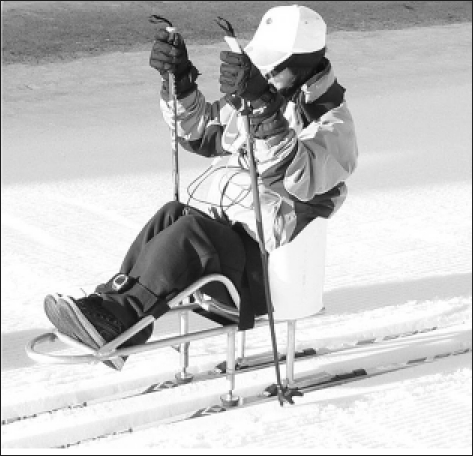
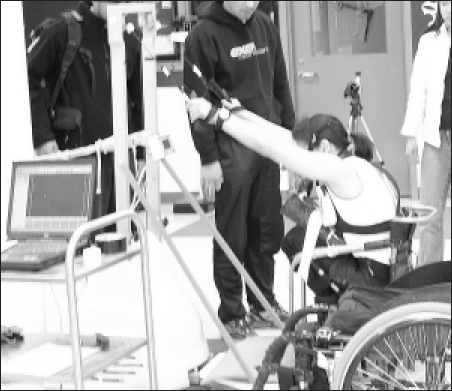
Objectives: The purpose of this study was to compare cardiorespiratory variables during exercise on a double poling ergometer to a field test in elite sit skiers.
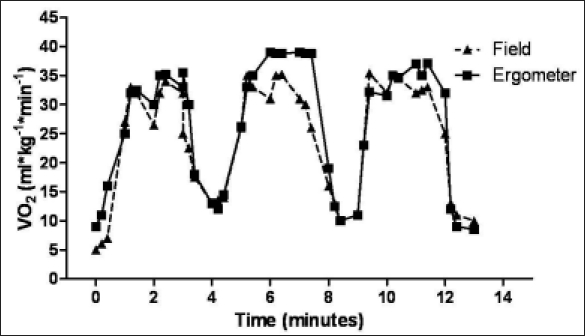
Methods: Three male and four female athletes from the Canadian National / Developmental team (17-54 years of age, six with complete paraplegia and one with cerebral palsy) completed a field test and a double poling ergometer protocol separated by at least 24 hours. Both protocols consisted of three maximal trials of skiing of three minutes duration separated by 1.5 minutes of rest. A wireless metabolic system and heart rate monitor were used to measure cardiorespiratory responses [peak heart rate, peak VO(2), and peak respiratory exchange ratio (RER)] during each test. Arterialized blood lactate was measured before the beginning of exercise, after each trial and at 5, 10 and 15 minutes post exercise.
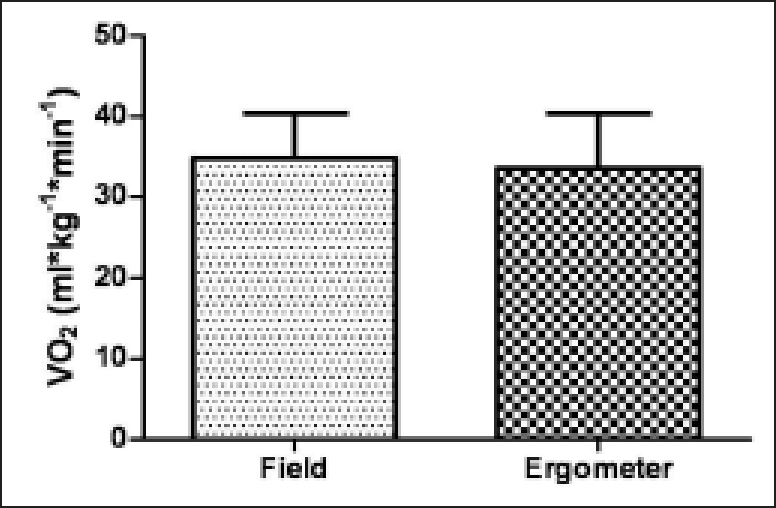
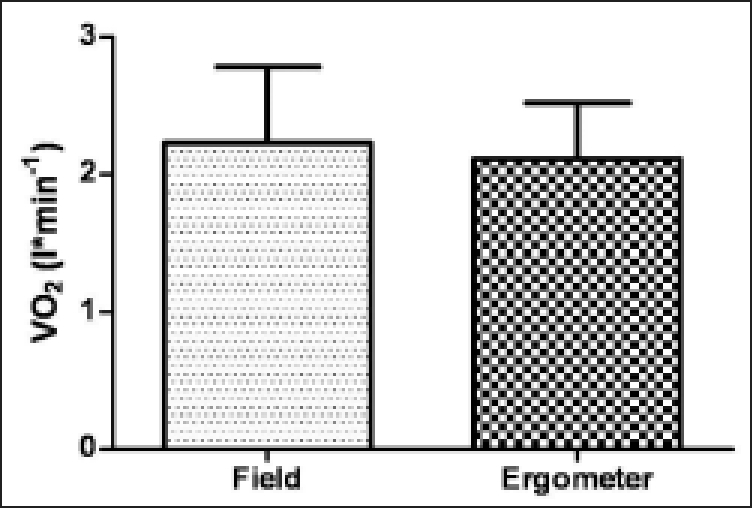
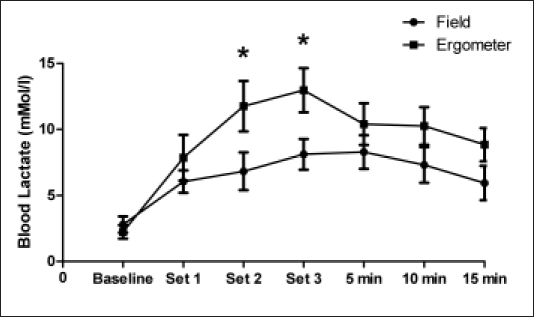
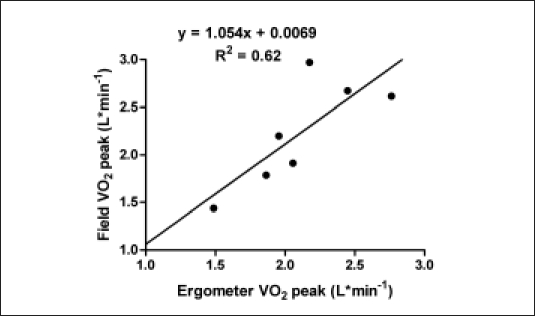
Results: No significant differences existed between the field and ergometer tests for peak oxygen consumption (VO(2)) (field=34.7±5.5 mL·kg-1·min-1 vs. ergometer=33.4±6.9 mL·kg-1·min-1). Significantly higher peak heart rate and RER were found during the ergometer test. Significantly higher lactates were found during the ergometer test after trial 2 and trial 3.
Conclusion: The double poling ergometer is similar to a field test for evaluating peak VO(2) in elite cross country sit skiers; however, the ergometer test elicits a higher heart rate and anaerobic response.
Keywords: aerobic power; lactate; spinal cord injury.
Figures
References
-
- Faria IE, Faria EW, Parker D. Metabolic and ventilatory response to cross-country skiing classical and double arm poling exercise. J Sports Med Phys Fit. 1996;36:1–6 - PubMed
-
- Hoffman MD, Clifford PS. Physiological aspects of competitive cross country skiing. J Sports Sci. 1992;10:3–27 - PubMed
-
- Leirdal S, Saetran L, Roeleveld K, et al. Effects of body position on slide boarding performance by cross-country skiers. Med Sci Sports Exerc. 2006;38:1462–1469 - PubMed
-
- Wisloff U, Helgerud J. Evaluation of a new upper body ergometer for cross country skiers. Med Sci Sports Exerc. 1998;30:1314–1320 - PubMed
-
- Baumgartl P. Treadmill ergometry and heart-volumes in elite biathletes: A longitudinal study. Int J Sports Med. 1990; 11:223–227 - PubMed
LinkOut - more resources
Full Text Sources
Miscellaneous