


Genome of Herbaspirillum seropedicae strain SmR1, a specialized diazotrophic endophyte of tropical grasses
- PMID: 21589895
- PMCID: PMC3093359
- DOI: 10.1371/journal.pgen.1002064
Genome of Herbaspirillum seropedicae strain SmR1, a specialized diazotrophic endophyte of tropical grasses
Abstract
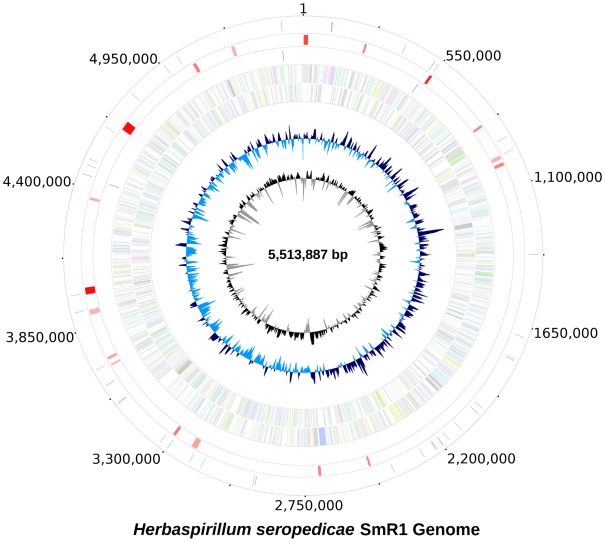
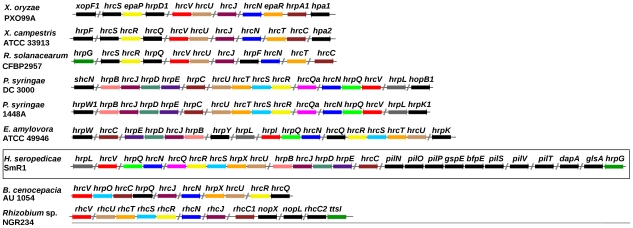
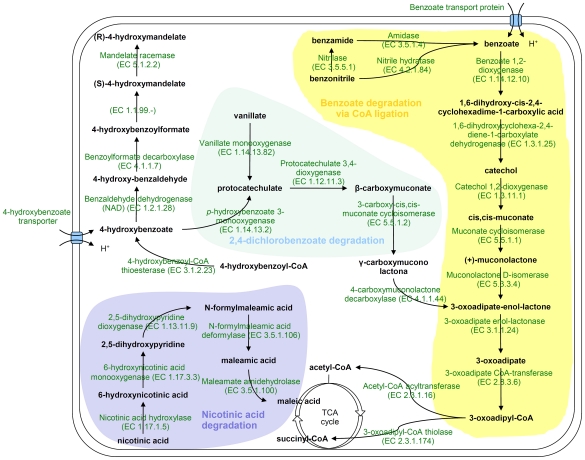
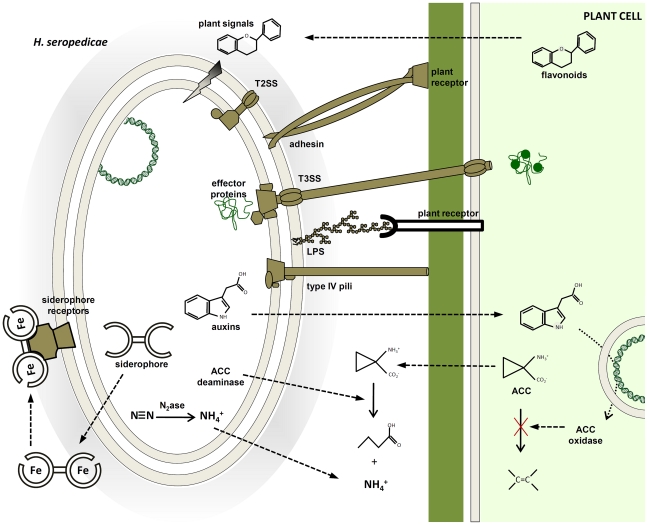
The molecular mechanisms of plant recognition, colonization, and nutrient exchange between diazotrophic endophytes and plants are scarcely known. Herbaspirillum seropedicae is an endophytic bacterium capable of colonizing intercellular spaces of grasses such as rice and sugar cane. The genome of H. seropedicae strain SmR1 was sequenced and annotated by The Paraná State Genome Programme--GENOPAR. The genome is composed of a circular chromosome of 5,513,887 bp and contains a total of 4,804 genes. The genome sequence revealed that H. seropedicae is a highly versatile microorganism with capacity to metabolize a wide range of carbon and nitrogen sources and with possession of four distinct terminal oxidases. The genome contains a multitude of protein secretion systems, including type I, type II, type III, type V, and type VI secretion systems, and type IV pili, suggesting a high potential to interact with host plants. H. seropedicae is able to synthesize indole acetic acid as reflected by the four IAA biosynthetic pathways present. A gene coding for ACC deaminase, which may be involved in modulating the associated plant ethylene-signaling pathway, is also present. Genes for hemagglutinins/hemolysins/adhesins were found and may play a role in plant cell surface adhesion. These features may endow H. seropedicae with the ability to establish an endophytic life-style in a large number of plant species.
Conflict of interest statement
The authors have declared that no competing interests exist.
Figures
References
-
- Pedrosa FO, Elmerich C. Elmerich C, Newton WE, editors. Regulation of nitrogen fixation and ammonium assimilation in associative and endophytic nitrogen fixing bacteria. Associative and endophytic nitrogen fixing bacteria and cyanobacterial associations. 2007. pp. 47–71. Kluwer: The Netherlands.
-
- Pimentel JP, Olivares FL, Pitard RM, Urquiaga S, Akiba F, et al. Dinitrogen fixation and infection of grass leaves by Pseudomonas rubrisubalbicans and Herbaspirillum seropedicae. Plant Soil. 1991;137:61–65.
-
- Baldani VLD, Baldani JI, Olivares FL, Döbereiner J. Identification and ecology of Herbaspirillum seropedicae and closely related Pseudomonas rubrisubalbicans. Symbiosis. 1992;13:65–73.
-
- Gyaneshwar P, James EK, Reddy PM, Ladha JK. Herbaspirillum colonization increases growth and nitrogen accumulation in aluminum-tolerant rice varieties. New Phytol. 2002;154:131–145.
-
- Baldani JI, Pot B, Kirchhof G, Falsen E, Baldani VLD, et al. Emended description of Herbaspirillum; inclusion of (Pseudomonas) rubrisubalbicans, a mild pathogen, as Herbaspirillum rubrisubalbicans comb. nov., and classification of a group of clinical isolates (EFgroup 1) as Herbaspirillum species 3. Int J Syst Bacteriol. 1996;46:802–810. - PubMed
Publication types
MeSH terms
Substances
LinkOut - more resources
Full Text Sources
Molecular Biology Databases
